
The War of 1812 is usually told in cannon smoke and marching feet. I get it. I grew up in upstate New York close enough to an old battleground that my grandfather could turn a Saturday walk into a history lesson just by pointing at a half-buried marker in the weeds.
But if you want to understand why ordinary families felt this war in their bones, follow the money and the missing goods. The story starts before the first shots, with empty wharves, silent shipyards, and a country trying to punish Britain and France without firing a musket. What follows is a rough, human timeline of a young economy thrown into a trade blackout, then into inflation and scarcity, and finally into a postwar boom that changed how Americans worked, bought, borrowed, and voted.
If you want the diplomatic finish line that frames the economic aftermath, keep our peace timeline open in another tab: Treaty of Ghent timeline: when peace reached the front.
1807 to 1809: The embargo years
December 1807: The Embargo Act hits like a winter squall
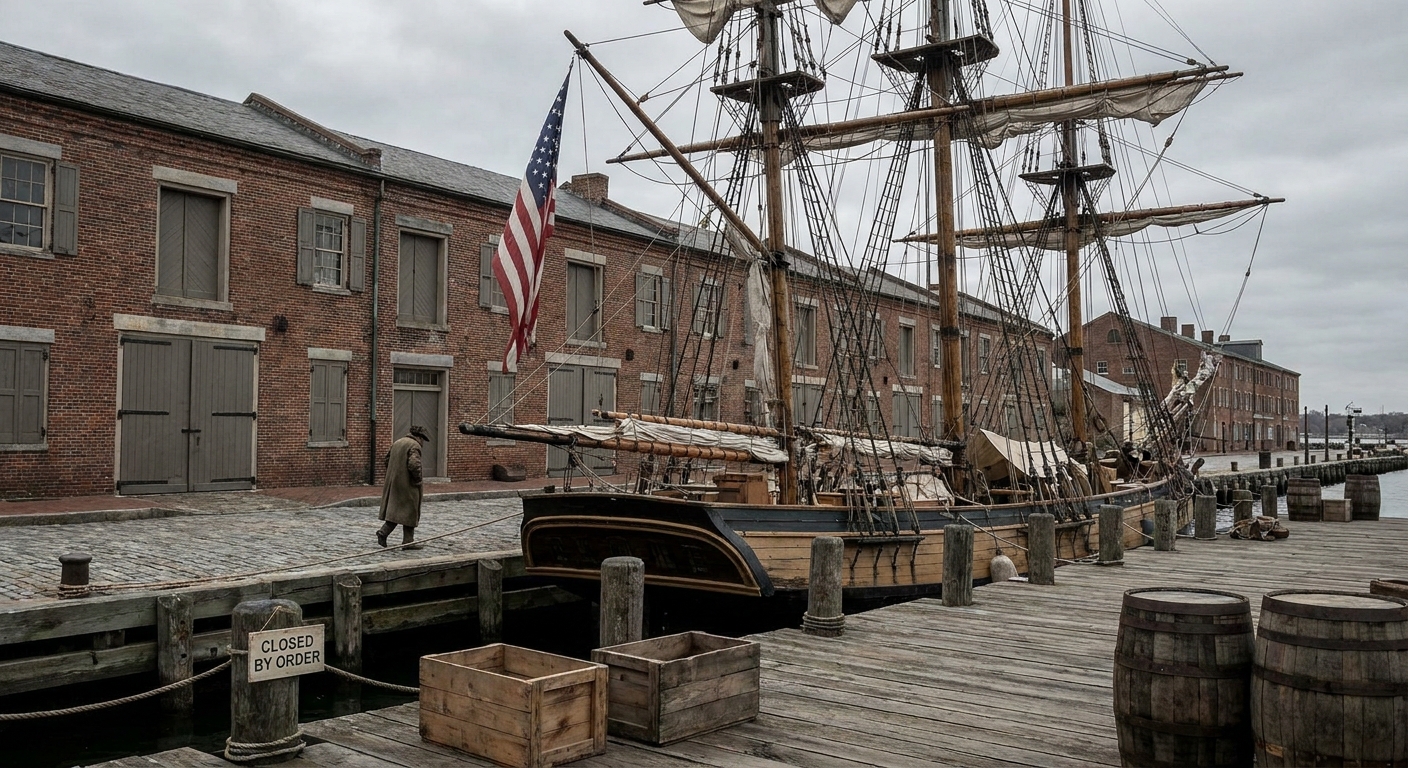
When Thomas Jefferson signed the Embargo Act, the intent was strategic. The effect was personal. The law barred American ships from sailing to foreign ports, sharply constraining exports and imports in an effort to pressure Britain and France during the Napoleonic Wars. Instead, it hammered American merchants, sailors, dockworkers, and coastal towns first.
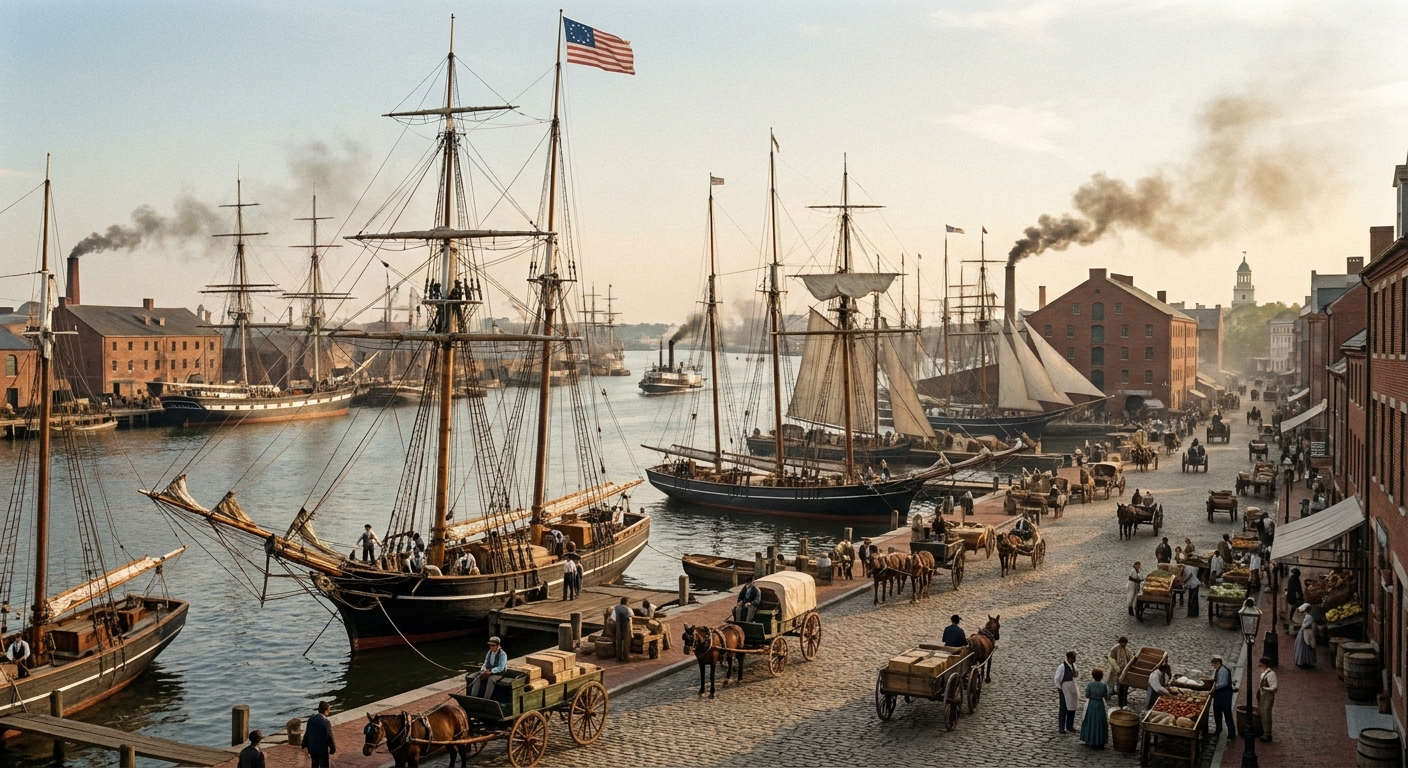
- Ports went quiet. In New England especially, the embargo felt like someone had put a padlock on the sea. If your paycheck depended on rigging, loading, or ship chandlery, there was not much “waiting it out.”
- Prices and livelihoods buckled unevenly. Some inland farmers could still sell locally. Coastal wage earners often could not, and cash got scarce fast.
- Smuggling surged. When law tries to stop an economy cold, the black-market warms up fast, especially along the Canadian border and the coast.
This matters because the embargo did something the War of 1812 would repeat on a larger scale: it forced Americans to experiment with making at home what they used to import.
1808: Enforcement hardens
As enforcement tightened, the embargo became not only an economic policy but a daily irritant. Businesses failed. Credit tightened. And politics turned bitter in seaports where the policy was felt as punishment.
March 1809: The embargo ends, but the bruise remains
The embargo was replaced by the Non-Intercourse Act, reopening trade with most nations but not Britain and France. Commerce revived somewhat, but uncertainty lingered like a bad cough. Merchants had learned that Washington could close the spigot. Farmers and consumers learned that global politics could decide what appeared in local shops.
1810 to 1811: Whiplash to war
1810: Macon’s Bill No. 2
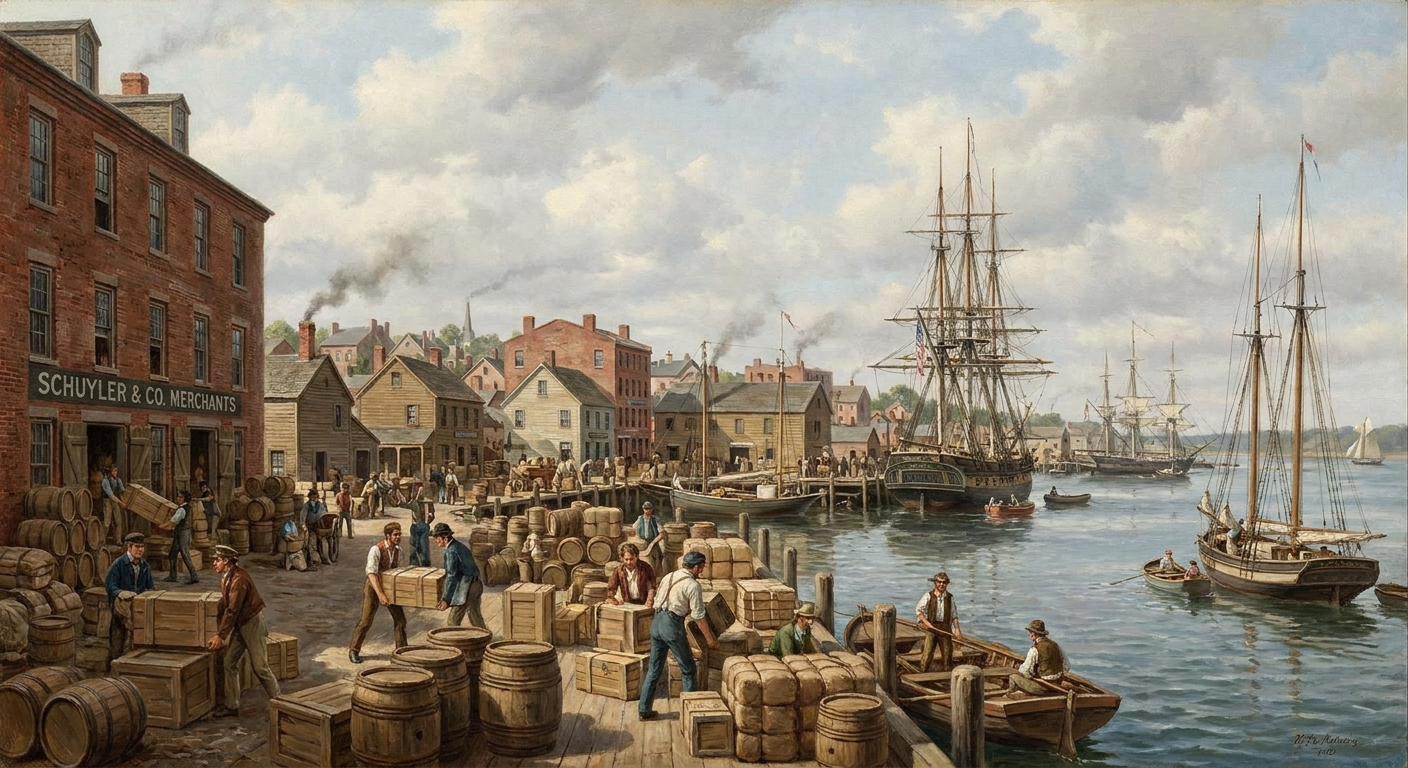
Congress tried yet another approach. Macon’s Bill No. 2 reopened trade with both Britain and France, then promised to restore nonintercourse against whichever power refused to drop its restrictions after the other complied. On paper it was clever. In real life it was another round of uncertainty for anyone buying inventory, insuring cargo, or extending credit.
1811: Financial anxiety grows
As the possibility of war sharpened, the risk in every commercial decision went up. Merchants worried about seizures at sea. Coastal communities worried about blockade. Western settlers had their own economic fears tied to land, security, and Indigenous diplomacy.
If you want one place where those pressures become painfully concrete, look at the aftermath of Tecumseh’s death and the violent dislocation around it: Life after Tecumseh.
1812: The economy turns martial
June 1812: War and immediate disruption
War did not simply add military spending. It rearranged daily commerce. Insurance rates spiked. Overseas trade routes became hazards. And in many places, the question was not “Can I afford it?” but “Can I get it at any price?”
- Coastal trade faces attack and interruption. Even before the blockade fully tightens, fear alone can choke shipping.
- Government needs cash fast. The federal government leans on loans and a banking system that is broad in number but uneven in reliability.
1812: A war financed with friction
The United States struggled to fund the conflict smoothly. Tariff revenue declined as trade shrank, and political opposition complicated national finance. Much of the burden fell on loans marketed through bankers and merchants, and on short-term borrowing that was vulnerable to bad news and bad timing.
In places I walk today, you can still sense the improvisation. A fort is repaired with what is on hand. A militia unit shows up with mismatched equipment. The “economy of war” is not an abstraction. It is shortage made visible.
For a broader orientation to this period’s major turning points, see our War of 1812 timeline guide.
1813: Blockade and inflation
1813: The blockade expands
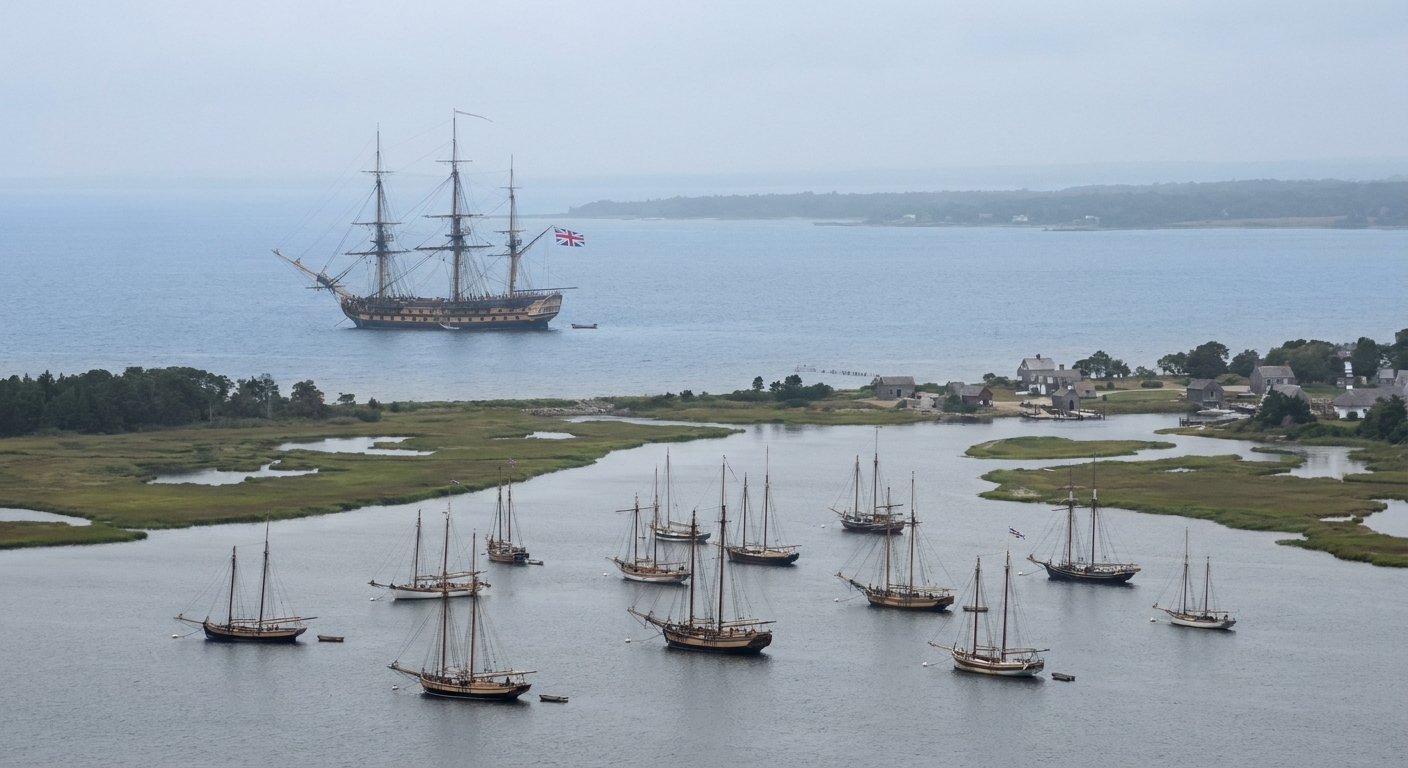
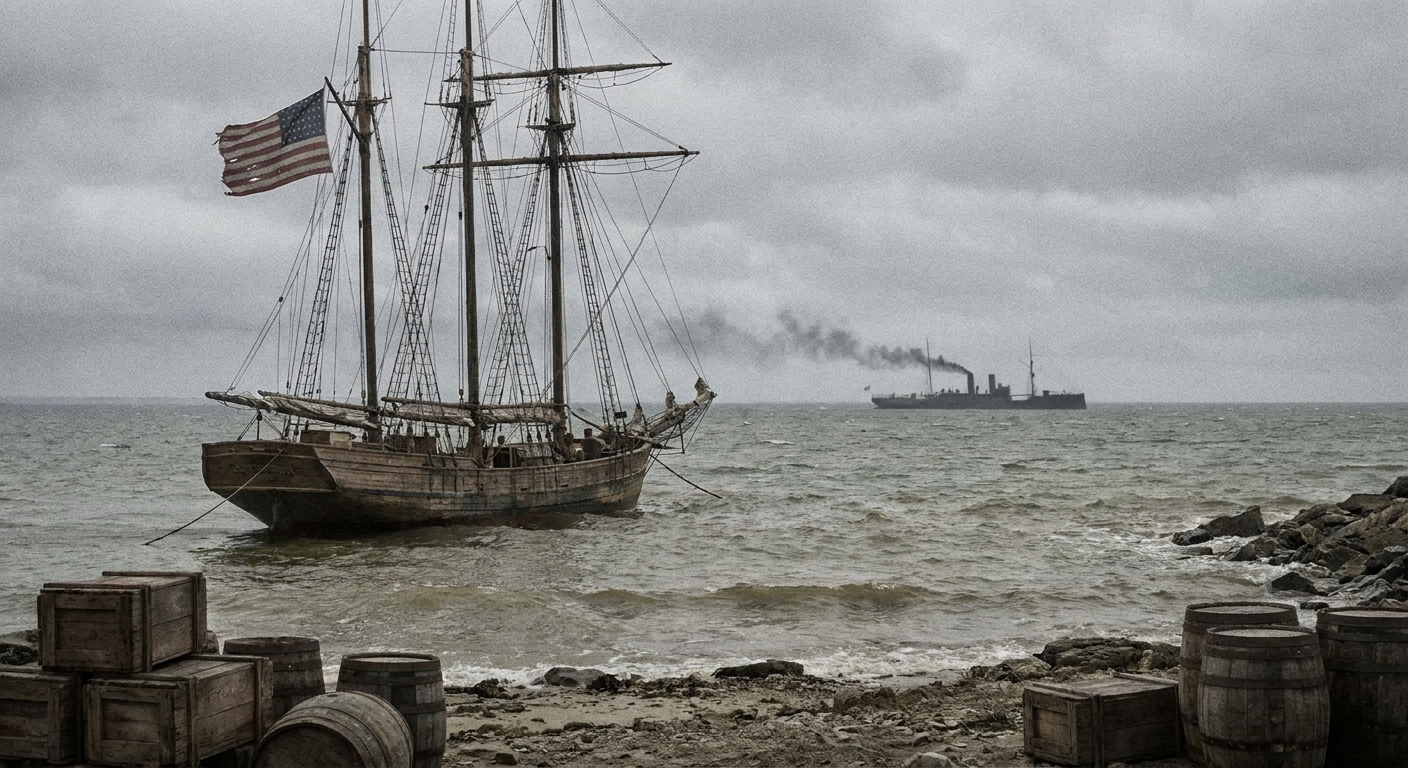
As the Royal Navy constricted American shipping more effectively, the war’s economic bite deepened. The blockade expanded in 1813 to cover much of the coast, and what had been expensive became scarce, then sometimes simply unavailable.
- Salt, sugar, coffee, molasses, and manufactured cloth were among the items that could become harder to find or suddenly costly. Families stretched what they had, substituted what they could, and learned which goods vanished first.
- Regional price gaps widened. Inland areas might still move grain or livestock locally. Port cities could be punished by their own geography.
1813: Privateers and profit
Privateering could generate spectacular profits for some investors and crews, and real pain for captured merchants. But privateers did not “fix” the economy. They redistributed risk and reward, and they added one more layer of uncertainty for shippers trying to plan beyond next week.
If you like naval stories that connect directly to commerce, the shipyard angle is one of my favorites: Perry’s shipyard miracle before Lake Erie. Wartime shipbuilding meant sudden demand for timber, ironwork, rope, sailcloth, and skilled labor.
1814: Peak strain
1814: Inflation and paper trouble
By 1814, wartime finance and disrupted trade fed price instability. In many areas, reliable hard currency was scarce. Banknotes varied in trustworthiness, and in much of the country specie payments were suspended late in 1814, making the whole system feel even more like a wager.
People learned to be amateur economists at the counter, judging which paper would be accepted and at what discount.
August 1814: Washington burns
The burning of Washington is often told as humiliation and spectacle. Economically, it also struck confidence. Governments run on credit as much as on law. When the capital is sacked, lenders notice. Merchants notice. Ordinary savers notice.
To revisit how the American defense failed so quickly, and how that failure echoed beyond the battlefield, see Beyond the Bladensburg Races.
1814: Supply is its own front
Even in campaigns far from Washington, economics sat at the center. Armies ate, marched, wore out shoes, and demanded transport. Contractors, quartermasters, farmers, and millers became part of the war machine, willingly or not.
On the northern front where I spend a lot of my own walking hours, supply and shipbuilding mattered as much as courage. Sackets Harbor, for example, was not only a place of battle but a logistical hinge: Sackets Harbor battlefield walking guide.
1815: Peace and whiplash
Early 1815: Trade reopens fast
Peace did not bring an immediate, gentle settling. It brought a sudden reopening of Atlantic trade, and that meant a surge of British manufactured goods into American markets hungry for textiles and hardware.
- Consumers cheered. Prices could fall as imported goods reappeared.
- Many young American manufacturers panicked. Wartime scarcity had sheltered them. Peace exposed them to fierce competition.
1815: The tariff argument changes
During the war, self-sufficiency had felt like survival. After the war, it became policy. Calls grew for protective tariffs not just to raise revenue, but to keep domestic industry alive.
1815: Veterans come home
Demobilization meant thousands of men looking for wages in a shifting market. Some had back pay issues. Some carried injuries that limited their labor. Families had adapted to absences and loss, and now had to adapt again to a peacetime economy that was not instantly prosperous for everyone.
If you are researching the human paper trail of service, disability, and financial claims, this is a good companion piece: Tracing War of 1812 military and pension records.
1816: Stabilizing money
1816: Second Bank chartered
Wartime chaos revived an old argument: a nation needs a more coherent financial system. The Second Bank of the United States was chartered in 1816, meant to help stabilize currency and credit after the messy patchwork of the war years.
To a shopkeeper, “bank reform” can sound far away. But it shows up in simple questions like: Is this banknote trusted? Will the price of flour hold from this week to next? Can I borrow without signing away my future?
1816: A protective tariff
The Tariff of 1816 is often cited as the first explicitly protective U.S. tariff, aimed in part at sheltering American manufacturing against cheaper imports. It was not the last tariff fight, not even close, but it marked a turn toward viewing industry as something the nation might deliberately cultivate.
1817 to 1820: Growth and crash
1817: Better roads, better routes
The war had exposed how hard it was to move men and materiel across a big country with limited infrastructure. In the postwar years, support grew for roads, canals, and other improvements, though politics often decided who paid and who benefited.
In my own region, you can practically trace this hunger for connectivity in the way communities talk about canals and turnpikes as if they were lifelines. They were.
1818 to 1819: Credit expands, then snaps
Postwar optimism and easier credit helped fuel expansion. Land speculation rose. New enterprises formed. Then the bubble tightened into the Panic of 1819, the first major peacetime financial crisis in the United States.
- Farm prices fell. Debts felt heavier.
- Bank failures and foreclosures hit hard, especially where speculation had run hot.
- Anger at banks and elites found a lasting place in American politics.
1820: A more complicated boom
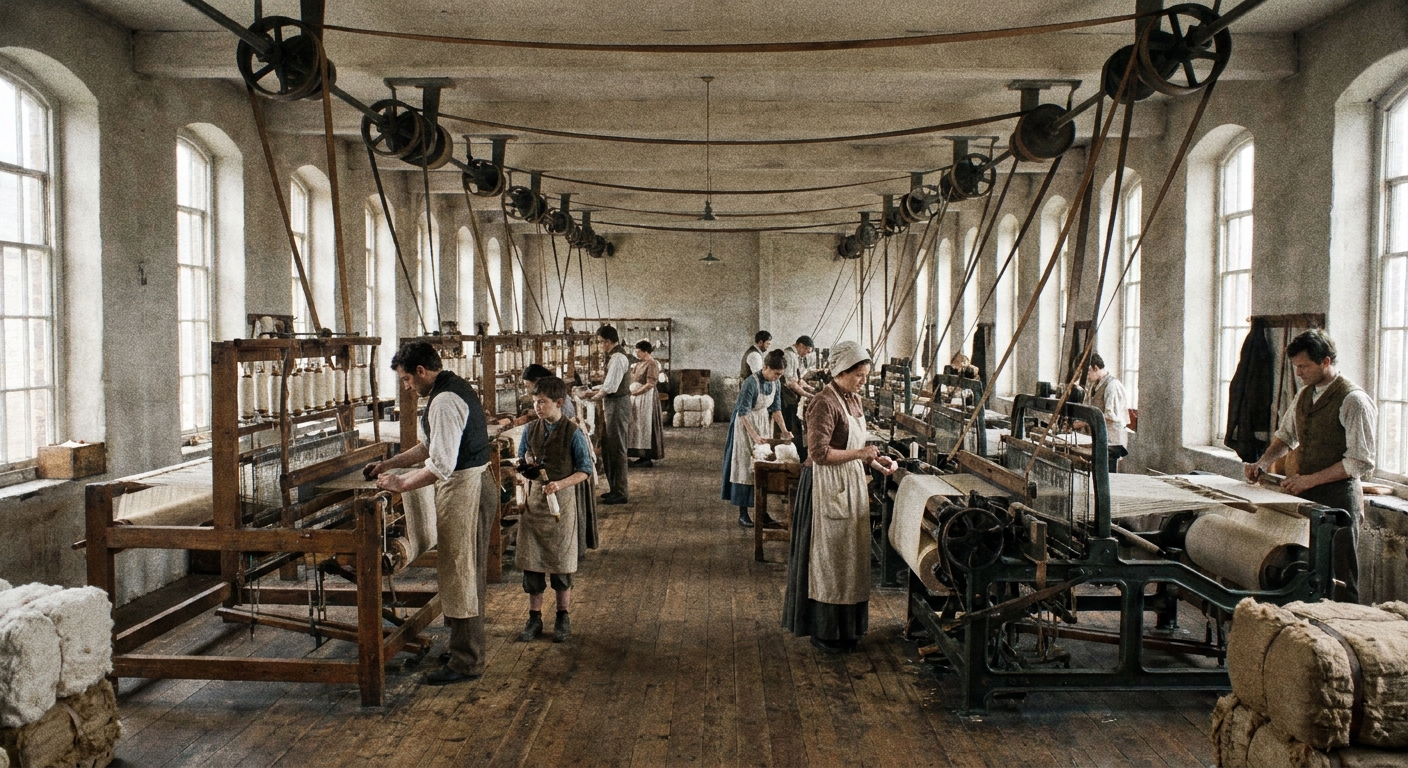
By 1820, the United States had undeniably changed. Manufacturing capacity had grown compared to the prewar years. Certain towns had learned to clatter with mills and workshops instead of living entirely by the tide and the crop. But that transformation came with winners and losers, and the scars of 1819 were fresh.
1820s: Long shadow
Industry and direction
The postwar years are often remembered as a calmer political season, at least on the surface. Economically, the United States leaned harder into:
- Domestic manufacturing as a national interest
- Protective tariffs as a tool, not just a revenue source
- Infrastructure projects as economic strategy
- Westward growth fueled by land hunger and credit
One reason I like telling the economic story this way is that it makes the War of 1812 feel less like an isolated event and more like a hinge. The embargo taught Americans what scarcity feels like. The war taught them what disruption costs. The peace taught them that reopening the world can be as dangerous as closing it, just in a different direction.
Ordinary people: What changed
When I visit local museums and small historical societies, the most affecting artifacts are rarely grand. They are humble, telling the everyday side of economics.
- Cloth and clothing: Wartime scarcity helped spur domestic textile production, especially in the Mid-Atlantic and New England. After peace, cheaper imports returned, but American mills did not simply vanish. The long-term shift toward domestic manufacturing had begun.
- Food and staples: Blockade and regional disruption could raise prices, especially in port towns. Salt, in particular, could turn into the kind of kitchen anxiety you feel every time you look at the barrel and wonder how long it has to last.
- Money and trust: A confusing mix of banknotes and shortages of hard currency taught people to be cautious. Postwar reforms aimed to restore confidence, but the Panic of 1819 showed how fragile credit could be.
- Work: New England shipping towns took some of the earliest hits from embargo and blockade, while other places found wartime opportunity in milling, transport, and government contracts. Then peace reshuffled the deck again. Veterans returned to a labor market that did not always have room waiting.
- Land and credit: In the West and along the frontier, wartime insecurity and postwar credit were tied to the same question: can a family hold onto its claim long enough to make it real?
Timeline at a glance
| Year | What happened | Economic ripple |
|---|---|---|
| 1807 | Embargo Act | Trade collapses, smuggling rises, coastal hardship spikes |
| 1809 | Non-Intercourse Act replaces embargo | Partial recovery, ongoing uncertainty |
| 1810 | Macon’s Bill No. 2 | Trade reopens, then conditional restrictions add uncertainty |
| 1812 | War declared | Trade risk surges, war financing strains federal revenue |
| 1813 | Blockade expands | Shortages and price instability deepen |
| 1814 | Financial stress peaks, Washington attacked | Confidence shaken, inflation and currency issues worsen |
| 1815 | Treaty of Ghent implemented, trade reopens | Import surge, young industries face sharp competition |
| 1816 | Second Bank chartered, tariff passed | Push to stabilize currency and support manufacturing |
| 1819 | Panic of 1819 | Credit contraction, foreclosures, political backlash |
Keep walking the story
If you want to connect this economic timeline to places where you can still feel the pressure points under your boots, I would start with waterways and forts. They were not just military assets. They were economic arteries and choke points.
Because in the end, “embargo to boom” is not a tidy upward line. It is a lived experience. It is a mother stretching coffee with whatever she can find. It is a merchant squinting at a banknote. It is a shipwright with plenty of work in 1813 and none in 1816. And it is a nation learning, the hard way, that wars are fought not only with muskets, but with credit, cargo, and confidence.