
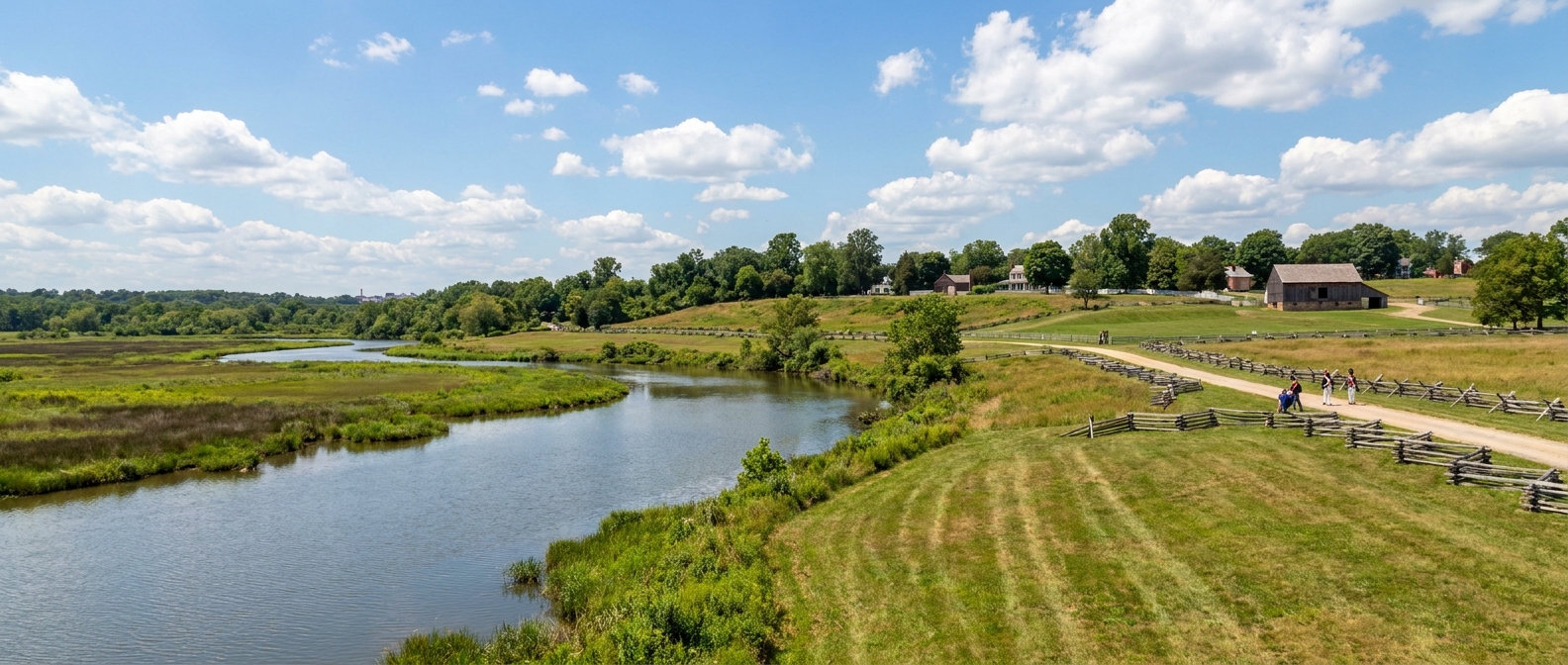
I have walked the ground around Bladensburg on hot afternoons when the air feels heavy enough to hold a musket ball in place. It is hard not to picture what August 24, 1814 must have felt like: the shimmer of heat over the Eastern Branch, the taste of dust, the nervous fidgeting of militiamen who had drilled just enough to look like soldiers from a distance. Later, people would laugh bitterly and call it the “Bladensburg Races.”
But a rout is rarely just a punchline. Bladensburg was a systems failure that exposed how the United States prepared for war, how it imagined citizen soldiery could substitute for trained formations, and how scattered command arrangements can turn courage into confusion. And in one of history’s sharper ironies, the defeat helped push American leaders to take professional training and coordination more seriously than many had wanted to for decades.
What happened at Bladensburg
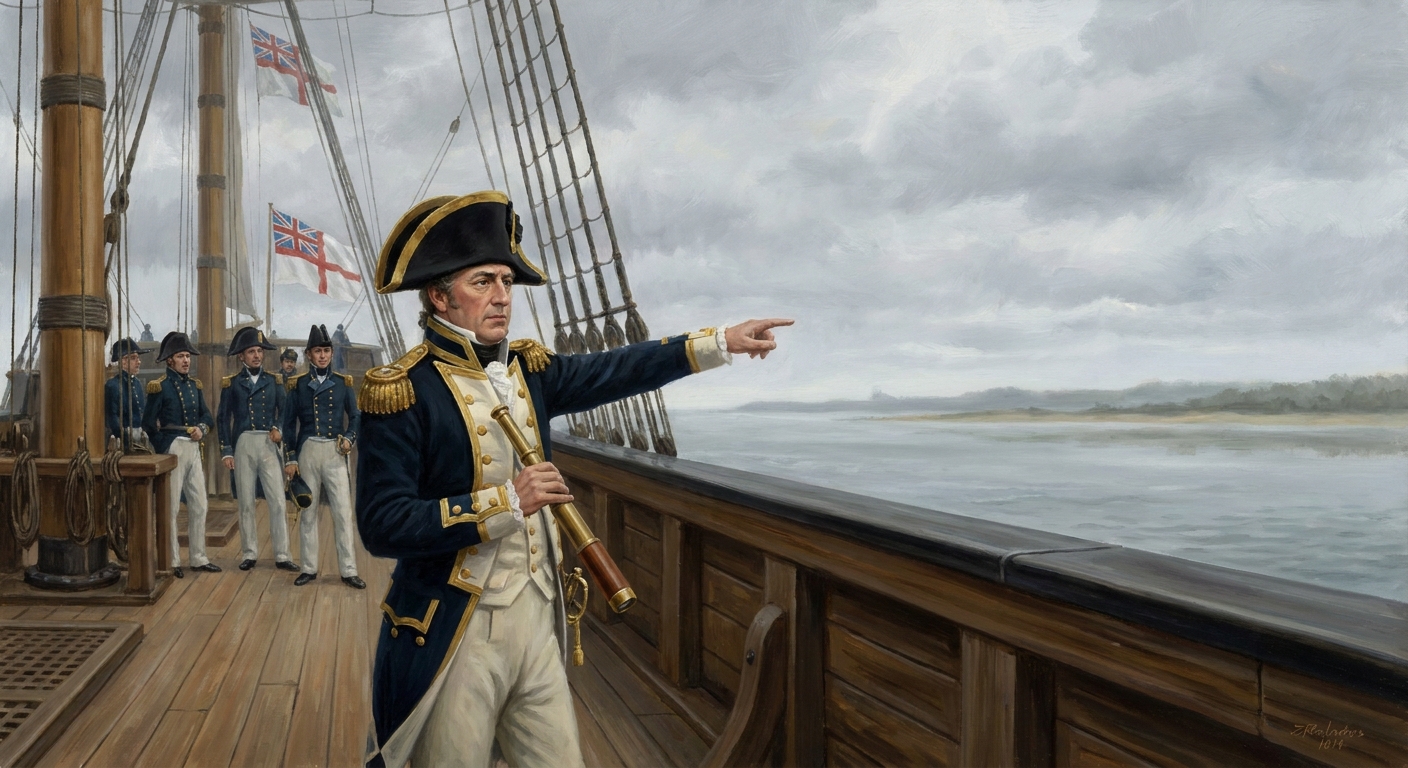
Bladensburg was not a grand set-piece battle in the Napoleonic sense. It was a hurried defensive line thrown together to stop Major General Robert Ross’s land force as it marched toward Washington, with Rear Admiral George Cockburn alongside the expedition, pressing the campaign forward and sharing in the direction of its movement and targets.
The Americans were a patchwork: regulars, sailors and Marines under Commodore Joshua Barney, District militia, Maryland militia, and other short-service units, all trying to behave like a single army on a day when everything punished inexperience. Brigadier General William H. Winder, tasked with defending the capital region, was the senior American commander, but on the field the arrangements were improvised, and the chain of authority never truly settled into something everyone could feel.
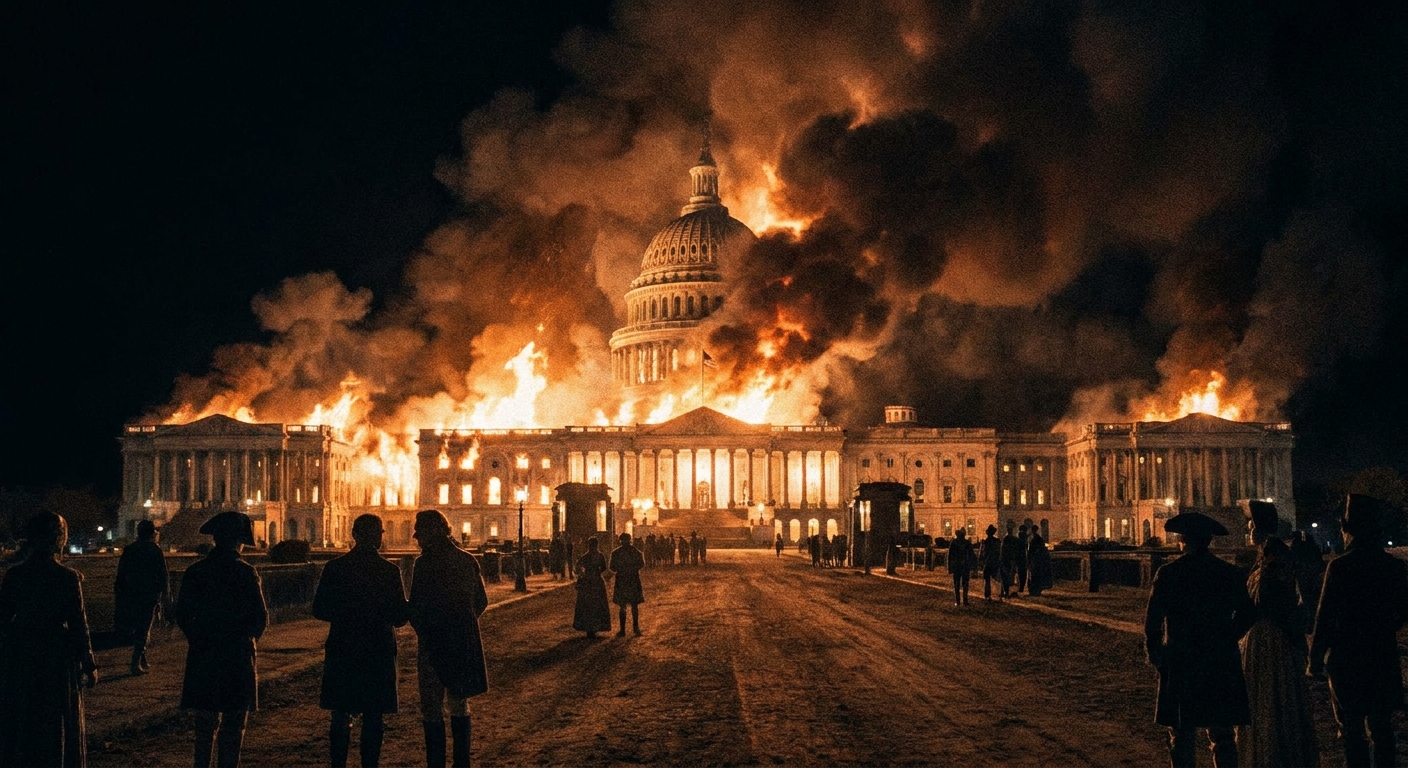
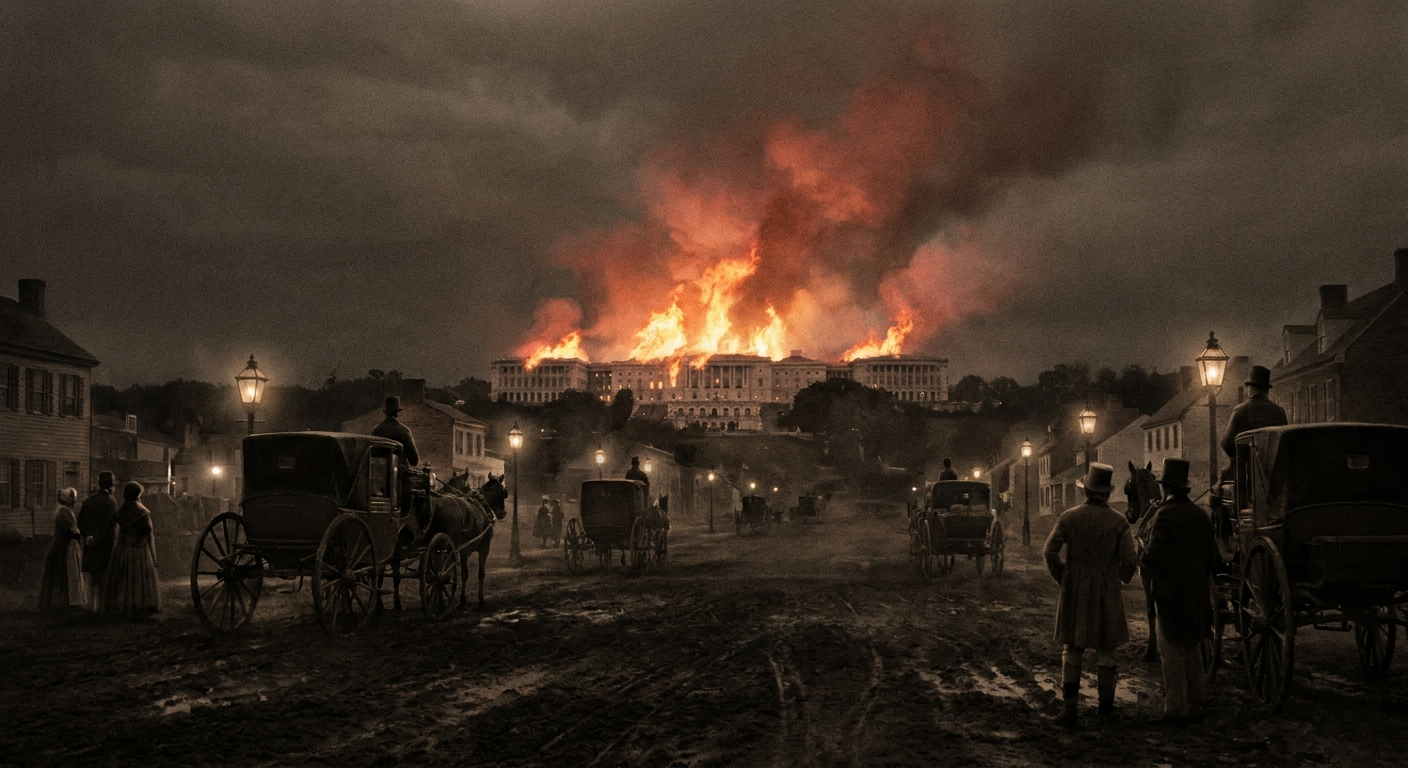
The basic outline is simple. The British came in from the east, made their main push at the bridge over the Eastern Branch at Bladensburg, and forced their way across under fire. Once across, they pressed the American positions in depth. The American line collapsed in sections until flight became contagious. The capital was left open, and the British entered Washington that evening and burned major public buildings.
The reasons for that collapse are where the real story lives.
If you want the larger arc of how the war led to that moment, the site’s timeline guide is a good companion.
Why the line broke
1) A position that looked better on paper
Bladensburg’s approach routes, creek crossings, and small rises could have been used to slow an attacker. But the American defensive arrangement did not fully exploit them. The defense formed in multiple lines, with militia placed forward and other elements deeper, yet those lines did not consistently support one another. Gaps, awkward angles, and limited fields of fire meant that when one portion started to give, it did not have a nearby handhold to steady itself.
Any line of battle is a promise: hold here, and the rest of us will hold with you. At Bladensburg, that promise was easy to break because the line was not built with mutual support in mind.
2) Confused command and mixed expectations
Bladensburg gathered leaders and units that had not trained together and did not share a common operating rhythm. Some commanders expected militia to stand like regulars. Some militia expected to fight like militia: a few volleys, local defense, then a fall back if the position turned. Those are not moral categories. They are training outcomes.
On top of that, the Americans were not acting from a single, clearly understood plan. When withdrawals began in one area, men elsewhere read it as a general collapse. Messages moved unevenly along the line. The moment a force begins interpreting instead of executing, cohesion is already slipping.
3) Heat and the limits of short-service forces
We tend to talk about morale as if it is purely psychological. In August heat, morale is physiological. Many militia arrived tired and dehydrated. Some had marched or waited under the sun for hours, then were asked to absorb the shock of a professional assault. When people are overheated and undertrained, they do not merely “lose heart.” Their bodies lose function.
4) British steadiness and momentum
Ross’s men were not invincible, but they were practiced at moving under fire, re-forming, and pressing. They had confidence in their drills because drills had worked for them before. British rocket fire, including Congreve rockets, also added a terrifying sensory dimension. Even when rockets did not kill many men, they could break the calm needed to keep loading and firing in step.
5) Barney’s stand proved the point
The defense did have a hard core. Commodore Joshua Barney’s sailors and Marines fought stubbornly and handled their guns with professional steadiness. Their fire punished the British advance, and Barney himself was wounded in the fighting and ultimately captured when the position could no longer be held. I do not read that stand as a romantic footnote. I read it as evidence of the central lesson: training and cohesion do not guarantee victory, but they give you a fighting chance to keep thinking when the air turns to smoke.
For readers who like to explore the human cast around battles, the site’s people guide is a helpful starting point.
Why the nickname stuck
The phrase “Bladensburg Races” stuck because it fit a painful narrative Americans already feared: that the republic’s suspicion of standing armies had left it unprepared. The humiliation was not only military. It was civic. Washington burned within view of people who assumed the capital was untouchable simply because it was the capital.
Public embarrassment can be a shallow motivator, but it is an effective one. Bladensburg made it difficult for political leaders to argue that minimal preparation was sufficient. It also made it easier for reformers to point at something concrete and say, “This is what unready looks like.”
What changed after
Bladensburg did not modernize the U.S. Army overnight, and it did not do the work by itself. But it sharpened arguments that had been simmering since the Revolution and gave them fresh urgency. In plain terms, the United States began taking preparedness more seriously, not just in weapons and forts, but in how men were trained to fight together and who, exactly, was responsible for making that happen.
From militia faith to system
Before 1812, Americans often treated militia service as a civic virtue that could be converted into battlefield performance when needed. Bladensburg showed the conversion was not automatic. The result was a gradual shift in how leaders talked about readiness:
- Standardized drill mattered. Not drill for its own sake, but drill as a shared language under stress.
- Integration mattered. Regulars, militia, sailors, and Marines needed clear command relationships and expectations, not improvisation at the moment of contact.
- Staging mattered. A man who arrives dehydrated and hungry is already half defeated.
Officer education gained oxygen
The United States already had West Point, founded in 1802, but its broader influence took time. War experiences, including the public failure at Bladensburg and the hard-earned successes elsewhere, made professional military education feel less like aristocratic posturing and more like national insurance.
Over the following years, the Army’s center of gravity moved slowly toward officers who could plan and coordinate beyond their immediate frontage, and toward technical competence in engineering and artillery. Those were not abstract ideals. They were responses to very specific embarrassments: roads, rivers, heat, timing, and the simple fact that bravery cannot substitute for organization.
Practice became policy
Americans in 1814 were not writing “doctrine” in the modern bureaucratic sense, but they were learning the same lesson modern doctrine tries to capture: successful units share assumptions about what happens next. At Bladensburg, too many people were guessing. In the years that followed, the Army pushed toward more consistent organization, clearer chains of command, and training that emphasized coordinated movement and disciplined fire.
Militia reform, uneven but real
Militia did not disappear, and reforms were uneven across states. But the debate changed. After Bladensburg, it was harder to defend the idea that militia could remain loosely trained and still be expected to face veteran troops in the open. Some states improved training expectations. Others leaned more heavily on volunteer units that drilled more frequently than traditional militia.
The deeper shift was cultural: the United States began to accept that a citizen republic still needed professional competence to survive.
Modernization you can trace
When I talk about modernization, I do not mean a single law or a magic manual. I mean a set of habits that became more common because the old habits had failed so publicly.
1) A stronger place for regulars
The War of 1812 produced enough examples of effective regular performance that political leaders could justify maintaining a more capable regular force. Bladensburg, where the least-trained segments tended to break first, reinforced that argument.
2) More respect for artillery and engineers
Barney’s guns at Bladensburg were a lesson in what disciplined crews can do even when everything else wobbles. The war also underscored the importance of fortifications, fieldworks, and coastal defenses. That fed an American appetite for engineers and artillerymen who treated their work as a profession.
3) Clear command as survival
Bladensburg punished unclear authority. Later American practice increasingly emphasized defined command relationships and staff work, the unglamorous planning that keeps units from tripping over one another in the moment that matters.
4) Training as readiness
One of the most damaging myths about early militia drill is that it was only pageantry. It was not, and it could have been useful, but too often it was too rare, too inconsistent, and too disconnected from realistic battlefield problems. The post-war drift toward more systematic training was not about looking sharp on the green. It was about staying coherent when the line starts to bend.
Walking it today
If you visit the area, go with two questions in your pocket: where could a line actually support itself, and where would you run if the man beside you ran? Terrain makes philosophers out of us because it strips away comforting abstractions.
As you look across open spaces and toward the water crossings, it becomes easier to understand how fear can move like a wave. It also becomes easier to respect the few pockets that held, because holding is not merely courage. It is organization made flesh.
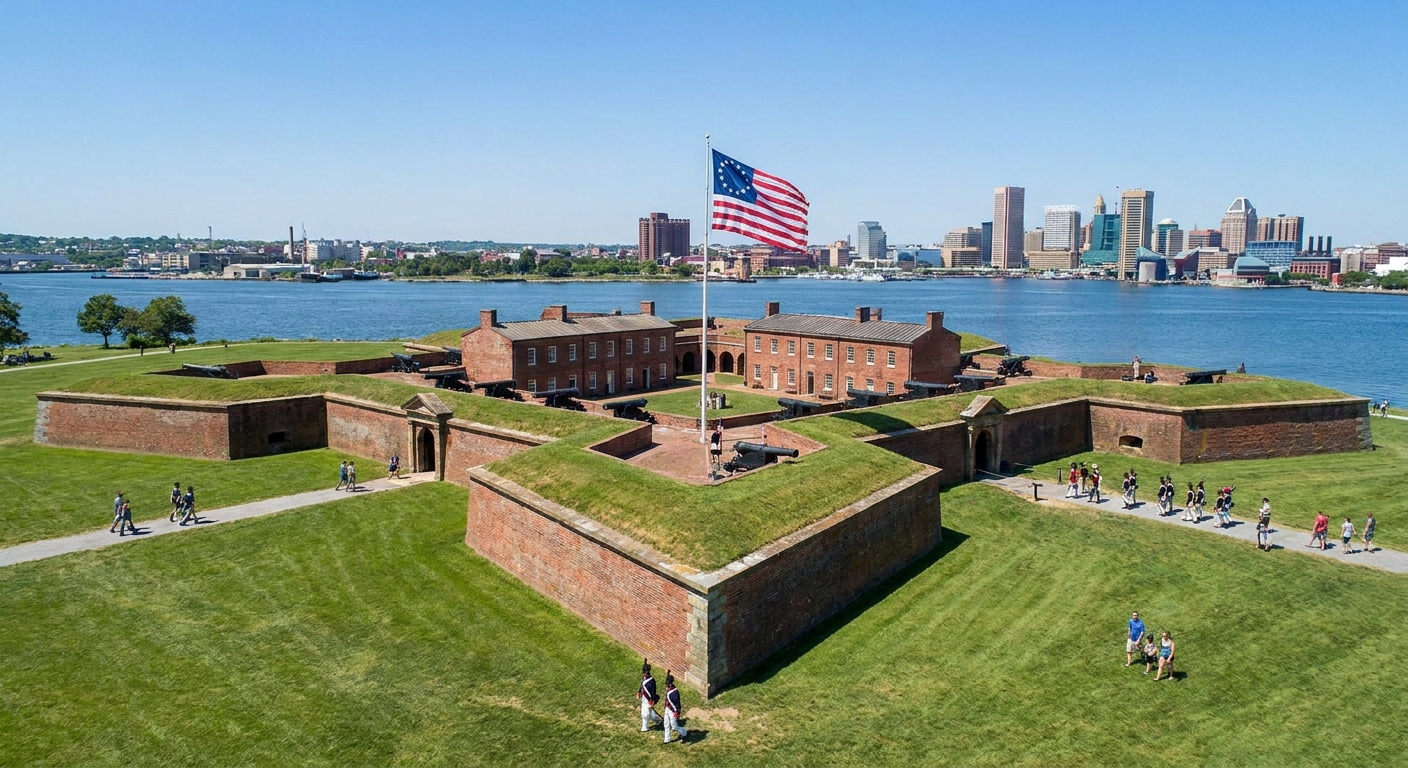
For more trips like this, start with the site’s historic sites guide and the broader battles guide.

The lesson beyond the joke
It is easy to repeat the old nickname and stop there. But Bladensburg deserves better than a laugh, even a bitter one. The defeat showed Americans the cost of treating preparation as optional and training as something you can improvise when the enemy appears on the road.
That clarity, paid for in panic and smoke, helped push the United States toward a harder, more modern understanding of military readiness. Not just better weapons or higher walls, but people trained to think and move together under pressure. In the long run, that may be Bladensburg’s most important legacy: it forced a young nation to admit that bravery without practice is a fragile shield.