

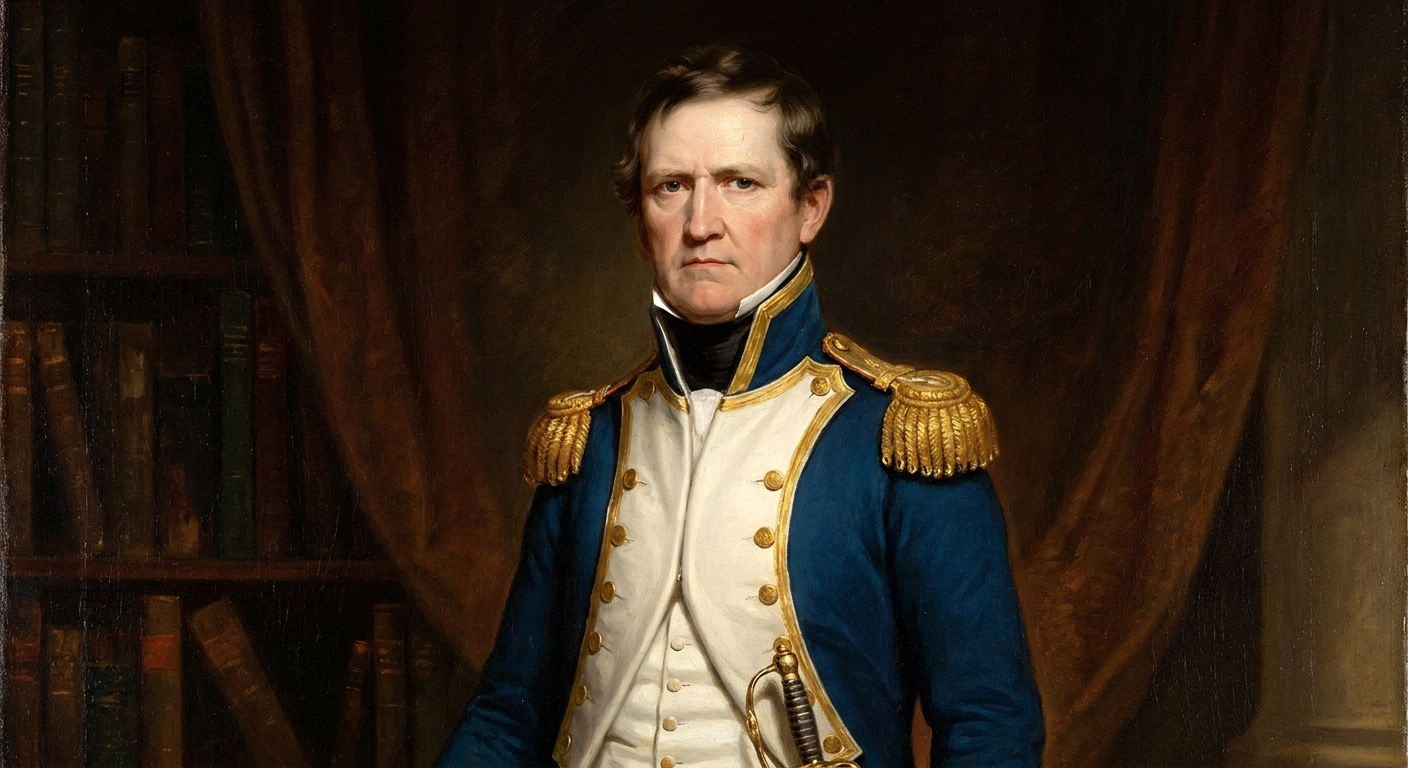
I grew up in upstate New York where you can still walk from farm fields into history without trying. My grandfather did that on purpose. He would slow down at half-buried markers and say, “That name mattered.” Winfield Scott was one of those names. Not because he won every fight, but because he took what went wrong in 1812 and turned it into habits and written routines that helped shape the Army for decades.
Scott’s War of 1812 story is not just about famous battles like Chippawa or Lundy’s Lane. It is about an ambitious young officer watching an institution fail ordinary soldiers, then building a remedy so stubborn and so practical that it outlasted him. When you hear about “regulars” acting like professionals in later wars, a lot of that tone begins here, in Scott’s frustrations, notebooks, and insistence on standards.
The Army in 1812
In 1812 the U.S. Army was small, scattered, and pulled in three directions at once: frontier posts, coastal defense, and political pressure to strike Canada quickly. On paper, the United States could raise forces. In practice, many units were short on training, short on experienced officers, and often short on the mundane things that keep men alive in the field: reliable supply, clear organization, and discipline that felt fair instead of arbitrary.
Scott arrived as a young officer with a lawyer’s mind and a believer’s faith in order. He was not alone in seeing the cracks, but he was unusual in how personally he took them. He did not treat chaos as inevitable American roughness. He treated it as a fixable defect.
If you want a quick refresher on how the war’s moving parts fit together, the best starting point is our timeline overview: Guide to the War of 1812 timeline.
Capture and Consequence
Scott learned early that courage does not compensate for bad systems. In the opening campaigns along the Niagara frontier, Americans stumbled through uncertain command arrangements, shaky coordination with militia, and tactical misunderstandings about what British regulars could do. Scott’s own experience included capture and confinement in the aftermath of Queenston Heights, after the fighting broke and the American foothold across the river collapsed.
It is tempting to tell that story as a simple tale of a young man embarrassed and eager to redeem himself. But the deeper point is what he did with the embarrassment. Scott fixated on the causes: units that had not drilled together, officers who did not share a common playbook, and an Army culture that treated professional training as optional until bullets started flying.
Those early Niagara lessons sit in the same muddy corridor of the war as two of the conflict’s best-known border fights. For context, see: Queenston Heights vs. Lundy’s Lane.
The Notes That Became a System
Scott’s blueprint was not a single document dashed off after one battle. It was a habit. He read obsessively, argued about systems, and watched how British regulars moved, formed, and recovered under fire. Where many Americans saw stiff European style, Scott saw something else: predictability. Predictability meant a private could anticipate the next command, an officer could trust his line, and a whole brigade could change shape without dissolving into noise.
His takeaway was blunt: an Army that improvises everything will eventually improvise its own defeat.
Chippawa
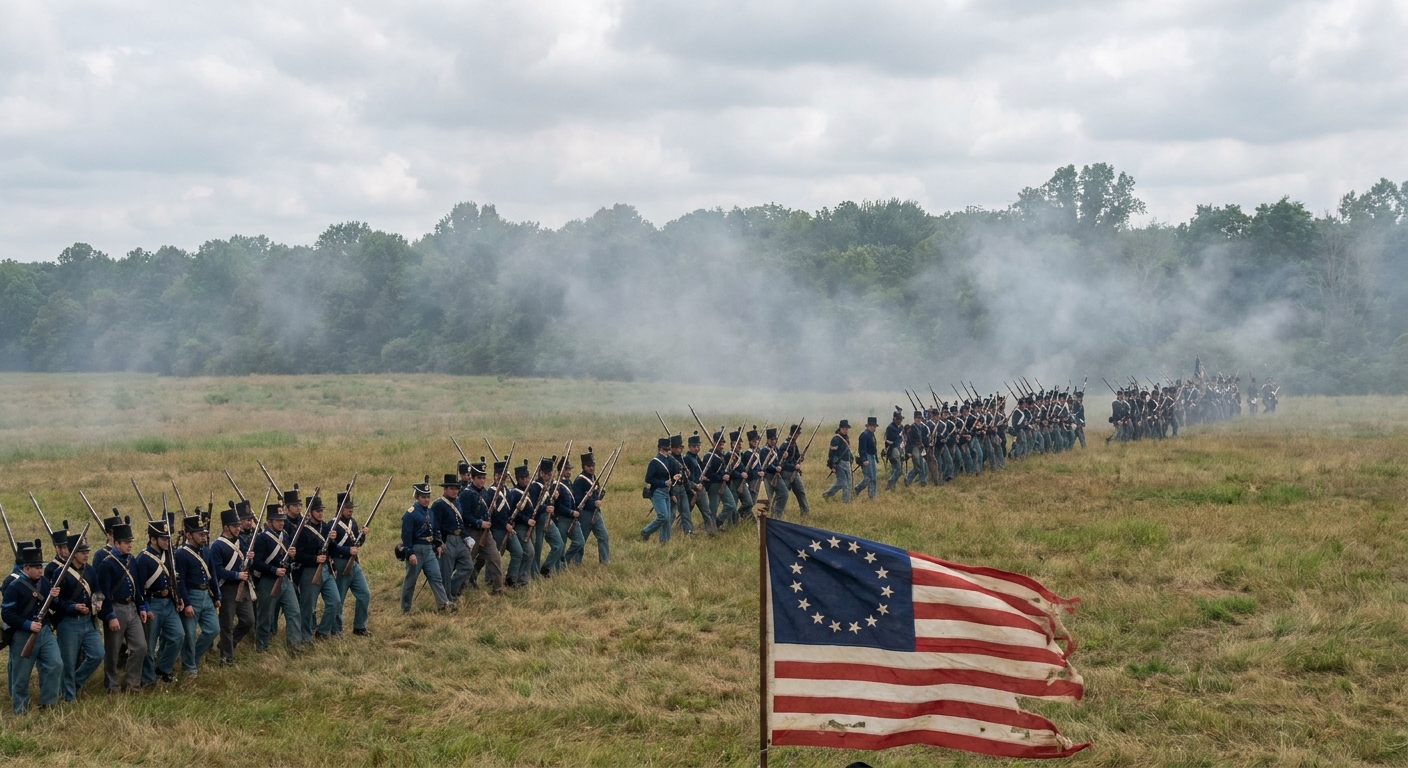
By 1814, Scott had a chance to prove that drill and discipline were not just parade-ground vanity. At Chippawa, the U.S. Army finally put a formation on the field that behaved like a formation under stress. American regulars held, maneuvered, and struck with a steadiness that British officers could not always count on seeing from U.S. troops earlier in the war.
Chippawa mattered for two reasons. First, it was a tactical win that restored confidence in regulars. Second, it was evidence. Scott could point to a result and say: this is what training buys you.
Lundy’s Lane
Then came Lundy’s Lane, a brutal night fight that feels, even now, like stumbling into a thunderstorm made of musket fire. The battle did not offer the clean satisfaction of a simple victory. It offered something closer to a stress test of the Army Scott wanted, and of the Niagara campaign as a whole. Scott himself was wounded early and did not direct the later phases, which is part of the point. Systems have to function when the “right” personality is gone from the front line.
Under confusion, darkness, and heavy casualties, the units that could keep cohesion and keep obeying orders had an edge. Not an edge that prevented suffering, but an edge that kept an Army from coming unglued.
This is one of the hard truths Scott learned and later tried to bake into doctrine: professionalism does not make war gentle. It makes war survivable.
After the War
After 1815, the temptation for the United States was to exhale, shrink the Army, and treat the war as an unpleasant exception. Scott never entirely accepted that. He saw the War of 1812 as a warning flare. If the country would not keep a huge standing force, then the force it did keep had to be unmistakably competent.
Over time, Scott gained the senior authority to make his preferences harder to ignore, including a long tenure at the top of the Army. And crucially, he pushed his ideas into writing. His 1835 infantry tactics manual, revised later, helped standardize how soldiers drilled and how officers talked to their units. That is the bridge between a hard-learned wartime lesson and something that can be handed to a new lieutenant decades later.
1) Drill everyone can share
Scott championed the idea that units across the Army should move and fight using shared drills and shared expectations. That could mean something as simple and lifesaving as getting every company to form line, change front, or shift from column to line without turning into a crowd. When an Army speaks in dialects, battlefield coordination becomes translation, and translation costs time.
2) Discipline that builds trust
Scott was strict, famously so, but his strictness had a purpose. He wanted soldiers to believe that orders would be consistent and that competence would be recognized. In 1812, many volunteers and militia were asked to perform military tasks with little preparation and uneven leadership. Scott’s answer was not to sneer at them. It was to build an Army where a private could predict what “right” looked like.
3) Officers who study
Scott pushed an officer culture that treated reading, practice, and preparation as part of the job. The War of 1812 had exposed a problem the young republic hated admitting: patriotism does not automatically produce skilled commanders. Scott’s postwar approach leaned into institutions, manuals, and training routines that could outlast individual charisma.
4) Readiness you can see
Scott’s reputation for polish has made him an easy caricature, “Old Fuss and Feathers,” as if clean lines were a hobby. The nickname is better read as a later-career verdict on habits he made visible early: inspection, attention to equipment, and the belief that small standards are rehearsal for terrifying ones. In the early 19th century, appearance often signaled something practical: whether men were being checked, whether officers cared about detail, and whether a unit could be relied upon to do basic things correctly before being asked to do impossible things correctly.
Not Just One Man
Scott did not professionalize the U.S. Army alone. The War of 1812 produced other hard-headed reformers and competent field commanders, and West Point-trained officers were already nudging the service toward a more technical, standardized culture. Scott’s distinction is how relentlessly he pressed the lesson, and how long he stayed in a position to keep pressing it.
Why It Lasted
Scott’s influence stretched because it addressed a uniquely American dilemma. The nation distrusted large standing armies, yet it kept stumbling into crises that demanded trained soldiers and trained leaders. Scott offered a compromise: keep the peacetime Army relatively small, but make it a schoolhouse for professionalism.
When later generations talked about the regular Army as a standard bearer, they were often inheriting a culture Scott helped harden into place. It showed up in drill, in expectations for officers, and in the assumption that the Army should be governed by written systems rather than improvisation and personal whim.
On the Niagara Today

When I walk Niagara battleground today, I try to imagine what a young officer actually experienced: the weight of wet wool, the ache in the legs from marching, the awful knowledge that the next command might be wrong. Scott’s reforms make more sense when you picture that lived reality. He was building an Army that could function even when the men in it were hungry, scared, and half-deaf from firing.
If your own interest runs toward following the war through places you can still stand, our site guide is a good launch point: Guide to historic sites.
What to Remember
- He treated failure as data. Early embarrassment and chaos did not just fuel his ambition. It shaped his belief in systems.
- He proved training under fire. Chippawa and the Niagara campaign showed what drilled regulars could do when the fight turned serious.
- He wrote professionalism down. A tactics manual and standardized routines made his lessons portable across generations.
- He was part of a larger shift. Other officers and institutions mattered, but Scott kept the pressure on long enough for habits to become culture.
And if you want to keep pulling this thread through the people who shaped the war and its aftermath, start here: Guide to people of the War of 1812.