
I grew up in upstate New York, close enough to the old invasion routes that you can still feel the war in the shape of the land. When I was a kid, my grandfather would stop at forgotten markers and tell me, almost offhandedly, “They traded men right here.” He did not mean in the clean, diplomatic sense. He meant hungry, sick, homesick men, shuffled across waterlines and dirt roads by paperwork and promises.
Prisoner exchange in the War of 1812 was never just a courtesy between officers. It was a system. It had rules, loopholes, and plenty of resentment. Some of it ran on honor, like parole. Some of it ran on hard accounting, like cartel ships and rank tables. And some of it broke down when the war’s politics turned prisoners into leverage.
This guide walks the prisoner exchange story in chronological order from 1812 through 1815, focusing on how paroles and maritime exchanges functioned in practice, and why agreements frayed as the war moved into its late, bitter phases.
For broader context on the war’s pace and turning points, you can jump out to our main timeline guide and then come back here when you want the prisoner story in one straight line.
How the system worked
Before we start ticking through dates, it helps to know the moving parts you will see repeated across theaters and years.
Parole
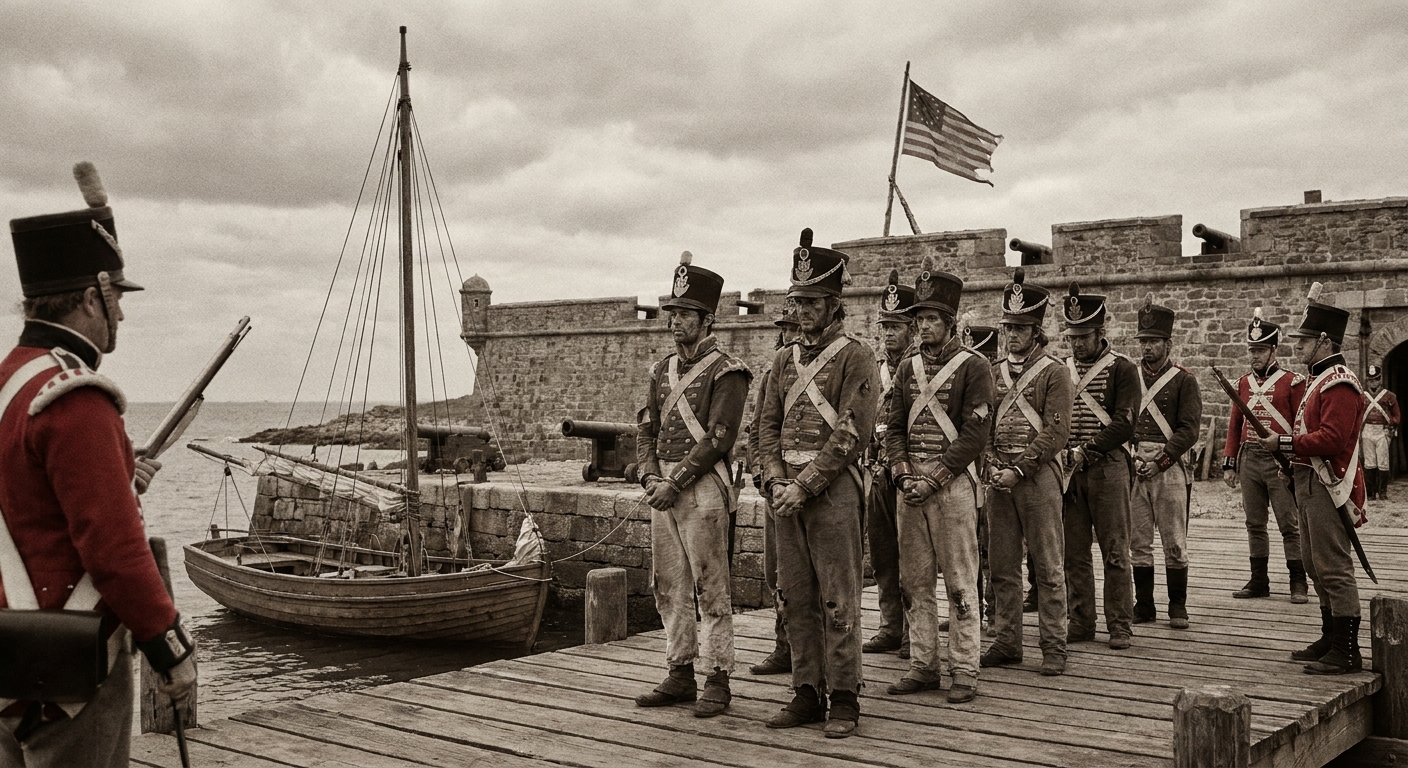
A prisoner released on parole gave his word not to fight until properly exchanged. In practice, parole could mean anything from an officer living in relative freedom in a town, to a private soldier confined locally but not shipped. Parole was a pressure valve when prisons were overcrowded, transport was risky, or commanders simply wanted to get rid of mouths to feed.
Paroles were not casual promises. They were typically written certificates listing names, units, dates, and the terms of release. In theory, a paroled man who returned to duty too early could be treated as violating his word and subject to harsher treatment if recaptured. In practice, accusations of parole breaking were one of the quickest ways to poison later exchange talks.
Cartels and cartel ships
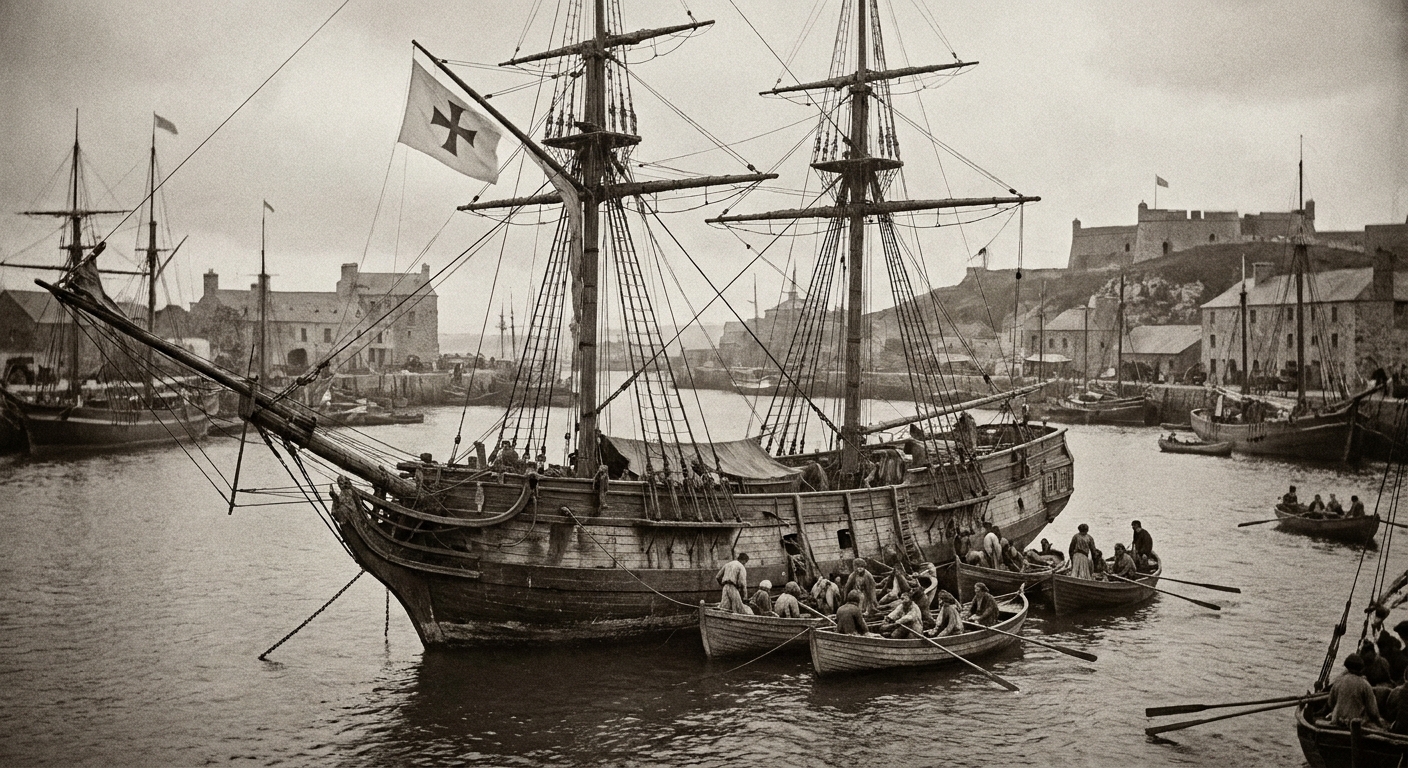
A cartel was an exchange agreement, and it was also the term often used for vessels sailing under a flag of truce to move prisoners pursuant to that agreement. These ships were not “neutral” in the modern sense. They traveled by mutual consent and custom. If consent was withdrawn or disputed, cartel movements could be delayed, searched, seized, or simply refused entry.
What did that look like in practice? Usually it meant an agreed port or anchorage, a flag of truce run up where everyone could see it, and an exchange of paperwork before an exchange of bodies. Manifests listed names and ranks. Receipts acknowledged delivery. Disputes over identity and category could stop the whole process until a higher authority answered the letters.
Exchange equivalents
Exchanges were bookkeeping as much as mercy. Officers were generally worth more than enlisted men in the accounting, often via negotiated rank tables. A captain might be traded for multiple privates, for example, but the exact numbers and categories could vary by agreement, theater, and moment of the war.
Where prisoners actually went
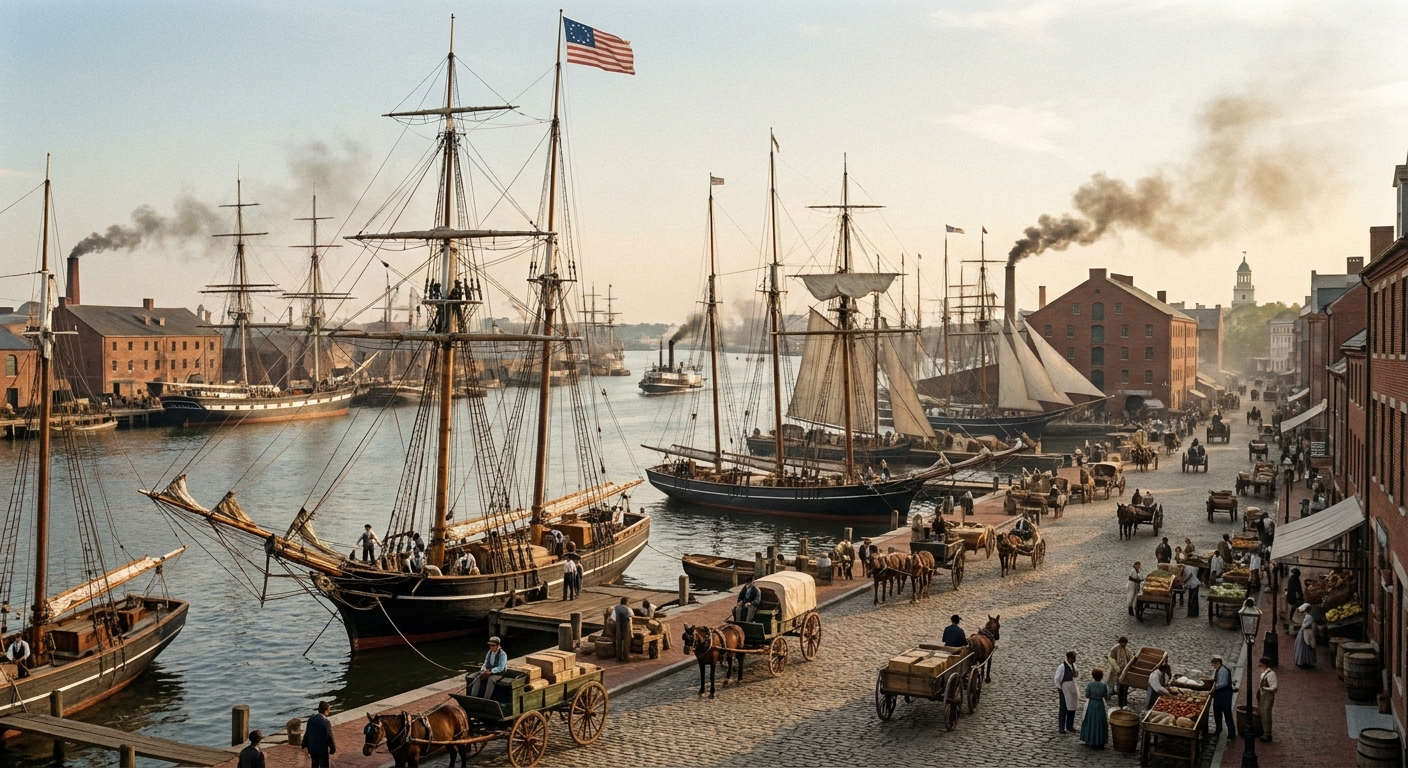
On land, prisoners might be held in forts, barracks, or improvised depots, or paroled into nearby towns when there was nowhere to put them. At sea and in coastal warfare, captured seamen were commonly concentrated in port prisons and, at times, prison hulks. In British North America, Halifax and its prison facilities became a recurring waystation, and the prison depot on Melville Island in Halifax Harbour shows up in many captivity accounts from the era. That difference matters because maritime captivity depended on the rhythm of shipping. If cartel traffic slowed, sailors piled up in the same places, waiting on a ledger that did not move.
Friction points that kept returning
- Nationality: Britain often claimed that some captured American seamen were actually British subjects, especially men believed to be impressed deserters or British born. The United States rejected that premise, and the argument became painfully concrete once those sailors were in prison.
- Privateers: Privateering was lawful under prevailing rules of war, but Britain saw U.S. privateers as a serious menace to commerce. Even when privateer crews were treated as prisoners of war, paperwork could become a weapon. Was the vessel properly commissioned? Did the crew match the roll? Were the ship’s papers in order, or conveniently “lost”?
- Race and status: Late-war exchange disputes got tangled in two related, but distinct, issues: people who fled slavery to British lines and were not returned as “property,” and Black soldiers and sailors serving in U.S. forces who the United States insisted must be treated as lawful prisoners of war if captured. When either side believed the other was crossing a line, retaliation threats followed, usually as blunt declarations that captives would be treated “the same way” until the dispute was resolved.
1812: Improvisation
June to August: War begins
When war broke out in June 1812, both nations had experience exchanging prisoners in earlier conflicts, but there was no single, smooth War of 1812 exchange machine ready to go. Early captures were handled locally. Commanders used parole because it was quick, because holding facilities were limited along the frontier, and because marching prisoners long distances invited escape, disease, and reprisals.
August: Detroit and mass paroles
General Hull’s surrender at Detroit created a mass prisoner event early, forcing British and American authorities to decide, fast, who would be paroled, who would be shipped, and how to prevent paroled men from drifting back into service before formal exchange. Many of Hull’s men were issued paroles and sent home under the understanding that they were not to take up arms again until properly exchanged.
That looked tidy on paper and messy in real life. Back in the United States, the “Detroit parole” became a point of controversy because the war did not pause while thousands of trained men sat in a kind of legal limbo. Were they bound by paroles given after a surrender? Could they be exchanged as a group? Could they be ordered back into service? Those questions did not stay theoretical, and the arguments around them helped harden attitudes about what parole was worth.
If you want the terrain-and-decision side of that moment, see my walking-focused piece on Hull’s surrender at Detroit. Detroit mattered for exchange not because it created a new rule, but because it demonstrated how quickly the war could overwhelm whatever rules people thought they were using.
Late 1812: Naval captures and the seamen problem
Ship-to-ship captures immediately raised a different logistical issue: where do you put seamen, and how do you swap them without releasing skilled manpower straight back into the fight? Early on, the answer was improvised cartels and port-level arrangements, with correspondence and receipts doing the heavy lifting. You also see the early outlines of the nationality problem in these cases, since seamen were exactly where the “subject versus citizen” dispute had teeth.
Naval actions did not just change strategy, they changed the prisoner ledger. If you want to see how quickly crews could change hands, look at five naval actions that changed the war, then imagine each victory also creating a sudden need for food, medical care, and secure holding for dozens or hundreds of men.
1813: Routine, then strain
Early 1813: Roles and paperwork
By 1813, commanders on the northern frontier and along the coasts had more practice. Parole papers, lists of names, and exchange accounting became more standardized. This is also when you begin to see the importance of designated officials often described as agents for prisoners, or a commissary of prisoners, depending on the service and theater. Their job was unglamorous and essential: compile rolls, verify identities, argue equivalents, and keep the whole process from dissolving into rumor and revenge.
1813: Privateering swells the rolls
American privateers were a constant drip and sometimes a flood. Captured merchant crews and privateer crews ended up in ports, prison hulks, and improvised depots. Each capture added urgency to cartel arrangements because prisoners, especially seamen, were expensive to keep, hard to guard, and politically sensitive to lose.
Britain’s recognition that privateering was lawful did not make the situation gentle. The volume of captures, the commercial damage, and the sense of irritation around privateers could make privateer captivity and exchange negotiations sharper, not softer. Even basic documentation could become a choke point, because a disputed letter of marque or an incomplete crew list could delay an entire release batch.
Late 1813: Retaliation becomes policy
As 1813 dragged on, retaliation logic moved from threat to habit. When one side claimed the other was not honoring exchange categories, the response was increasingly formal: orders, counterorders, and prisoners held back to force an answer.
One of the clearest fault lines was the nationality question. If Britain treated a captured sailor as a British subject, it could refuse to exchange him as an American prisoner, and American officials could answer by slowing or restricting equivalents the other way.
And then there was the hostage crisis that made the argument feel less like paperwork and more like a fuse. In late 1813, U.S. authorities selected a group of British prisoners described at the time as Irish born, held as hostages under threat of retaliation if Britain executed Irish-born naturalized Americans captured in British service as “British subjects.” The number repeated in contemporary accounts is twenty-three. You can hear the gear shift in that moment. It was no longer just, “Is this sailor exchangeable?” It was, “We will hold these men until you change your policy.”
This is also where the race-and-status dispute becomes harder to keep contained. People fleeing slavery into British protection and Black servicemen captured while serving in U.S. forces pulled exchange out of the comfortable world of rank tables and into political ultimatums. When American authorities heard of captured Black soldiers being treated as something other than prisoners of war, the language of retaliation sharpened quickly, because the United States insisted those men must be treated as lawful prisoners of war on the same basis as any other soldier or sailor.
1814: Fraying and stoppages
Spring 1814: Thin trust
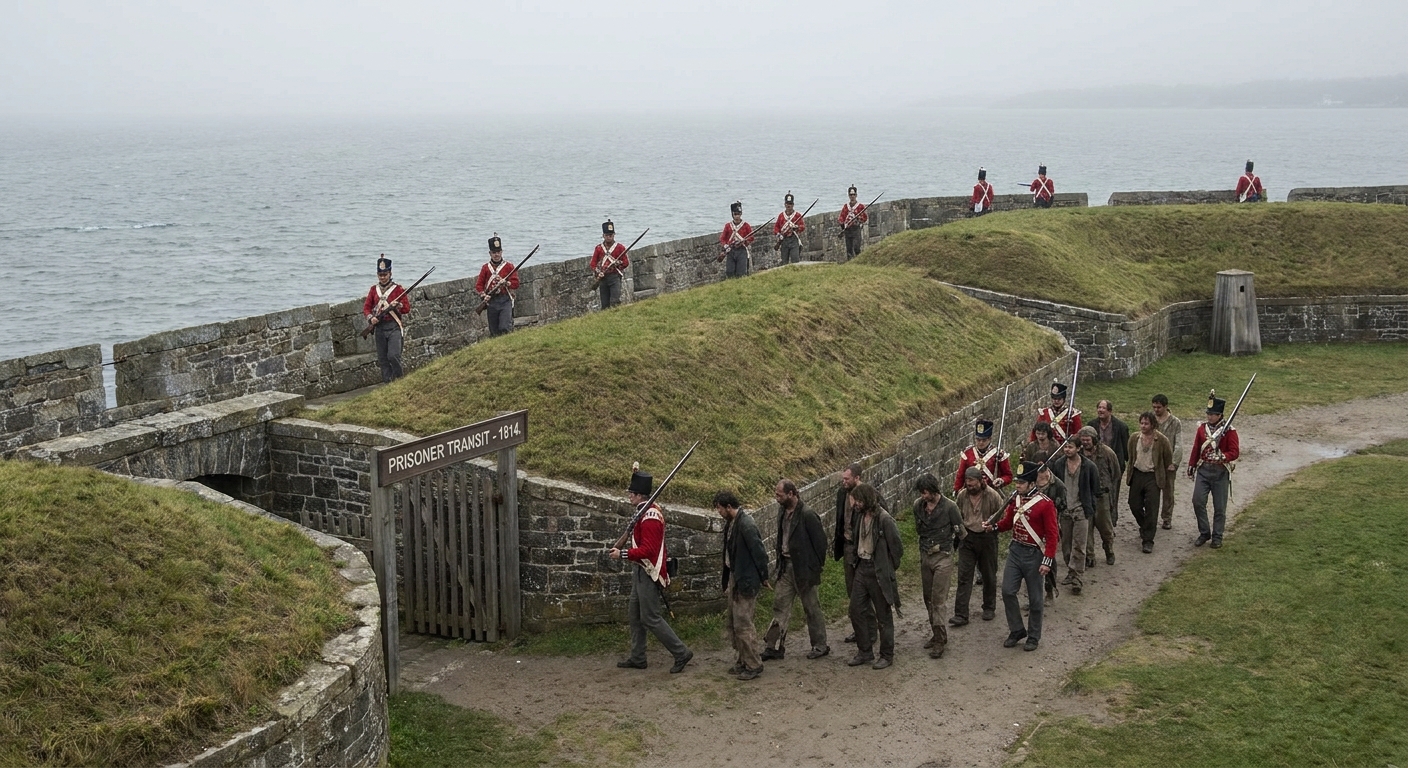
By 1814, the prisoner system was straining, and you can see it in practical symptoms: fuller depots, longer transport lines, more men waiting on lists, and more correspondence devoted to arguing categories instead of arranging handoffs. Cartel movement, which relied on mutual consent, became easier to interrupt and harder to restart.
Even when exchanges happened, they tended to happen with more friction. A cartel could sit while officials compared lists and receipts. A handful of disputed sailors could stall a larger transfer because nobody wanted to concede the principle behind the dispute.
Summer and fall 1814: The Chesapeake surge
The British campaign in the Chesapeake, including raids and the march on Washington, intensified the human stakes. Prisoners were taken amid burned towns, displaced civilians, and exhausted militia. Parole could look less like gentlemanly procedure and more like a blunt tool to clear the road, reduce guard burdens, or move quickly without feeding captives.
To place these prisoner issues inside the wider shock of 1814, see our Burning of Washington timeline and the larger Chesapeake Bay raids timeline.
What jammed the machinery
I used to tell this part as if the exchange system “snapped” in one late-war moment. It was messier than that. The breakdown came in fits and starts, with negotiations slowing, partial arrangements failing, and then broader stoppages when one side decided the other was not playing by the same rules.
- Nationality disputes: If Britain labeled a captured sailor a British subject, it could refuse to trade him as an American prisoner. This was not a clerical quibble. It was a fight over allegiance, manpower, and the legitimacy of the other side’s claims.
- Race, refuge, and retaliation: Britain did not agree to return people who had fled slavery to British lines, and the United States protested any treatment of captured Black U.S. soldiers or sailors that implied they were not lawful combatants eligible for normal exchange. When U.S. officials believed that line was being crossed, they threatened retaliation in prisoner treatment to force recognition of prisoner-of-war status. Some channels kept working locally, but broader trust eroded.
- Privateer classification: Even when privateers were treated as lawful belligerents, arguments over commission papers, prize documentation, and whether a crewman was properly entered on a muster roll could slow releases and harden conditions.
What stoppages looked like
When exchange channels stalled, prisons filled and “short captivity” became “long captivity.” Men sat longer on prison hulks or behind walls, waiting for the next list to be accepted. In overcrowded quarters, sickness traveled faster than any flag of truce. Mail was irregular, and when parole stopped being trusted, commanders used it less, which only made confinement tighter and numbers higher.
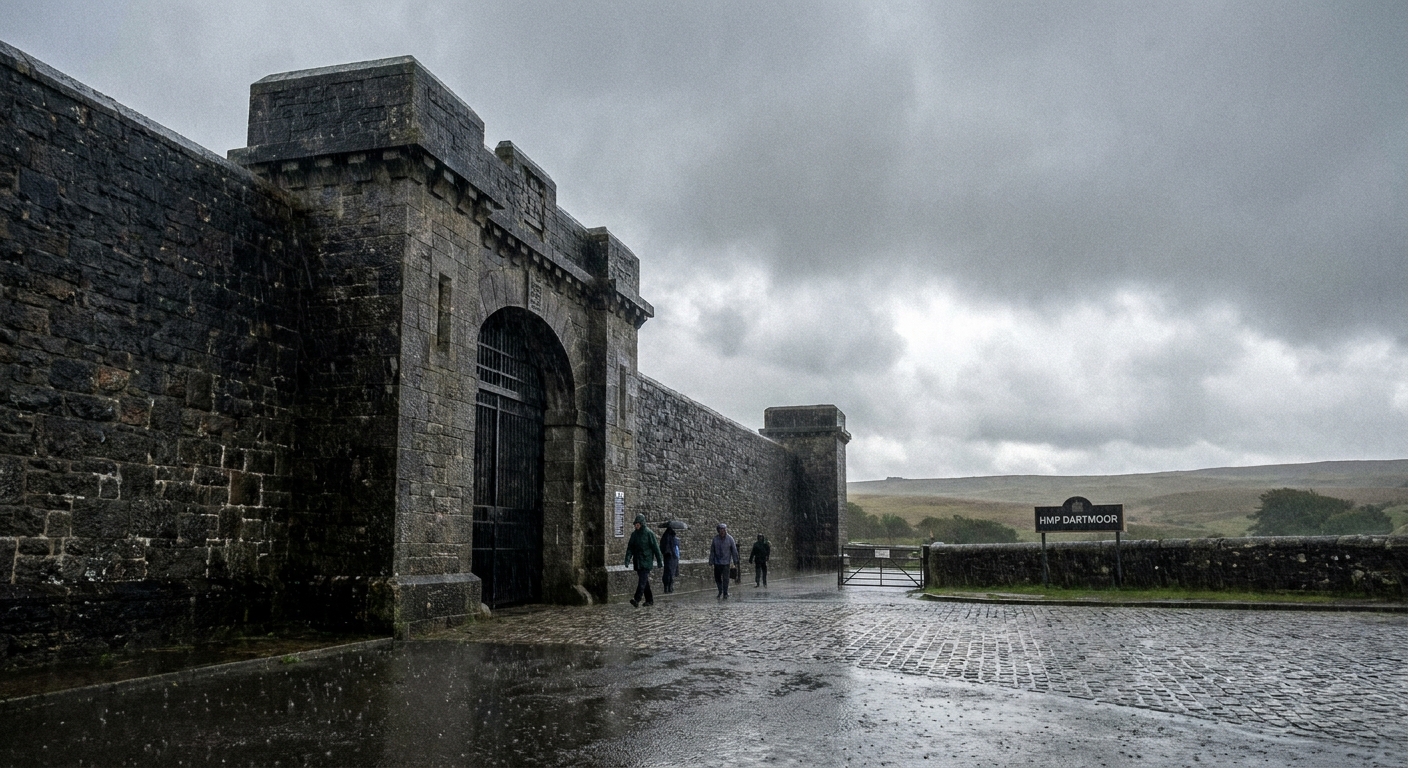
If you want one of the war’s most haunting captivity stories, I recommend our look at U.S. prisoners held in Britain in Inside Dartmoor Prison, including what happened there after the peace and why Dartmoor became a byword for War of 1812 confinement.
1815: Slow returns
January to February: Uneven ending
The Treaty of Ghent was signed in late 1814, but news traveled at the speed of winter seas and muddy roads. Fighting continued into early 1815, and so did captures. Even once official peace was known, prisoner return was not instantaneous.
For the treaty’s step-by-step pace, see our Treaty of Ghent timeline.
Early 1815: The cleanup
This is the part people forget. Repatriation required lists, transports, escorts, and receiving stations. It also required agreement on identity. A man had to be matched to a name on a roll, categorized correctly, and physically delivered to a port that could receive him. Sick prisoners might be delayed. Clerical errors could strand someone for weeks. Even after release, there were accounts to settle: rations, transport costs, and the paper trail proving that “paroled” had finally become “exchanged.”
In many communities, the end of captivity did not feel like a single moment. It felt like a trickle of returns, rumors, and finally a knock on the door.
Phases at a glance
If you like seeing the whole war on one page, here is the prisoner exchange story reduced to its big phases. The details vary by theater, but the rhythm stays consistent.
- Mid 1812: Local paroles and improvised holding along the frontier, driven by necessity more than policy.
- Late 1812: Mass surrenders and early naval captures push record keeping and port-level cartel arrangements.
- 1813: More routine parole paperwork and exchange accounting, while privateering expands maritime prisoner numbers.
- Late 1813 to early 1814: Nationality and status disputes increase delays, with exchanges continuing unevenly by region.
- Mid to late 1814: Heavier prisoner volume and retaliation threats over status lead to stoppages and harder confinement.
- 1815: Treaty implementation brings releases and returns, but the process is administrative and slow, not a switch flipped overnight.
Common questions
Were land and sea prisoners treated the same
Not really. Land prisoners might be marched, confined in forts, or paroled into towns depending on rank and theater. Seamen were often concentrated in port prisons or prison hulks, where disease and overcrowding could be severe. The exchange system existed in both worlds, but it moved differently in each because maritime captivity was tied to port logistics and shipping availability.
Did parole work
Parole worked often enough that commanders kept using it, especially early. But it depended on enforcement and good faith. Once either side believed paroles were being abused, the response was predictable: fewer paroles, tighter confinement, and more insistence on formal exchange before release.
Why did exchange deteriorate late in the war
Because by 1813 and 1814, prisoner exchange was no longer just humanitarian and logistical. It was tangled in disputes about nationality, sovereignty, and the status of Black people in a war fought alongside slavery. Once prisoners are treated as leverage in those arguments, the machinery that requires mutual consent stops turning.