
I grew up in upstate New York close enough to Lake Ontario that, on certain wind days, you could swear the whole horizon smelled like damp rope and old timber. My grandfather used to stop at half-forgotten markers and say, almost like a warning, “Wars don’t only happen where the cannons are.”
The British naval blockade proved him right. It was not one dramatic curtain-falls moment. It was a slow tightening, a patient hand closing around American coastal trade. First a few ports felt it. Then entire regions. By the end, the blockade was not just a military measure. It was a daily grind on dockworkers, shipwrights, merchants, farmers with produce to sell, and families watching imported necessities vanish or jump in price.
What follows is a timeline of that expansion, with a few hard anchors so you can see where policy shifted and why the waterfront mood shifted with it.
How the blockade worked
When people picture a blockade, they often imagine a neat row of ships sealing a coastline like a fence. In reality, the Royal Navy used a mix of stationed squadrons, cruising patrols, and choke points near major harbors. Some ports were watched closely. Others were effectively hemmed in because any outbound ship had to pass through waters where British cruisers could appear fast and stay longer than you wanted them to.
It also helps to keep one plain-language distinction in mind. Sometimes the British tried to hold ships close to the harbor mouth, a tighter watch that historians often call a close blockade. Other times they worked farther off shore along the routes ships had to use anyway, a wider net that is often called a distant blockade.
Two practical details matter if you want to understand the timeline:
- It expanded in steps. The blockade grew as Britain could spare more ships and men, especially once the fighting in Europe eased in 1814.
- It hit different regions differently. A port with shallow approaches, tricky bars, or nearby inlets might keep some small traffic alive longer than a deepwater commercial hub with obvious channels.
One more point keeps the language honest: early in the war, a lot of what Americans called “blockade” functioned as cruiser interdiction and localized pressure before it hardened into broader, more formally declared blockades backed by sustained enforcement.
For a broader war chronology to place these shifts in context, see our War of 1812 timeline guide.
1812: Pressure begins
June to August 1812: War declared, risks spike
After the United States declared war in June 1812, British naval forces in North American waters were not instantly positioned to seal the American coast end to end. What they could do right away was make shipping feel hunted. Royal Navy cruisers took prizes when they could, and the mere chance of interception changed the math for merchants and captains.
American ports were not closed, but the risk calculus changed: insurers stiffened, captains delayed departures, and merchants started thinking in shorter, safer runs.
Fall 1812: Disruption before formal rules
In this first season, British pressure leaned on capture and intimidation more than on a coastwide proclamation. The pressure was real, but uneven. Some harbors still saw outward-bound ships slip away, especially smaller craft and those willing to gamble on weather, speed, and local knowledge.
At the same time, American naval victories at sea had an outsized psychological effect, reminding everyone that the ocean was contested, even if Britain’s long-term capacity was never in doubt. If you want a quick sense of those moments, our rundown of naval actions that changed the war shows why early optimism persisted.
1813: Warren escalates
Spring 1813: The Chesapeake tightens
By 1813, the blockade stops feeling like scattered bad luck and starts feeling like a system, especially in the Mid-Atlantic. Admiral Sir John Borlase Warren commanded the North American Station through this phase, and this is the year many Americans began to feel his station’s pressure as a sustained campaign rather than a run of unlucky encounters.
Under Warren, British squadrons pressed hardest where they could do the most damage for the least effort, and the Chesapeake Bay fit that logic perfectly. The goal was not only to interrupt trade. It was to project British power inland through raids and threat. For coastal communities, blockade and raid blurred together. A fisherman might be thinking about British cruisers one day and landing parties the next.
Summer to fall 1813: Routes harden
As more ships became available, British squadrons could maintain more consistent coverage near major entrances and common sea lanes. Routes out of the Delaware and Chesapeake became increasingly risky for ordinary commerce. The result was predictable: fewer legitimate voyages, more idled waterfront labor, and a rising temptation toward smuggling and privateering.
This is also where the blockade’s secondary effects become easier to see. Shipyards could be pinched for imported materials such as canvas, cordage, and iron fittings. Salt, vital for preserving fish and meat, could turn scarce or expensive in many port towns when normal import channels faltered. The point is not that every place suffered the same shortage, but that the supply chain stopped being boring, and boring supply chains are what keep a town fed.
Late 1813: New England feels the drag
New England did not suddenly flip from open to sealed in late 1813, and it matters to be honest about that. The most sweeping, widely recognized expansion of the blockade comes in 1814. Still, by late 1813 many New England merchants could feel the drag: interceptions mounted, voyages grew less predictable, and the margin for ordinary trade narrowed even when a port was not formally declared blockaded.
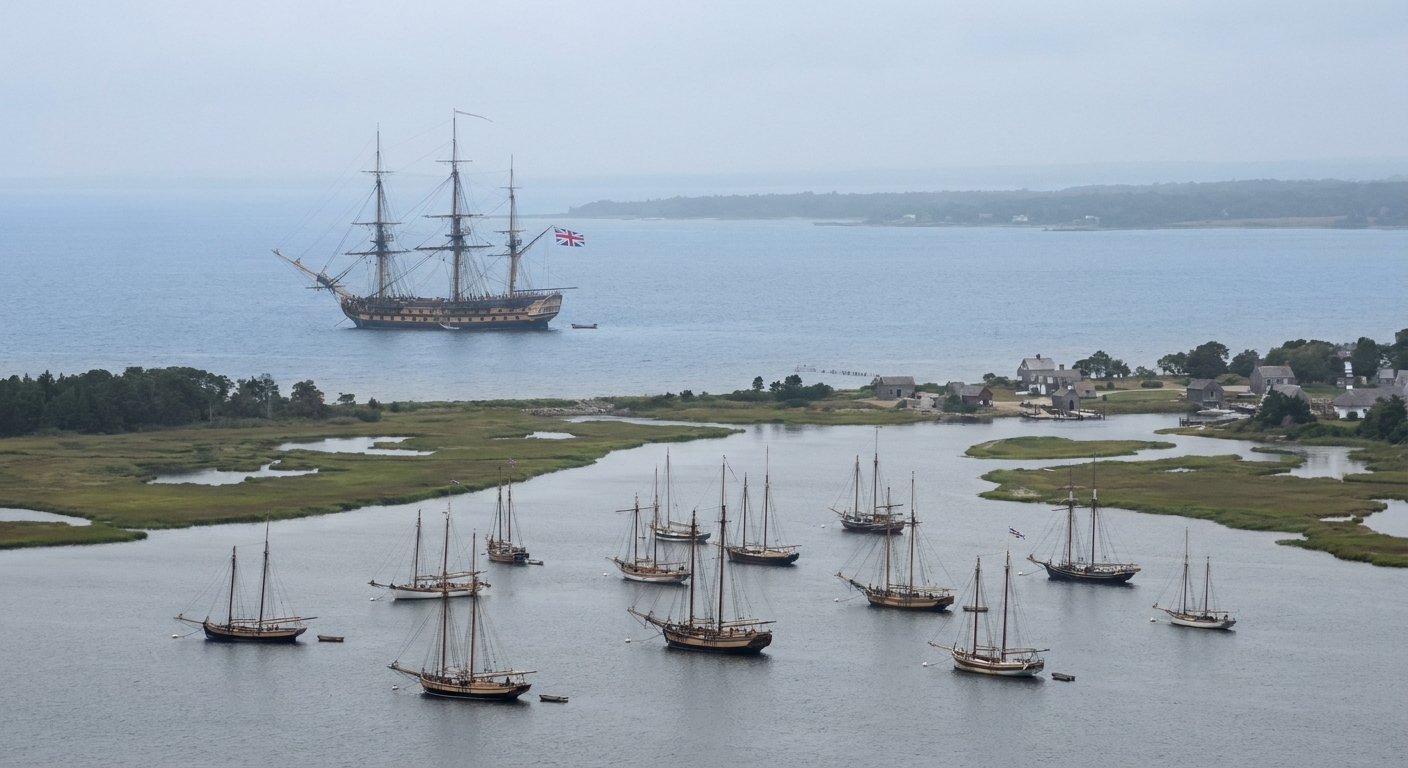
On Nantucket, the squeeze had a particular bite because daily life depended on maritime trade and the ability to move goods in and out. Rather than pretend I can pin this to one tidy ledger entry, I will put it the safer way: island communities like Nantucket were structurally vulnerable. When imports slowed and outward trade was choked, shortages stopped being an abstract “coastal problem” and started showing up in pantries, on chandlery shelves, and in the way neighbors talked about prices.
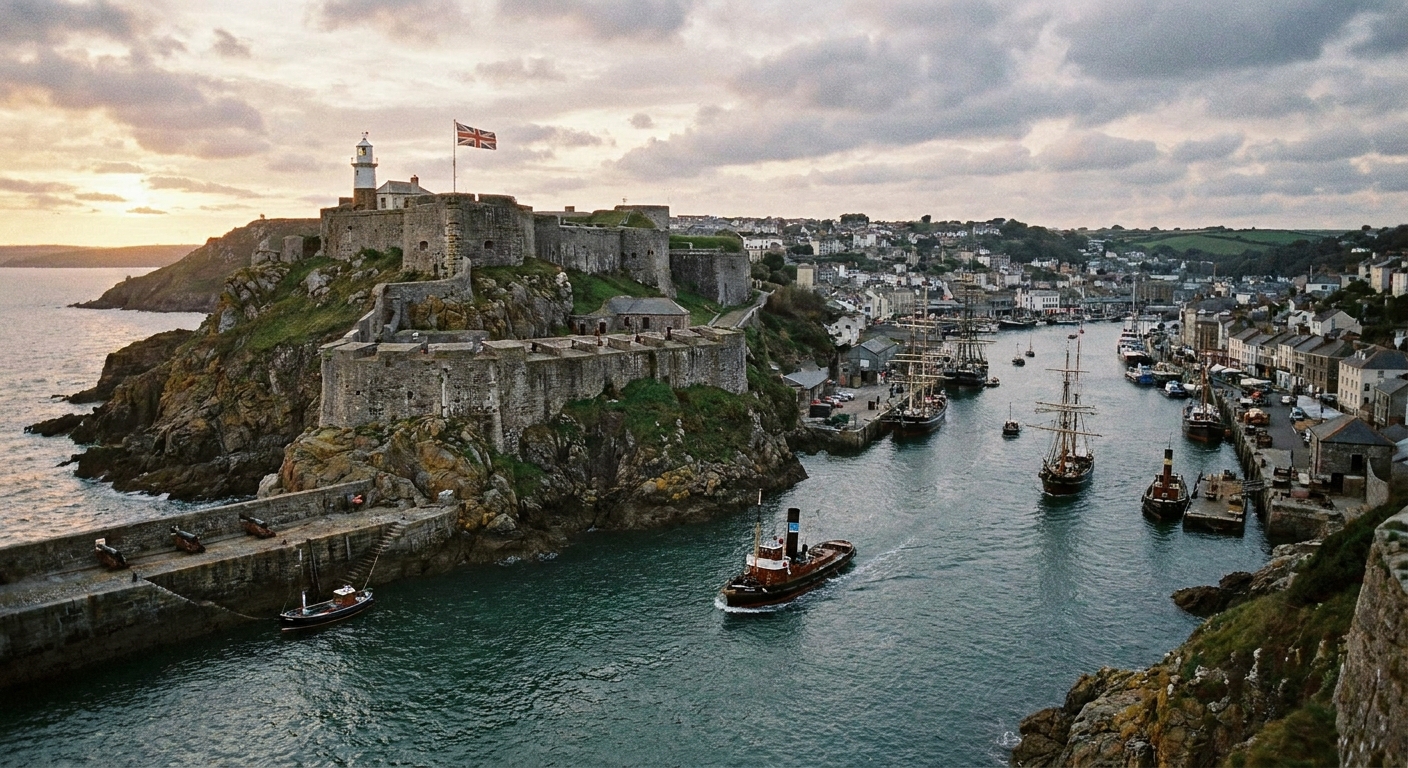
You can read that wider sensation in the way coastal communities invested in fortifications and preparedness. Start with preserved New England coastal forts to see how communities prepared for what they could not outrun.
1814: Cochrane expands
Spring 1814: A wider set of orders
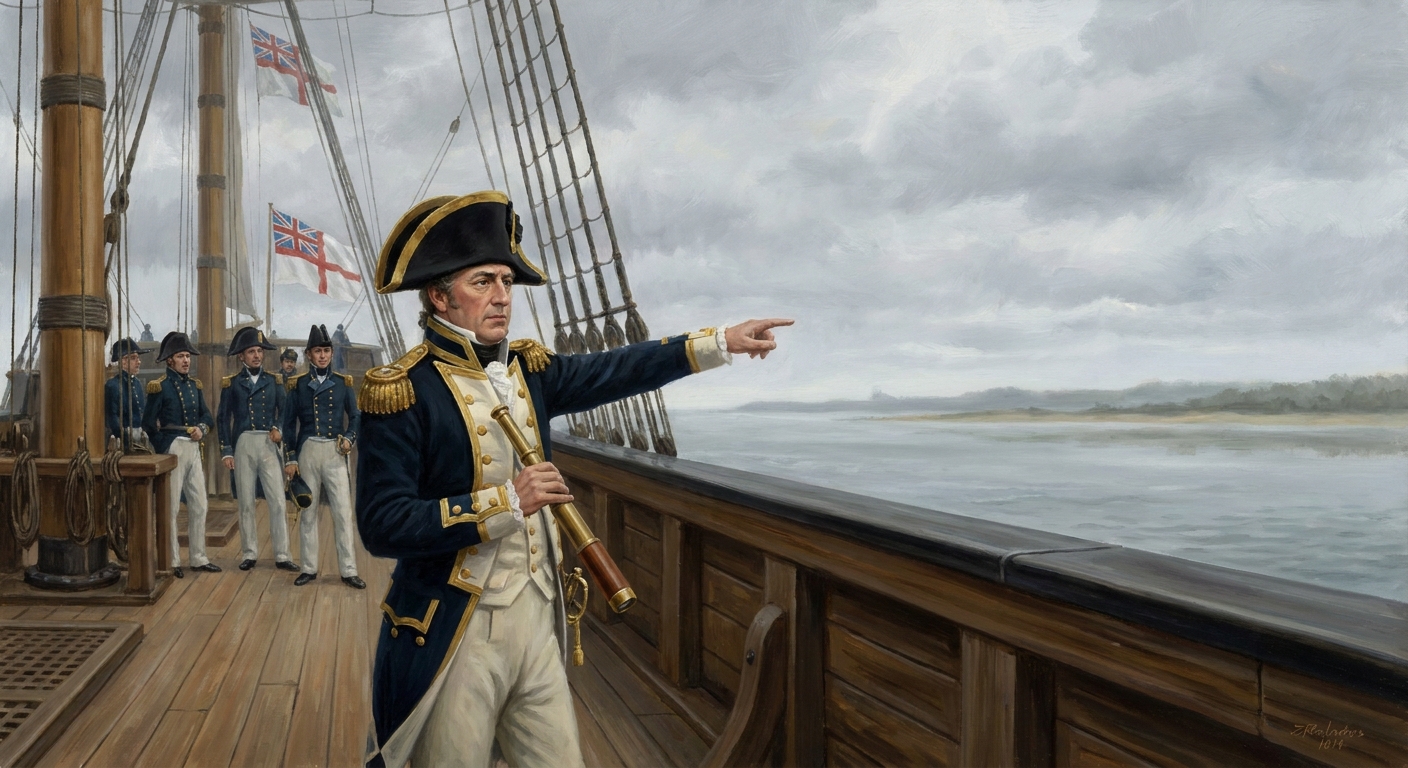
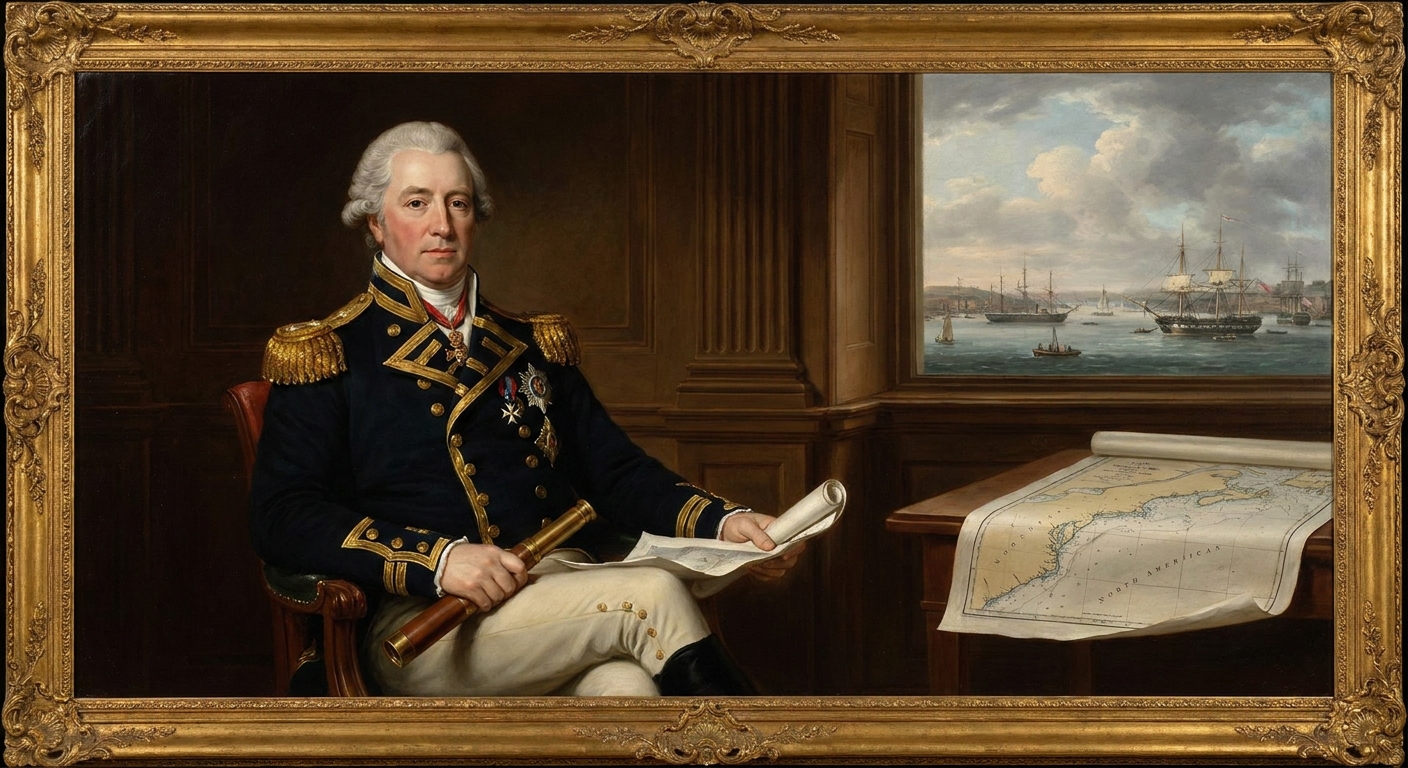
In 1814, the blockade becomes harder to dodge at scale, and it has names attached to it. Over the course of that year, command on the North American Station shifted from Warren to Vice Admiral Sir Alexander Cochrane, and the shift shows up not only in energy but in paperwork and enforcement practice.
You will often see spring 1814 cited as the period when blockade policy widened, with New England commonly included in later summaries of that expansion. Because the 1814 shift appears through a series of Admiralty directions, station notices, and on-water practice, it is more accurate to treat “spring 1814” as a useful marker than a single switch that shut every harbor at once. The practical reality was a tightening net: broader authority on paper, more consistent enforcement at sea.
Why then? Because Britain could spare more naval muscle in North American waters and keep it there. Napoleon’s first abdication in April 1814 did not end every obligation overnight, but it did make it easier to shift ships, seasoned officers, and attention across the Atlantic. Policy followed capacity, and the tightening you feel in 1814 tracks that new freedom of action.
Spring to summer 1814: Blockade plus raids
The blockade was not only a barrier. It was a platform. With British ships already off the coast, raiding became easier to mount and harder to predict. Ports and rivers that once felt like commercial arteries began to feel like open doors.
One reason Washington and the Chesapeake loom so large in memory is that naval pressure and raiding fed each other. For a sense of how the war’s tempo changed on land during this same period, Beyond the Bladensburg Races helps place the blockade inside the broader British offensive mindset of 1814.
Late 1814: The long squeeze
Late 1814 is where endurance matters. A short interruption is painful. A long one reshapes habits. Coastal trade rerouted through back channels. Prices settled at new, harsher levels.
To keep this from floating off into generalities, here is the most honest way I can ground the “vanish or jump in price” problem without overclaiming. Contemporary city papers, including Baltimore papers such as the Baltimore Patriot, could carry wartime notices and commentary that treated basics tied to shipping as worth ink: marine sales and ship chandlery supplies, imported goods, and the preserving staples that kept food edible through a hard season. When a newspaper starts making room for scarcity talk, you are already past inconvenience and into preservation anxiety.
Even people far from tidewater were dragged into it. When shipping faltered, inland producers lost markets, and the ripple ran backward along roads and rivers: less cash circulating, fewer imported manufactured goods, more improvisation. You do not need a ledger to understand this part. You only need to picture a farmer hauling produce toward a port and learning the buyers are gone, the ships are gone, and credit has turned tight.
1815: Peace arrives
January to February 1815: Orders lag behind ink
The Treaty of Ghent was signed in late 1814, but oceans do not transmit peace at the speed of ink. Enforcement did not vanish overnight. Some patrols continued until official word and orders moved through the system.
That delay is why 1815 still belongs in a blockade story. Major fighting continued into January, including the Battle of New Orleans, and sailors did not live in the same calendar as diplomats.
Spring 1815: Ports restart, but not to 1811
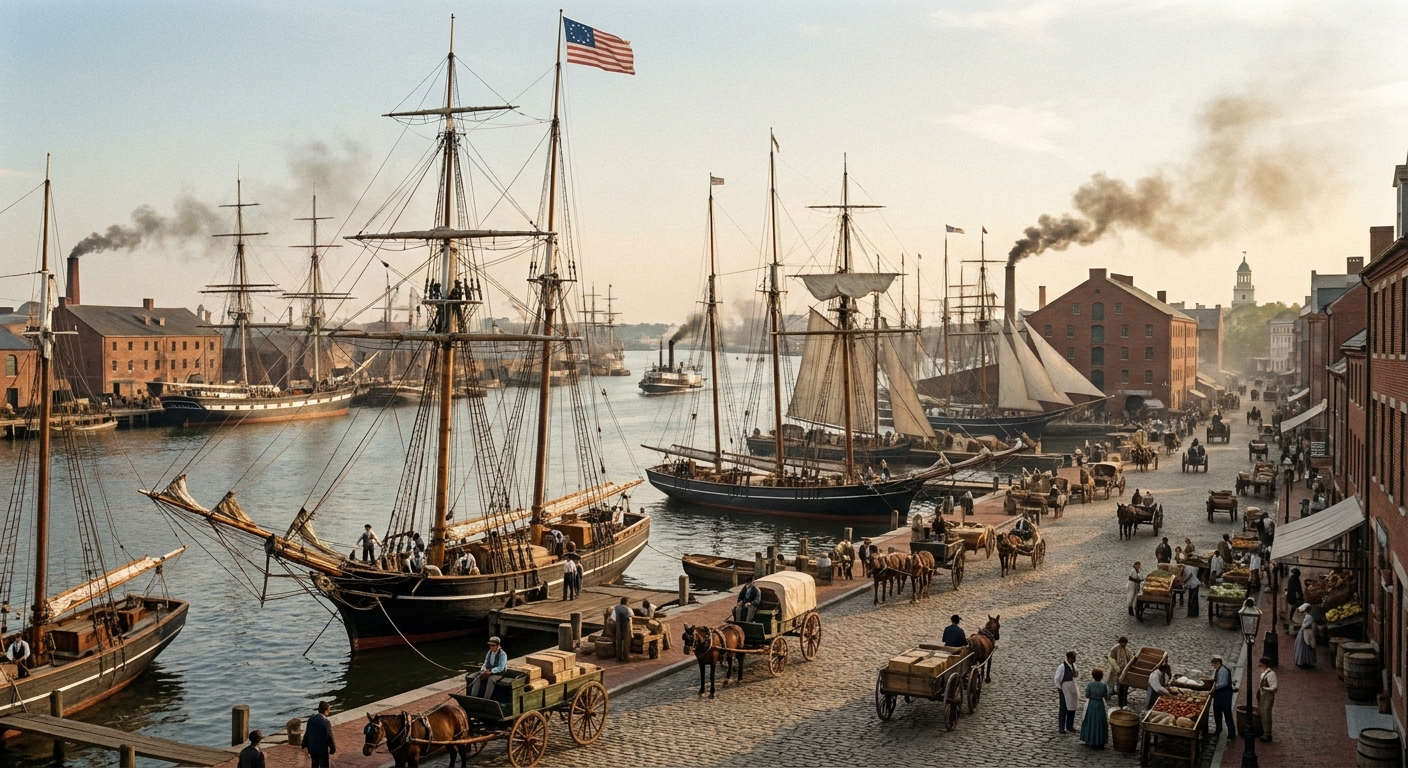
Once peace took practical hold, American ports did not simply bounce back to 1811. Credit networks had been strained, ships had been captured or laid up, and merchants had shifted strategies. Some waterfront workers returned quickly. Others found the work changed or reduced.
For the treaty’s step-by-step progress and how long peace took to reach the front, see our Treaty of Ghent timeline.
Region by region
Chesapeake and Mid-Atlantic
- Most exposed: Large, navigable waterways made it easier for British forces to combine blockade pressure with raids, first under Warren’s 1813 intensification and then under Cochrane’s 1814 campaign.
- Everyday impact: Spiking prices, disrupted coastal shipping, and a constant question in waterfront towns: is that sail out there commerce, capture, or a landing party?
New England
- When it tightens: Many summaries put the decisive widening in spring 1814, but enforcement varied by port, weather, and the number of hulls Britain could keep on station.
- Island vulnerability: Places like Nantucket could not treat maritime trade as optional. When outward trade is pinched and imports slow, the shortage feels immediate, and the pricing feels personal.
South and Gulf
- Long coastline, key choke points: Britain did not need to watch every inlet equally to disrupt trade.
- Local texture: The blockade pressed on Gulf commerce in ways that meshed with privateering and the region’s Caribbean connections. By 1814 and early 1815, the Gulf becomes part of the same story of patrols, prizes, and shortages, not a separate theater floating free.
For a vivid Gulf-adjacent angle on how irregular forces and maritime power overlapped, see Jean Lafitte’s pirates vs. regulars at New Orleans.
What to notice
If you stand at an old harbor today and try to picture the blockade, look beyond cannons and flags. Look for the practical bones of a working port.
- Warehouse districts: A blockade empties them, then repurposes them.
- Fort positions: Many were meant as much for warning and morale as for stopping a fleet.
- Inlets and back channels: These are where a lot of desperate, nighttime commerce tried to survive.
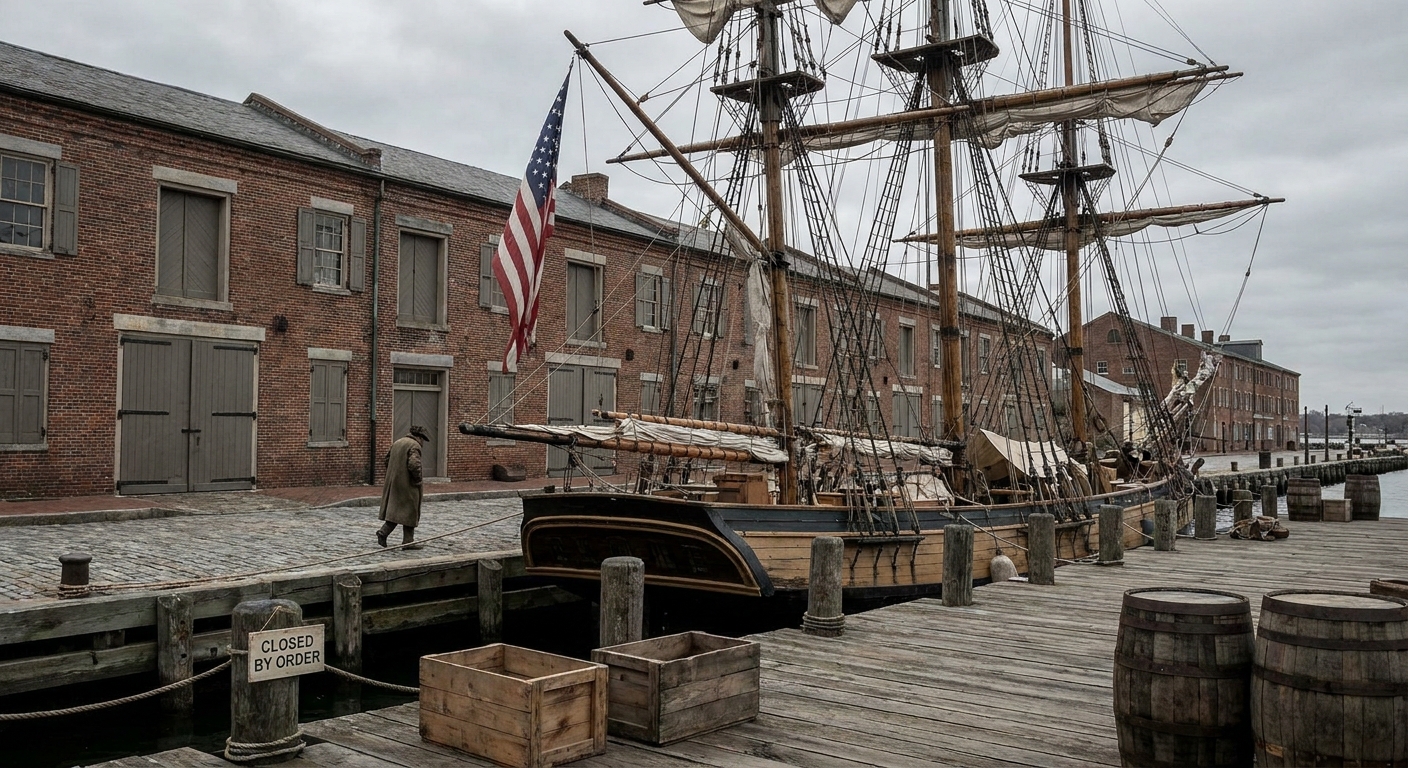
When I walk places like this, I try to listen for what is missing. In blockade years, the missing sound is often work: the rasp of blocks, the clatter of barrels, the easy shout between wharves. Silence can be a historical artifact too.
Timeline at a glance
| Period | What Britain did | What Americans felt |
|---|---|---|
| Mid to late 1812 | Initial disruption and cruiser pressure, uneven coverage | Rising risk, higher insurance, cautious shipping |
| 1813 | Warren’s station sustains and intensifies pressure in key areas, especially the Chesapeake and Mid-Atlantic | Trade contraction, localized shortages, stronger smuggling and privateering incentives |
| Spring 1814 onward | Blockade authority widens through a series of directions and notices, commonly summarized as extending to New England alongside tighter enforcement | Port economies stall, shortages sharpen in vulnerable places, inland ripples grow clearer |
| Early 1815 | Enforcement winds down as peace becomes operational | Restart with lag, uneven recovery, new postwar realities |