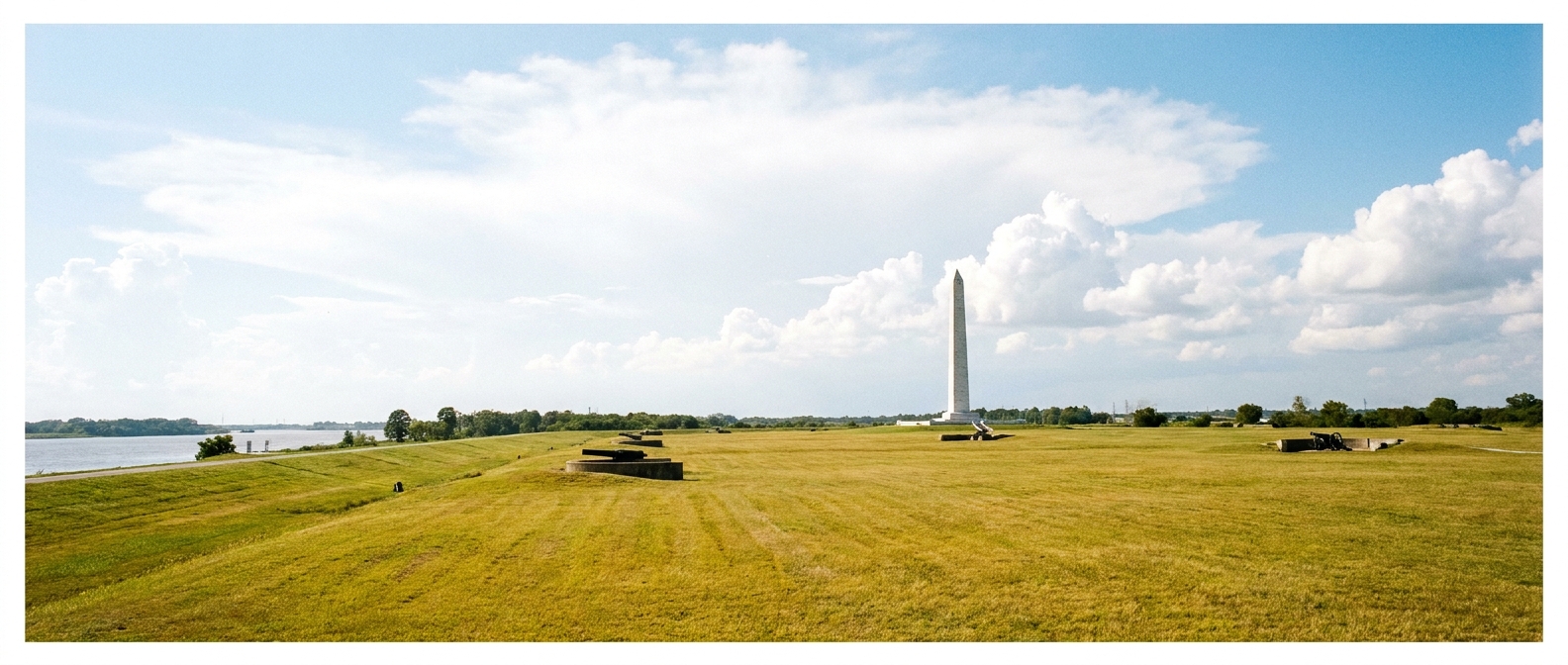

The first time I walked the ground at Chalmette, the wind coming off the river had that wet, brackish bite that makes you tug your coat collar up. You look out across the open field and it feels too wide, too exposed, like any line out there would be a thin thread waiting to snap. And then you remember that the “line” was not just blue-coated regulars standing shoulder to shoulder. It was sailors, militiamen, free Black troops, Choctaw allies, and yes, a band of men the United States had recently branded criminals.
Jean Lafitte’s Baratarians are often treated like a romantic footnote to Andrew Jackson’s greatest victory. In the old retellings they show up like storybook pirates, fire a few cannons, and vanish into the fog. The truth is more interesting and more human. Their value was not that they were “pirates” in some swashbuckling sense. It was that they were skilled coastal fighters with hard-earned artillery experience, and Jackson had the practical wisdom to fold them into a defense that needed every capable hand.
Who counted as “pirates”
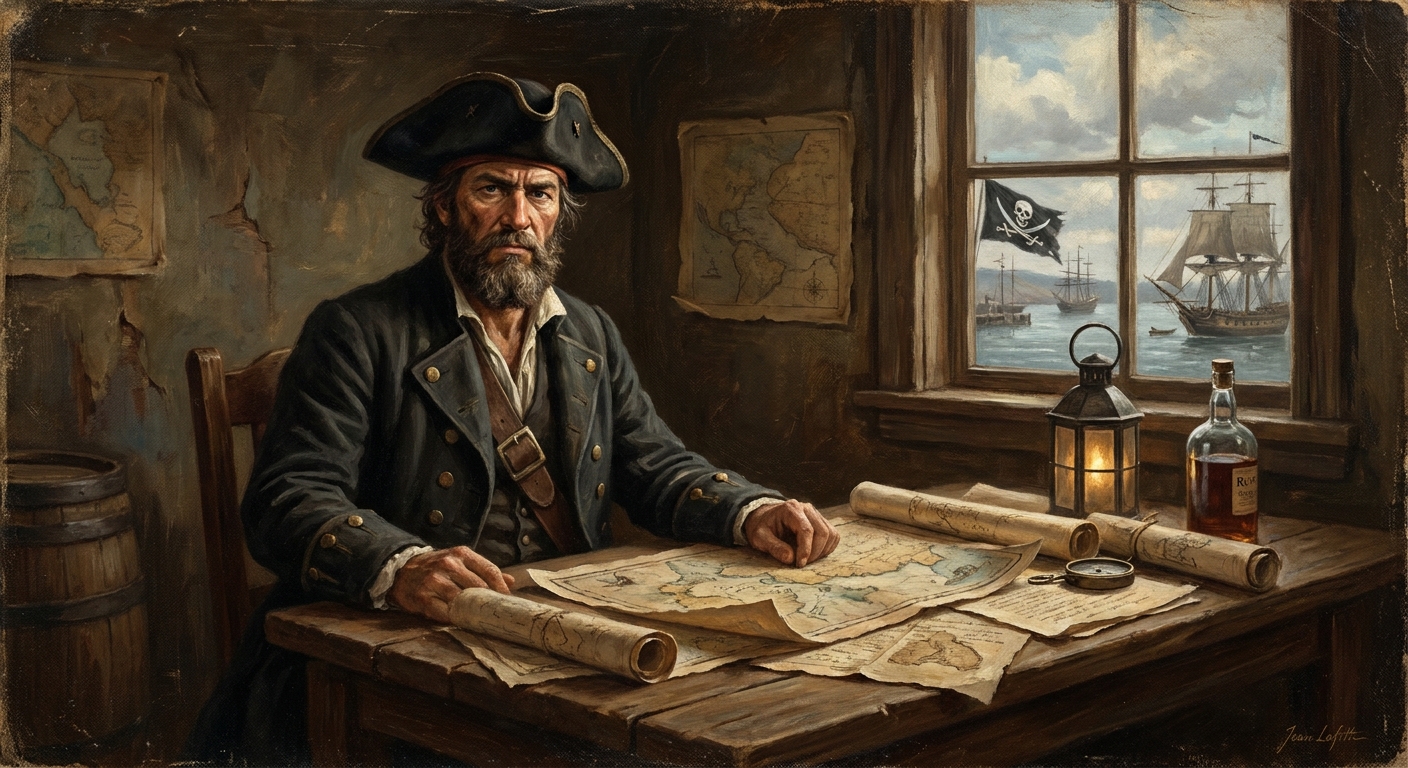
Let’s start by stripping away one sticky misconception. Lafitte and the men tied to him were not pirates in the classic sense of attacking random merchantmen under no flag. They operated as smugglers and privateers in the murky world of Gulf commerce, a quasi-privateering environment where claims of legitimacy often traveled faster than paperwork.
You will sometimes see references to letters of marque in this story, and it is true that Gulf operators regularly leaned on that language. But for Lafitte’s Baratarians, specific, clean documentation is disputed and shifts depending on who is telling the tale and which year you are in. The safer description is that they lived in the legal gray between smuggling, coastal raiding, and wartime commerce.
The U.S. government saw them as lawbreakers, especially for smuggling and for trafficking in enslaved people, a stain that should not be polished away by battlefield heroics. New Orleans locals, meanwhile, often saw them as useful and connected, the kind of men you might condemn in public and quietly rely on when you needed powder, rum, or information.
When the British approached in late 1814, that whole tangle became a military question. British representatives, moving through the Gulf in the fall and early winter, dangled money and rank and asked for cooperation. Lafitte, reading the room, chose a path that offered survival and a future. He warned American authorities and offered men and supplies in exchange for mercy.
The regulars on the line
In any comparison, U.S. regulars begin with the obvious advantage: training and a chain of command designed for battlefield stress. At New Orleans, Jackson needed units that could hold a fixed position for long hours, in wet cold, under the shock of artillery and rockets, and still fire by order.
Regular troops also brought something less glamorous but crucial: predictability. They drilled to move on commands, to reload under pressure, to keep intervals, and to avoid the contagious panic that can ripple through less seasoned formations. If the line at Rodriguez Canal was a machine, regulars were the gears you could trust to turn the same way every time.
It is also worth saying out loud that “regular discipline” was not limited to regulars. Some volunteers and militia on that line behaved with real steadiness once the parapet went up and the job became simple and brutal: stay, load, fire, repeat.
Still, regulars alone were not enough in Louisiana. There were not enough of them, and the defense was not a neat European set-piece. It was a patchwork, stitched together fast, across swamps and waterways, with limited time and limited supplies. Jackson’s small core of trained infantry, including elements of the 7th U.S. Infantry and other regular detachments present for the campaign, helped anchor that patchwork so the rest could hold.
Why Jackson wanted Lafitte’s men
The Baratarians mattered because their most valuable skills matched Jackson’s most urgent needs.
1) Artillery skill
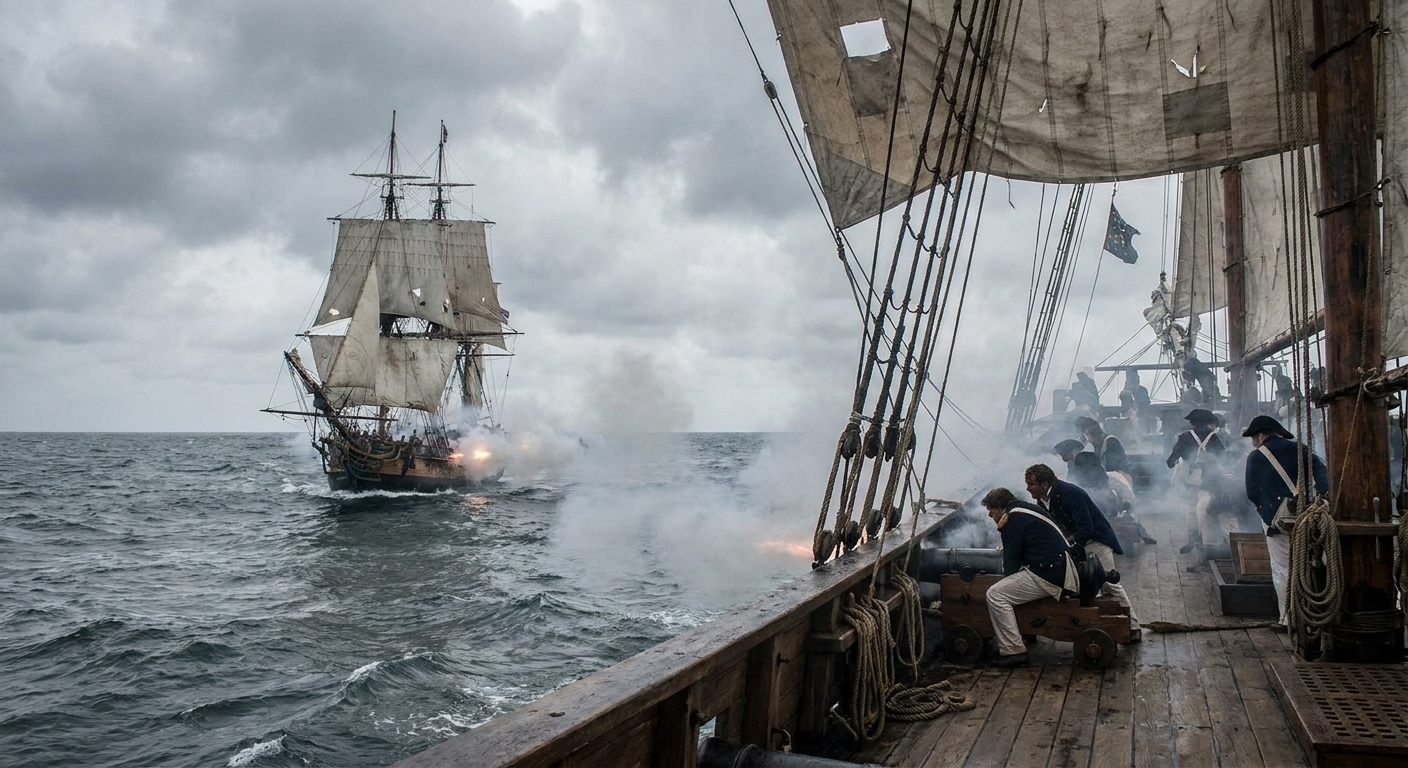
The most repeated praise for Lafitte’s men is that they were good gunners. That is not just a compliment, it is a battlefield multiplier. Artillery in 1815 was labor-intensive and technical. You needed crews who could:
- judge distance and elevation quickly
- work a gun as a team without tangling drills
- keep powder dry and ammunition moving
- stay steady when counter-battery fire started chewing up the parapet
A lot of soldiers could be brave for a few minutes. Far fewer could run a gun well, repeatedly, on command, in miserable weather.
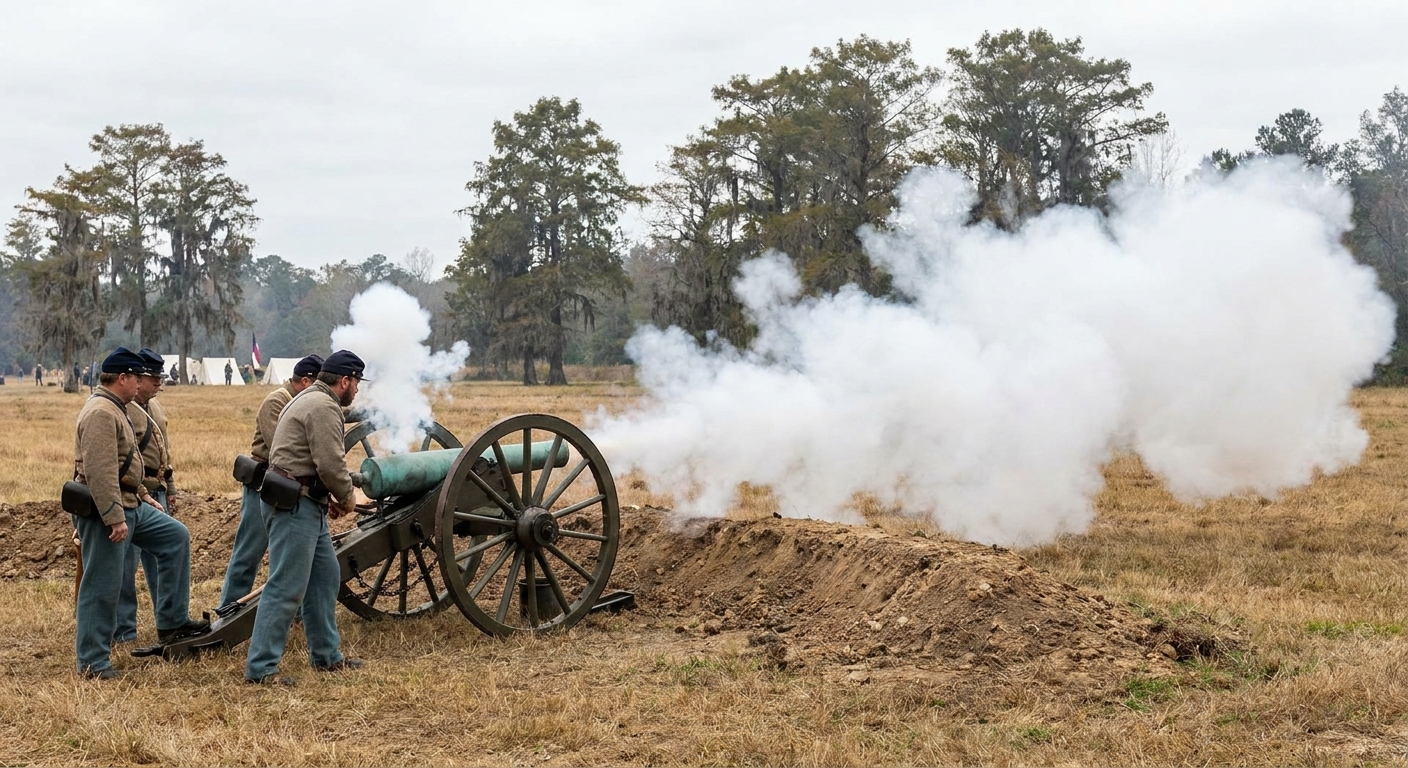
One concrete anchor that gets lost in the “pirates saved the day” myth is that this was formal artillery work inside Jackson’s system. Men drawn from Barataria served under American artillery officers, including Captain Humphrey’s artillery company, where experienced hands were prized because the gunnery job was unforgiving.
2) Water sense
Even when they were not standing to a cannon, Baratarians brought a Gulf Coast kind of experience: moving men and supplies by water, reading channels, and operating around marsh and bayou. That mattered in a campaign shaped by boats, muddy approaches, and the constant risk of being outflanked through places that did not look passable to outsiders.
3) Improvisation under pressure
Smugglers survive by solving problems fast: shortages, patrols, broken gear, sudden weather. That habit translates well to a defensive line built in a hurry. At New Orleans, the defense was a coalition in the literal sense. Different units with different habits had to mesh quickly, and a lot of the success came from making practical fixes in real time.
How they fit into the army
This is the part that fascinates me most, because it is where legend usually replaces logistics. You do not simply “add pirates” to an army like pouring rum into coffee. You have to make them obey orders, show up on time, and not pick fights with the men who seized their goods a few months earlier.
Jackson did what good commanders do when they inherit a messy roster. He made it useful.
- He put competence where it mattered. Baratarians were used heavily around artillery, where skill could be measured quickly and where strong leadership could keep crews focused.
- He wrapped them in structure. Even if a man’s past was questionable, the line required watch schedules, assigned positions, and clear authority.
- He turned the promise of mercy into leverage. For men living one raid or arrest away from disaster, the chance to become legitimate gave Jackson a way to demand discipline.
The result was not a fairy tale redemption. It was a temporary alignment of interests. The British were the immediate threat. Jackson was the immediate route to survival.
A blended defense
If you take anything from the New Orleans story, let it be this: the defenders were not one neat category. They were many, and each group carried a different strength into the line.
Militia
Militia units varied widely, and they have been mocked unfairly in some popular memory. At New Orleans, many militiamen fought behind prepared works, which helped offset uneven training. The best militia service is often unromantic: standing in the cold, taking orders, firing when told, and not leaving.
Sailors and Marines
Navy men brought gunnery culture with them. That matters because the battle was as much about artillery effect as musketry. Naval personnel also tended to be comfortable with hard labor under pressure, which is exactly what building and maintaining a defensive position demanded.
Free Black soldiers
Free men of color in Louisiana served with notable steadiness, despite facing suspicion and prejudice even from the country they were defending. Any honest evaluation of New Orleans has to include their service as part of what made Jackson’s line hold.
For another window into how overlooked soldiers carried heavy loads in this war, I recommend our profile of Richard Pierpoint and the Coloured Corps.
Choctaw allies
Choctaw warriors were present with Jackson’s forces and were used primarily in scouting and skirmishing roles on the edges of the fighting, the kind of work that rarely shows up in heroic paintings but can shape what a commander knows and when he knows it. The War of 1812’s southern dimension is full of aftermath and hard consequences, and the story at Horseshoe Bend casts a long shadow over this whole region. If you want that wider context, see Horseshoe Bend and the Creek Nation aftermath.
Who was better?
If we judge “better” by who could best perform under the specific conditions at New Orleans, the honest answer is: they were better together, because they covered each other’s weaknesses.
Where regulars had the edge
- Reliability under orders: predictable movement and steadiness when things got loud and chaotic
- Unit cohesion: fewer personal agendas pulling against the mission
- Endurance in routine: holding the line day after day without drifting into lax habits
Where Lafitte’s men had the edge
- Experienced gunnery: practical artillery skill gained in real, dangerous work
- Adaptability: comfort operating in the coastal environment and solving supply problems fast
- Motivation with a deadline: the hope of mercy and legitimacy sharpened their commitment
Jackson’s genius, if we want to call it that, was recognizing that the battlefield does not care about respectability. A cannonball does not ask whether the man sighting the gun paid customs duties. Jackson needed effective fire and a line that would not break. The Baratarians helped provide that.
The moral balance sheet
There is a temptation in War of 1812 storytelling to treat wartime service as a cleansing flame. It makes for a neat ending. History rarely offers neat endings.
Lafitte’s network was entangled in smuggling and profiteering, and the Gulf economy of the era was inseparable from slavery. Those facts sit alongside their battlefield contribution. The defenders of New Orleans were not saints. They were people. Some were admirable. Some were opportunists. Many were both, depending on the day and the choice put in front of them.
That messy reality is part of what makes the episode worth studying. The victory was real, and so were the compromises that helped make it possible.
Where to stand today
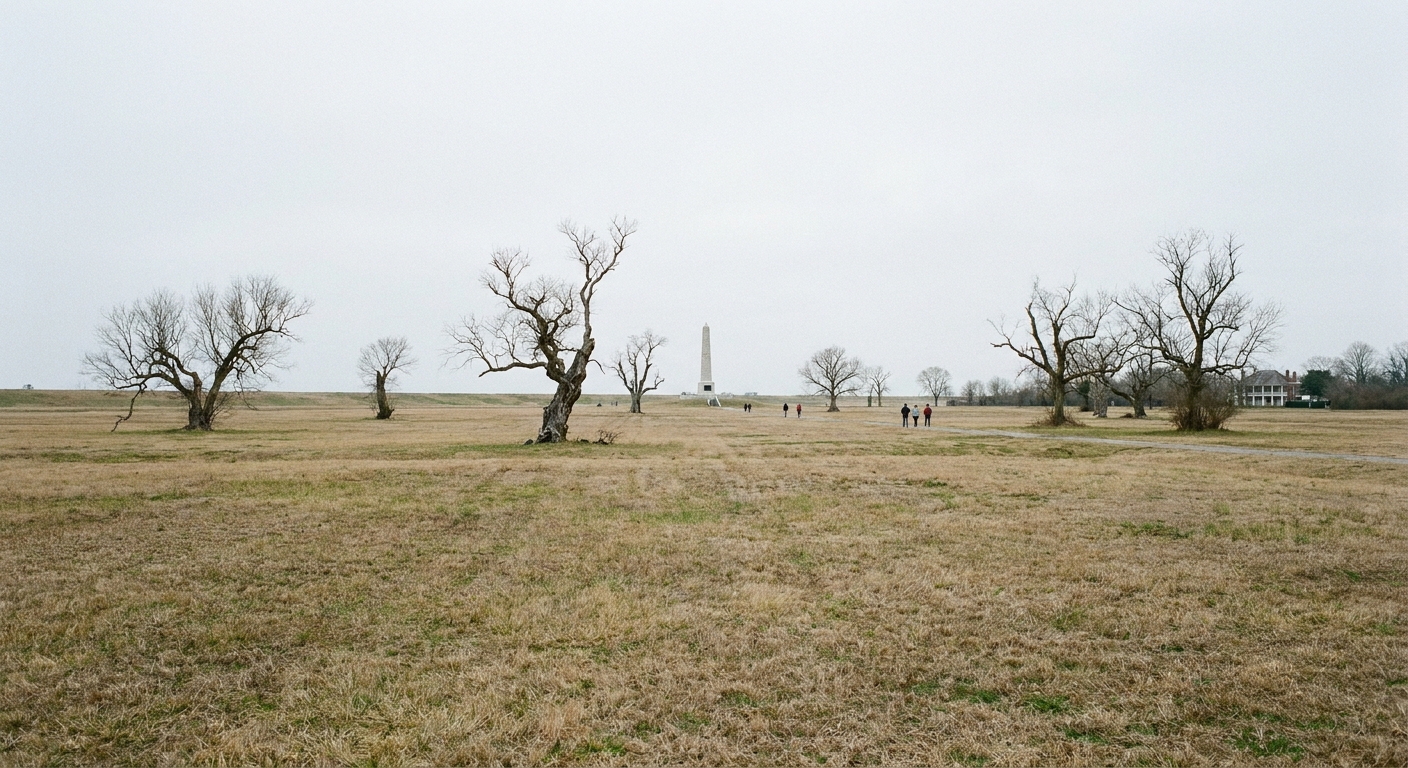
If you want the battle to stop being an engraving and start being a place, go walk Chalmette. Stand near the line and look toward the approach. Picture fog hanging low, the ground slick underfoot, and a long wait for the moment when everything finally breaks into noise.
I put together practical notes for making that visit count in Visiting Chalmette Battlefield Today.
Quick questions
Did Lafitte fight in the battle?
Most of the direct battlefield value came from his men and their artillery service rather than a single cinematic moment of Lafitte himself. His leadership mattered in organizing support and negotiating his way into the American camp, but the hard work on the line was largely done by crews at the guns and the broader coalition Jackson commanded.
Were the Baratarians pardoned?
They fought with the expectation that service could earn mercy, and Jackson pressed hard for it. The formal federal pardons and amnesty for many of the Baratarians came after the campaign, not as a neat, stamped document handed out before the shooting started. That timing matters because it underlines what the bargain really was: risk now, hope for legitimacy later.
Was New Orleans a typical War of 1812 battle?
Not really. It has the war’s familiar themes of militia performance, leadership, and contested frontiers, but the mix of cultures and the heavy emphasis on a prepared defensive line make it distinctive. If you want a sense of how different War of 1812 battlefields can be from one another, our broader navigation pages are a helpful starting point: Guide to battles and Guide to people.