I grew up in upstate New York where the roads still bend around old earthworks and forgotten markers. My grandfather used to slow our weekend walks whenever we hit a weathered plaque and say, almost like it was a family secret, “Half the men who ran this country later started right here.”
He was exaggerating, the way grandfathers do. But he was pointing at something real. In the generation after the War of 1812, military service did not just help a political career. For many ambitious Americans, it made one. The conflict minted reputations, spread names across newspapers, and stitched together networks of officers, militiamen, and local power brokers. When peace came, veterans stepped into a nation hungry for heroes and a little uncertain about what the republic was supposed to become.
Why 1812 service helped careers
By modern standards, the War of 1812 produced a surprising amount of political capital. It was a messy war with plenty of blunders, and yet it created the right kind of story for a young republic.
- It was close enough for voters to remember. In the 1820s and 1830s, men who had fought at places like New Orleans, Lundy’s Lane, or Plattsburgh were not distant figures. They were neighbors, uncles, and local legends.
- It was fought on home ground. Communities experienced raids, burned buildings, militia call ups, shortages, and fear. A veteran could credibly say, “I stood between you and invasion.” That hits differently than a faraway campaign.
- Print culture amplified hero making. Newspapers, broadsides, and tavern talk turned battles into narratives with recognizable protagonists. Even defeats could be spun as endurance under fire.
- The old Revolutionary generation was aging out. For decades, “served in the Revolution” was the gold standard. By the 1820s, the War of 1812 supplied the next best thing.
- Veterans’ networks were ready-made machines. Militia structures, officer friendships, and wartime patronage gave veterans instant organizing muscle at the county and state level.
If you want the backbone chronology of where these moments fit, our War of 1812 timeline guide is a good anchor before diving into the politics that followed.
Veterans who reached the White House
Three presidents are the clearest proof that 1812 service became a highway to the top. Their wars were not identical, but each man carried a campaign story that voters could recognize in a sentence.
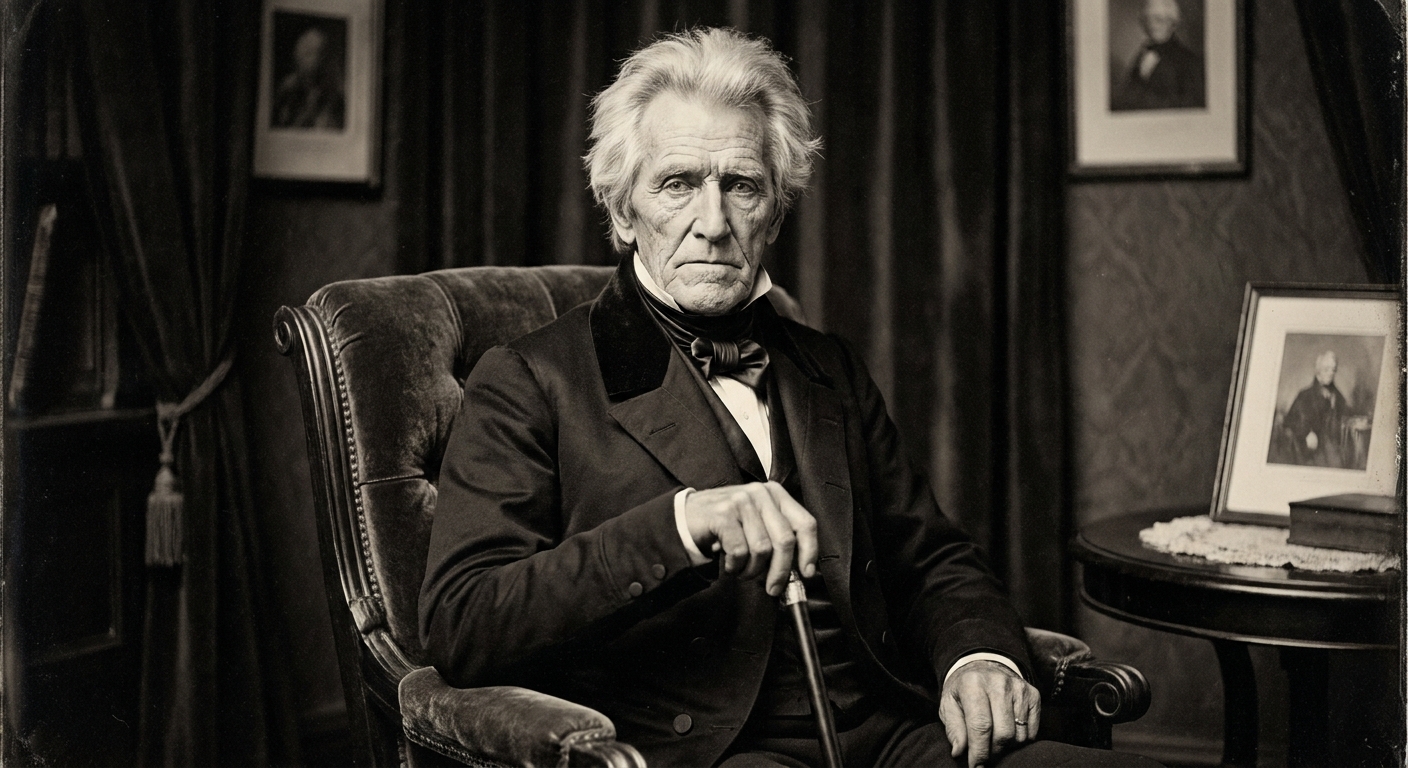
Andrew Jackson
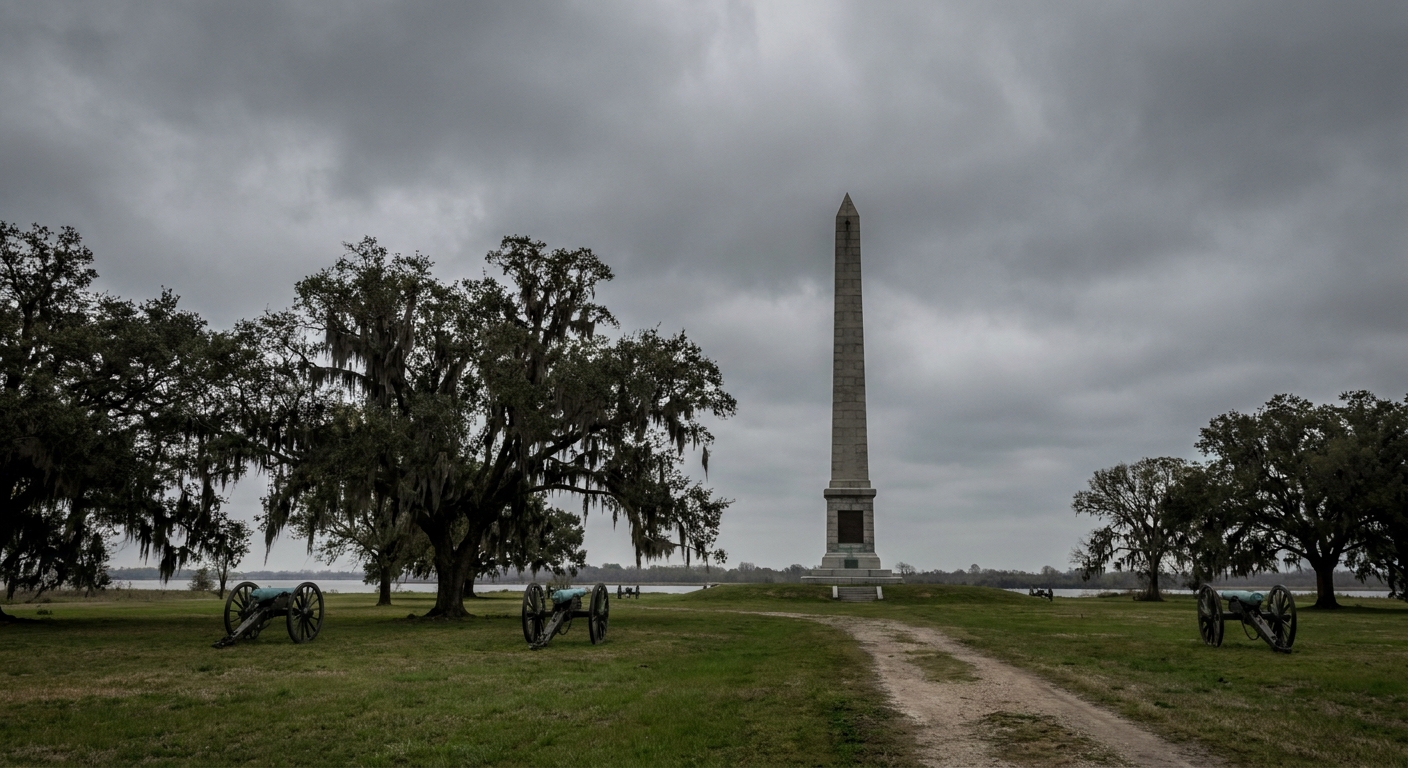
Jackson is the most obvious case, and the most instructive. His defense of New Orleans in January 1815 became a national legend, and it stayed useful long after the cannons cooled. Jackson’s political brand was not built on legislative subtlety. It was built on the claim that he was a hard man forged in emergency, the kind of leader who could not be bullied by foreign powers or domestic elites.
For readers who like the unpolished human side of that campaign, the story makes more sense when you follow what happened around the battle and afterward. Our piece on visiting Chalmette Battlefield today puts you on the ground where that legend took shape.
William Henry Harrison
Harrison’s War of 1812 service tied him to the Old Northwest, militia mobilization, and the violent struggle along the frontier. In 1813, he commanded U.S. forces in the Northwest campaign, an effort that culminated later that year at the Battle of the Thames, the same arc of fighting that many Americans later flattened into a single frontier story about survival and security.
By the time he ran for president, his supporters were selling him as “Tippecanoe,” collapsing earlier frontier fighting and the War of 1812 era into one marketable identity: the veteran-protector of settlements.
Zachary Taylor
Taylor is often remembered for the Mexican-American War, but his army career began earlier. During the War of 1812, he commanded at Fort Harrison in the Indiana Territory, a rough post where the language of defense and endurance was not a metaphor.
By the late 1840s, the electorate had spent a generation treating military command as shorthand for steadiness and patriotism. Taylor benefited from a political culture the War of 1812 helped normalize: when in doubt, elevate the general.
Veterans in Congress and states
The presidency gets the spotlight, but the bigger phenomenon was legislative. In the decades after 1815, statehouses and Congress featured a noticeable share of veterans. Some were famous officers. Many were ordinary militiamen whose local reputations were enough.
A few names make the pattern easier to see. Richard Mentor Johnson built a national profile as a Kentucky politician and War of 1812 officer. Winfield Scott turned wartime lessons into a long public career that mixed military command with political influence, and later generations treated him as presidential timber.
Here is what wartime service did for a would-be senator or congressman in practical terms:
- Instant name recognition beyond one town. Muster rolls and casualty lists traveled. So did stories.
- A ready-made coalition. Veterans joined militia associations, fraternal groups, and political clubs that overlapped heavily. If a man had been your captain, you were more likely to print handbills for him later.
- Credibility on defense spending and frontier policy. When Congress argued forts, militias, naval appropriations, or Indian policy, veterans claimed lived expertise.
- A language of sacrifice. Even short service could be framed as hardship endured for the republic. That rhetoric played well in an era that prized public virtue.
On the ground, you can still feel how “ordinary service” got folded into civic memory. Places like Plattsburgh are full of local stories where civilians and soldiers blend together into a single community narrative. I wrote about that texture in Plattsburgh’s civilians in the crossfire, because it helps explain why veterans became trusted spokesmen at home.
Hardship into politics
One of my least favorite habits in popular history is reducing this era to a parade of famous commanders. The War of 1812 was also frostbite, bad rations, camp rumors, and long stretches of boredom punctured by sudden terror. Veterans who never became household names still learned how institutions work under stress, and that lesson translated well to politics.
Veteran candidates leaned on a few themes that were easy to understand and hard to argue with:
- Competence under pressure. A man who had managed a supply train or kept order in a militia camp could present himself as “practical,” not theoretical.
- Fairness and fellow-feeling. Shared suffering created a usable empathy. Candidates talked about pay arrears, pensions, widows, and wounded men because they had seen the cost close up.
- Suspicion of distant authority. Many militiamen came home convinced that bureaucrats were slow and that local initiative mattered. That attitude fit neatly into emerging democratic politics.
For a sense of what those soldiers carried home, and what the fighting actually looked like at the small-unit level, our look at weapons of the Thames is a good reminder that politics grew out of very physical experiences.
War memory on the trail
By the 1820s, political theater had learned to dress itself in 1812 memory. “Hero of” titles, anniversary dinners, militia musters, toasts, and parades became campaign infrastructure. Voters did not just read about the war, they performed it in peacetime civic life.
That performance had consequences. Once military service became a dependable route to legitimacy, parties and newspapers had incentives to inflate some stories and bury others. The war’s memory was not neutral. It was contested, edited, and packaged.
It is also worth remembering that the war was divisive in its own time. Support and opposition broke along regional and party lines, and some veterans came home to praise in one county and suspicion in another. Later memory smoothed those sharp edges, but the arguments were real while the smoke was still in the air.
Even “national” symbols were still raw. The Star-Spangled Banner came out of a specific moment of fear and endurance. If you want to trace how that moment was interpreted and why the British attack failed, Fort McHenry: why the bombardment failed gives that context without sanding off the chaos.
Policy and the veteran vote
Military service did not only produce candidates. It produced a voting bloc with needs, grievances, and a long memory. Pensions mattered, and politicians knew it. So did the long arguments over relief and bounty land, which were never just about acreage. They were about whether the republic would treat service as a debt owed.
Veterans and their families pursued recognition in ways that created paper trails and political pressure:
- Pension petitions and affidavits. Proving service forced communities to document who fought and where, and those documents carried moral weight when elections came around.
- Local patronage. Postmasterships, customs jobs, and militia appointments often flowed along wartime loyalties.
- Commemoration as leverage. Communities that built monuments, hosted anniversary gatherings, or maintained burial grounds also kept veterans visible.
If you are trying to follow a particular soldier from musket smoke into later life, I have a field-tested starting point in tracing War of 1812 military and pension records. The politics show up right there in the ink.
What it left behind
When I walk a battlefield today, I think about how quickly a muddy field can turn into a resume line, and then into a law, and then into the shape of a country. In the years after 1815, veterans helped define what “national service” was supposed to mean. They also helped lock in a powerful American habit: equating military reputation with political fitness.
That habit had upsides. The war produced leaders who understood logistics, crisis management, and the cost paid by ordinary families. It also had blind spots. It elevated certain kinds of courage over other forms of public competence, and it let some men ride a single season of glory for decades.
Still, if you want to understand why so many voters trusted men with powder burns on their story, you can do worse than stand where the lines once formed and listen to the place. The War of 1812 did not end at the treaty table. It kept going, election after election, wherever veterans shook hands, told their stories, and asked their country to reward the sacrifice.
Quick questions
Which War of 1812 veteran became president?
Andrew Jackson is the most famous. William Henry Harrison and Zachary Taylor also had service connected directly to the War of 1812, and all three benefited from a political culture that treated military reputation as proof of leadership.
Why did voters care so much about 1812 service?
Because the war was recent, local, and personal. Many communities experienced raids, militia mobilizations, and economic disruption. Veterans returned with stories that neighbors recognized, and those stories translated into trust.
Did veterans influence policy as well as elections?
Yes. Veterans shaped debates over defense, forts, militia organization, pensions, and relief. They also created a paper trail through pension claims and petitions that kept their service at the center of public life.