
There are moments in War of 1812 history where you can almost hear the gears of politics grinding against the mud of winter roads. The Hartford Convention is one of them. I have walked New England waterfronts where the old Federalist mercantile world still lingers in the street plan and the churchyards, and I keep coming back to the same hard truth: the convention was not doomed because its delegates were fools. It was doomed because they moved in a world where a message traveled at the speed of a horse, and public opinion traveled faster than truth.
What began as a serious regional protest against a punishing war and a punishing federal policy ended as a political death sentence. Below is the sequence, step by step, that turned a meeting in Hartford into the shorthand for disloyalty.
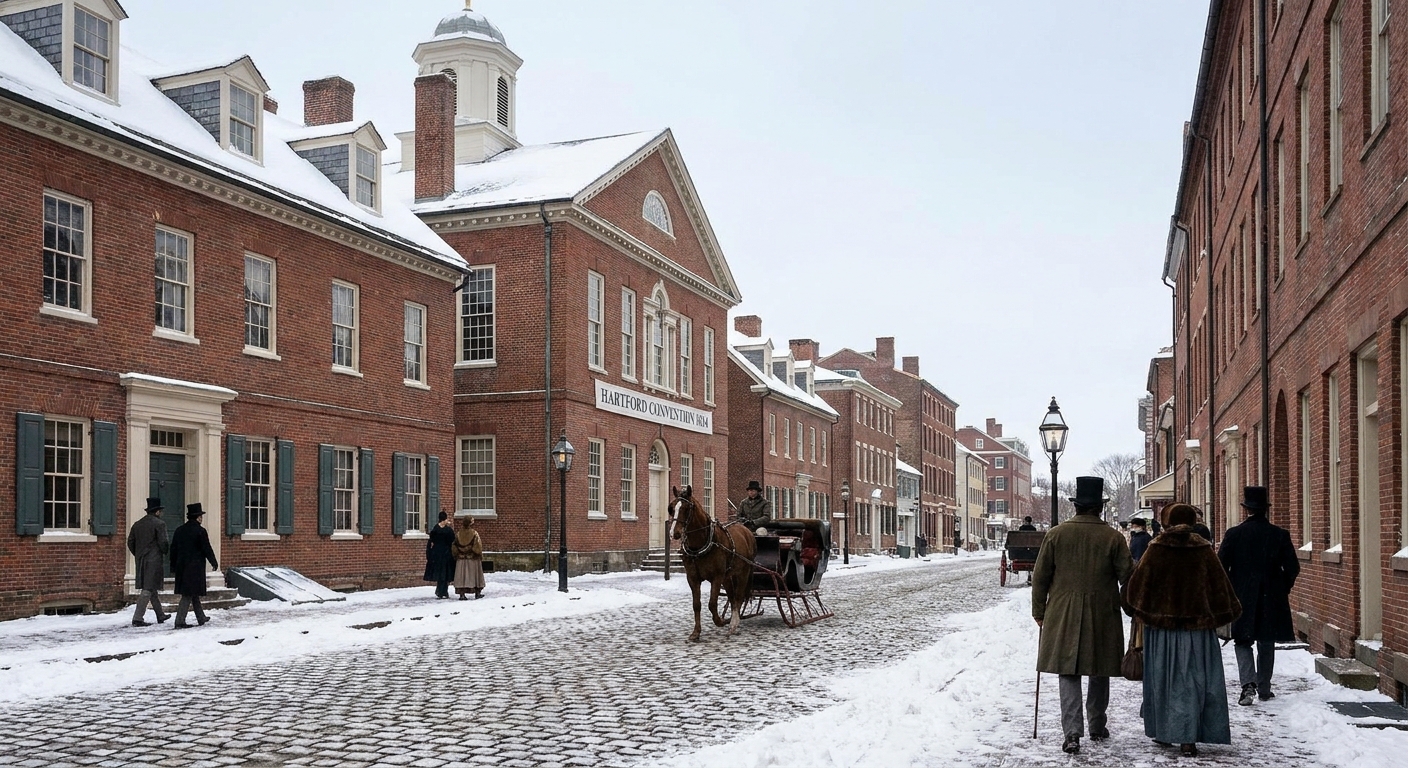
Quick context: why Hartford happened
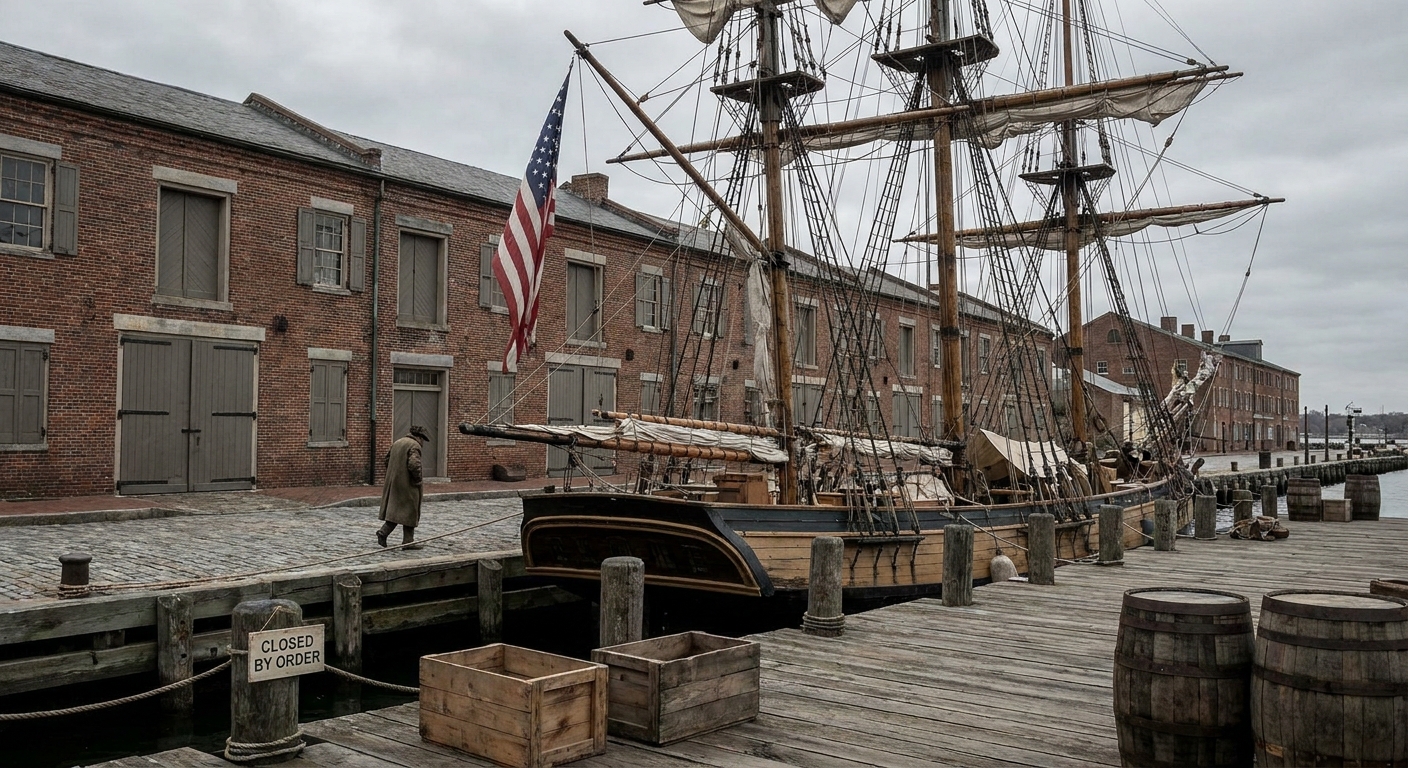
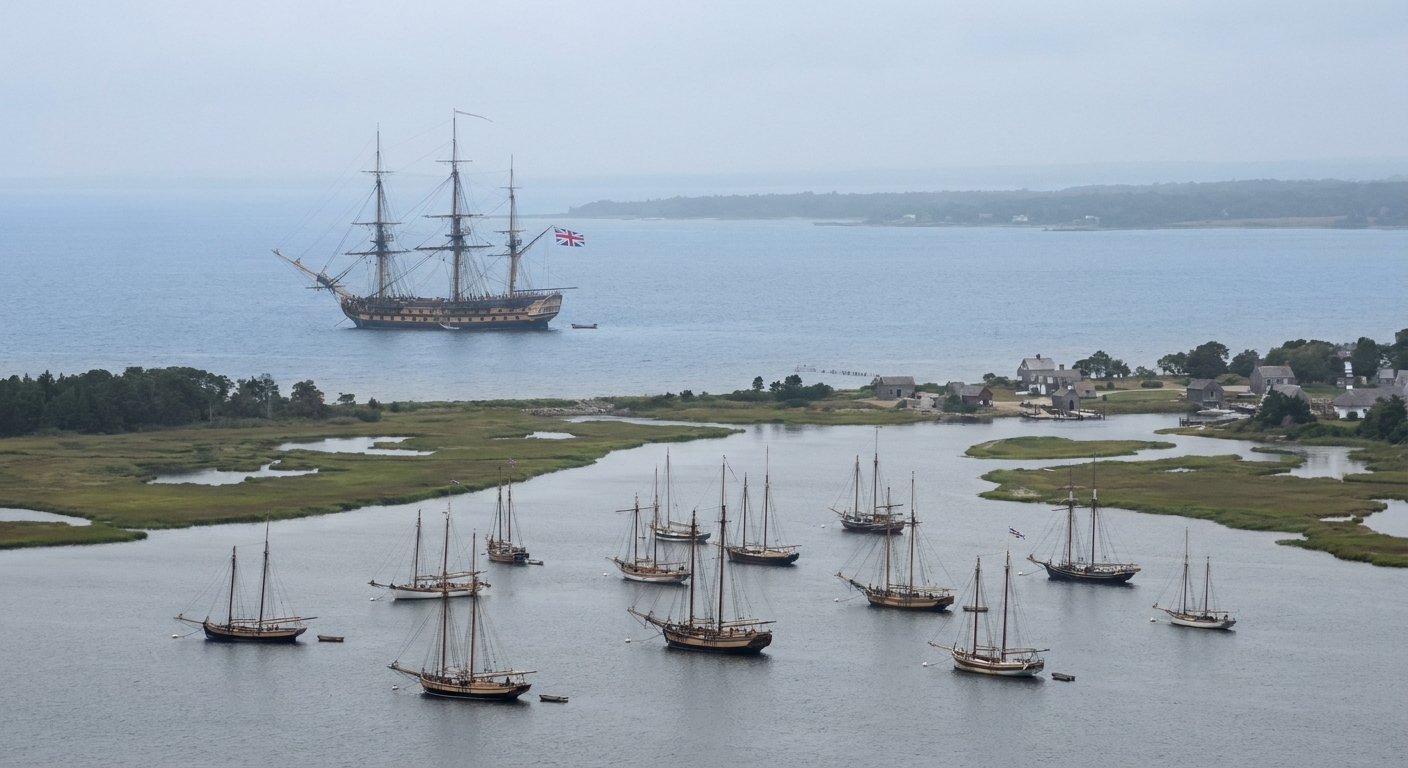
New England, especially the seaports, felt the War of 1812 like a hand tightening around the throat. Trade restrictions hit hard. Coastal towns feared raids. State leaders argued that Washington was asking them to shoulder the costs of a war they did not want and, in their view, did not benefit from.
This tension was not just newspaper thunder. It showed up in militia disputes, in arguments over who had authority to deploy state forces, and in the everyday grind of shortages and lost income. If you want a broader map of how the war’s big events stack up in time, start with our timeline hub here: /guide-timeline/.
The timeline: from grievance to fallout
1807 to 1812: The long fuse
- December 1807: The Embargo Act shuts down much of American overseas trade, hammering New England shipping and fueling deep distrust of national policy in coastal communities.
- 1809 to 1812: Embargo replacement policies and continued restrictions keep pressure on merchants and dockworkers. Federalists, already weakened nationally, become increasingly concentrated as a regional force.
- June 1812: The United States declares war on Britain. New England Federalists condemn the conflict as unnecessary and economically ruinous.
1813 to summer 1814: War closes in
- 1813: British naval pressure and blockades intensify. Insurance rates rise, trade collapses further, and coastal defense becomes a daily anxiety.
- Spring to summer 1814: With Napoleon defeated in Europe, Britain can spare more ships and troops for North America. New England fears it is exposed, underfunded, and treated as an afterthought by the national government.
- August 1814: Washington is burned. The shock is national, but it lands in New England as proof that the federal government cannot protect the country. If you want the human reality behind that catastrophe, see /beyond-the-bladensburg-races/.
October to November 1814: The meeting becomes real
- October 1814: The Massachusetts legislature calls for a convention of New England states to coordinate a response to shared grievances and propose constitutional remedies.
- November 1814: Delegates are selected. This is where legitimacy starts to matter. Massachusetts, Connecticut, and Rhode Island move formally. New Hampshire sends delegates too, but in a more piecemeal way, often described as coming from particular communities rather than as a fully state-directed mission. Vermont does not send an official delegation.
- Late 1814: Some New England leaders stay away, and other states look on with suspicion. That split feeds the fear that something bigger than “complaints” is underway.
December 15, 1814: Hartford opens
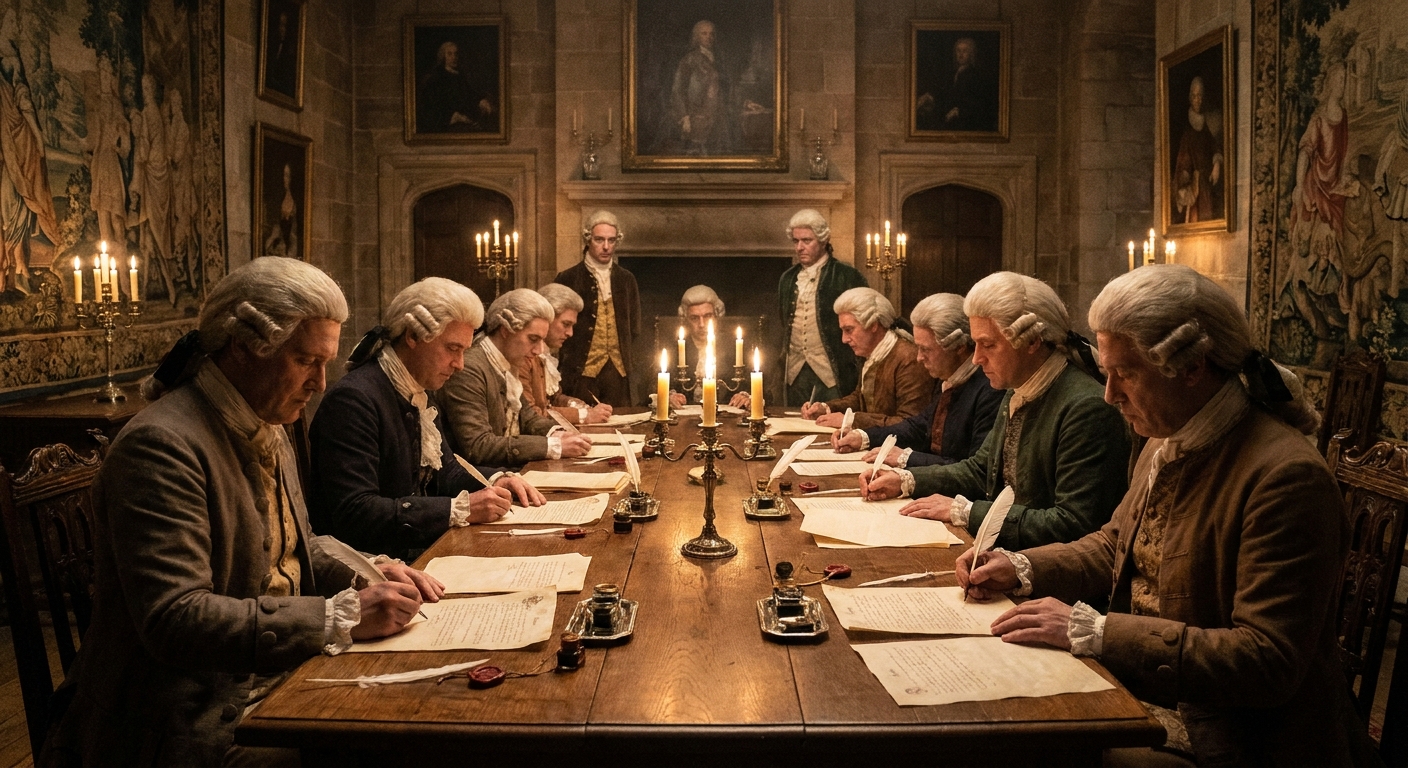
The convention begins in Hartford, Connecticut, with delegates from Massachusetts, Connecticut, and Rhode Island, joined by delegates from New Hampshire who were not commissioned in quite the same statewide way. They meet behind closed doors.
That secrecy mattered. In wartime, Americans were primed to imagine plots. The lack of public minutes invited rumor to do what rumor always does: fill silence with the worst possible story, including talk of secession or a separate peace with Britain.
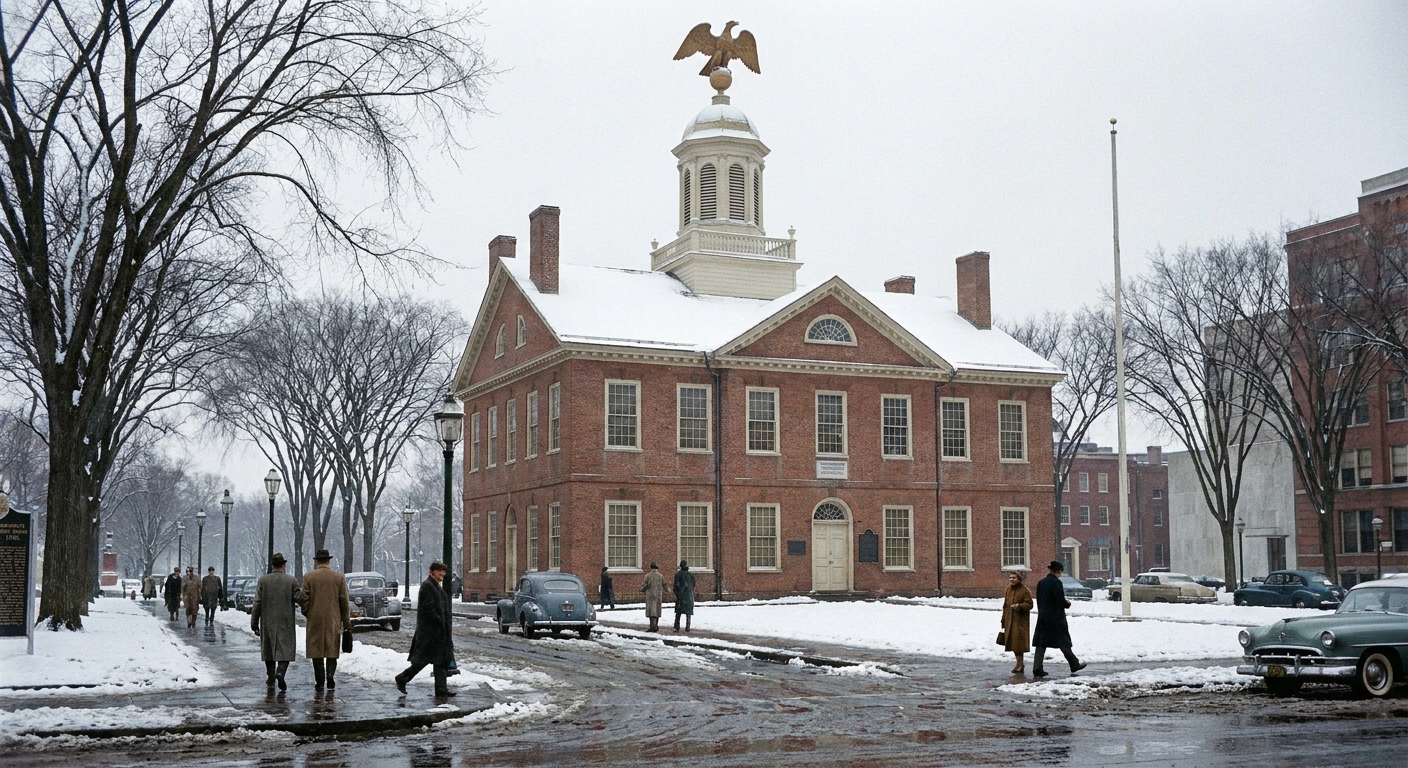
December 1814: The convention debates remedies
Inside the room, the strongest voices are not necessarily arguing for secession. The center of gravity is constitutional change meant to restrain federal power and, frankly, to rebalance a union the delegates believed was tilting against New England.
The proposals most often associated with the convention’s final report included:
- Two-thirds votes in Congress to declare war, admit new states, or impose an embargo lasting longer than 60 days.
- Limits on presidential rotation, including barring successive presidents from the same state.
- Changing representation rules by ending the practice of counting enslaved people toward representation, a direct challenge to the Three-Fifths framework.
But politics is not only what you decide. It is what people think you decided. Outside Hartford, suspicion keeps growing because the public can see the smoke but not the fire.
December 24, 1814: Peace terms agreed at Ghent
In Ghent, American and British negotiators agree to a treaty ending the war. The treaty is signed, but the news has to cross an ocean, then ride roads, then filter through cities and towns.
This delay is the hinge of the Hartford story. The delegates in Hartford are still operating as if the war will grind on indefinitely. If you want the broader sequence of the diplomacy and the long wait for confirmation, see /treaty-of-ghent-timeline-when-peace-reached-the-front/.
January 5, 1815: The convention concludes
The final report is adopted. It criticizes national policy and proposes amendments, and it calls for another convention if grievances remain unresolved.
Read coldly, it is a political document, not a declaration of independence. Read in the emotional climate of 1815, it is a match held too close to a powder keg.
January 1815: The commissioners head to Washington
- Early January 1815: Commissioners travel to Washington, D.C. to present the convention’s proposals.
- On the road and in the newspapers: Rumors harden. “Hartford” becomes less a place and more an accusation.
This is the part I always picture most clearly: winter travel, uncertainty, and a delegation carrying a formal complaint into a capital that is raw from invasion and hungry for unity.
And then, in practical terms, the floor drops out from under them. By the time the commissioners reach Washington and try to press their case, the city’s attention is already swinging toward victory and peace. Their timing turns their mission into an embarrassment, and their opponents do not waste the opening.
January 8, 1815: New Orleans changes the mood
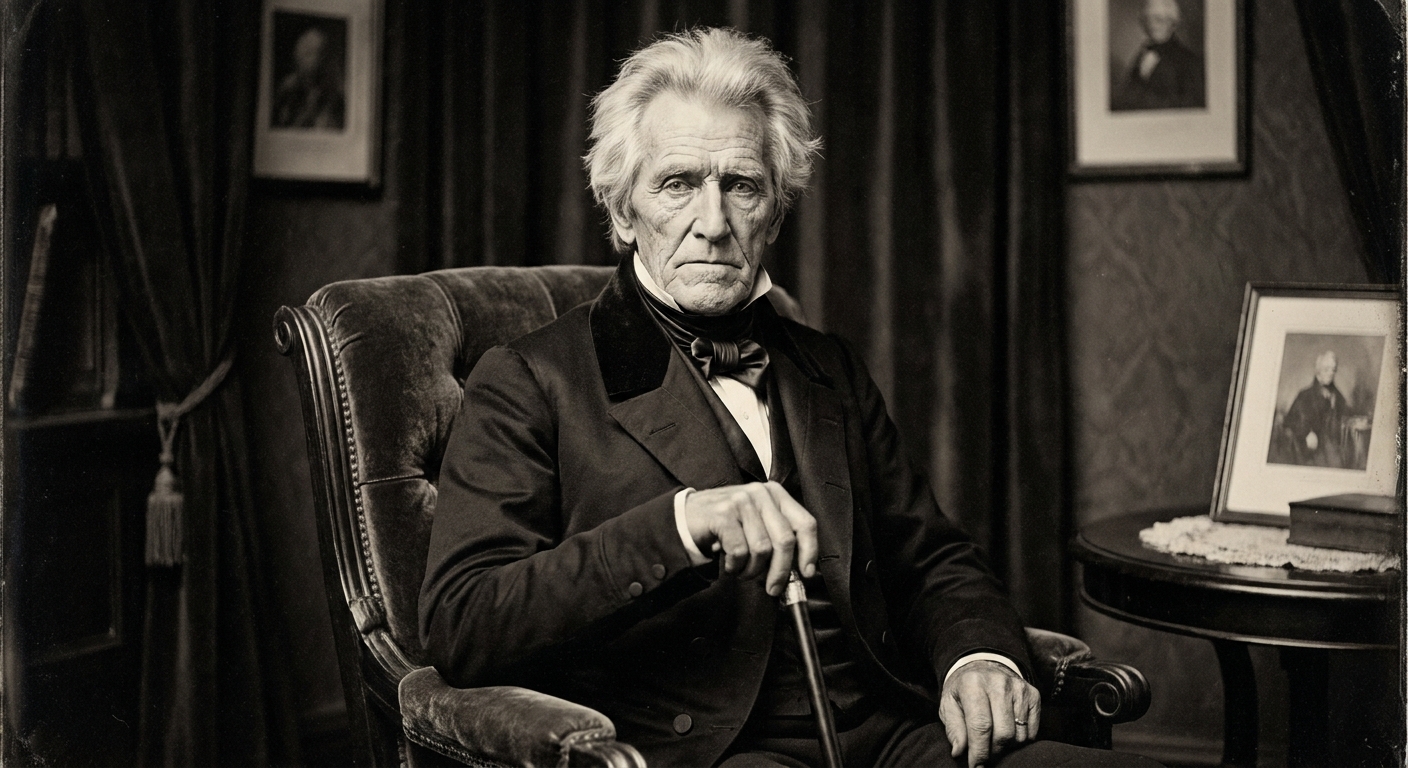
Andrew Jackson’s victory at New Orleans is fought after the treaty is signed but before it is widely known. The public impact is immediate and enormous. It feels like national vindication.
And it flips the emotional math. A movement framed around opposition to the war now looks, to many Americans, like opposition to victory itself. For the Federalists, it is terrible luck and worse optics.
Late January to February 1815: Peace news spreads
News of the Treaty of Ghent reaches the United States in late January and spreads more widely through February. As peace becomes accepted fact, the convention’s grievances sound dated, even petty. Wartime dissent, which might have been debated in calmer air, is re-labeled as near-treason in a peace people want to celebrate.
February 1815: The treaty is ratified
The Senate ratifies the Treaty of Ghent in mid-February, and the war is officially over. This is the final blow to Hartford’s relevance. The moment for leverage has passed. The moment for backlash has arrived.
Spring 1815 to 1817: “Hartford” becomes a brand
Nationally, Federalists are branded as disloyal. The party’s remaining strength becomes increasingly local and defensive. Hartford sticks as a symbol, and symbols do not require nuance to survive.
- 1816 presidential election: Federalist prospects crater. James Monroe wins decisively, setting the stage for the so-called Era of Good Feelings as he takes office in 1817.
Why timing killed it
When people ask why the Hartford Convention became radioactive, I usually answer with three intertwined causes:
- The calendar betrayed them. Peace was agreed at Ghent on December 24, 1814. The convention continued and concluded without that knowledge, and the commissioners traveled while the nation’s mood was pivoting.
- Secrecy invited invention. Closed doors made strategic sense to delegates who feared disruption, but it handed their enemies the perfect stage for rumors of secession and a separate peace.
- Public emotion outran policy detail. New Orleans and the arrival of peace made unity feel patriotic. In that moment, constitutional complaints were read as sabotage.
What they wanted, in plain terms
It is fair to say some New Englanders toyed with drastic ideas in private, and the atmosphere was thick with talk. But the convention’s formal output is better understood as an attempt to build guardrails: make it harder to drag the country into war, make long embargoes politically expensive, and reduce what delegates saw as structural advantages enjoyed by other regions.
The bitter irony is that a protest designed to preserve New England influence ended up accelerating New England’s political isolation at the national level.
Hartford’s legacy
When I am out walking battlefields and old port towns, I try to keep two pictures in my head at once. One is the military war of forts, ships, marches, and burned capitals. The other is the homefront war of arguments, shortages, and political fear.
The Hartford Convention sits squarely in that second picture. It reminds us that the War of 1812 was never experienced as one single national story. It was experienced as many local stories that collided in Washington, in newspapers, and in the long delays between a decision and the public hearing about it.
For more of the war’s political aftershocks, see /from-the-battlefield-to-the-ballot-box/.
FAQ
Did the Hartford Convention call for secession?
No formal declaration of secession came out of the convention. The final report focused on grievances and proposed constitutional amendments. But the secrecy of the meetings and the broader political climate allowed secession rumors, and separate-peace rumors, to flourish.
Why did the Federalist Party collapse so fast afterward?
“Hartford” became a national label for disloyalty at the exact moment Americans were celebrating New Orleans and peace. The party was already regionally concentrated, and the backlash made it politically toxic outside New England, accelerating its decline.
Was the timing really that important?
It was everything. The treaty was signed in Europe on December 24, 1814, but the convention ended January 5, 1815 and its commissioners traveled to Washington without knowing peace was essentially settled. By the time their message landed, the country’s mood had changed.