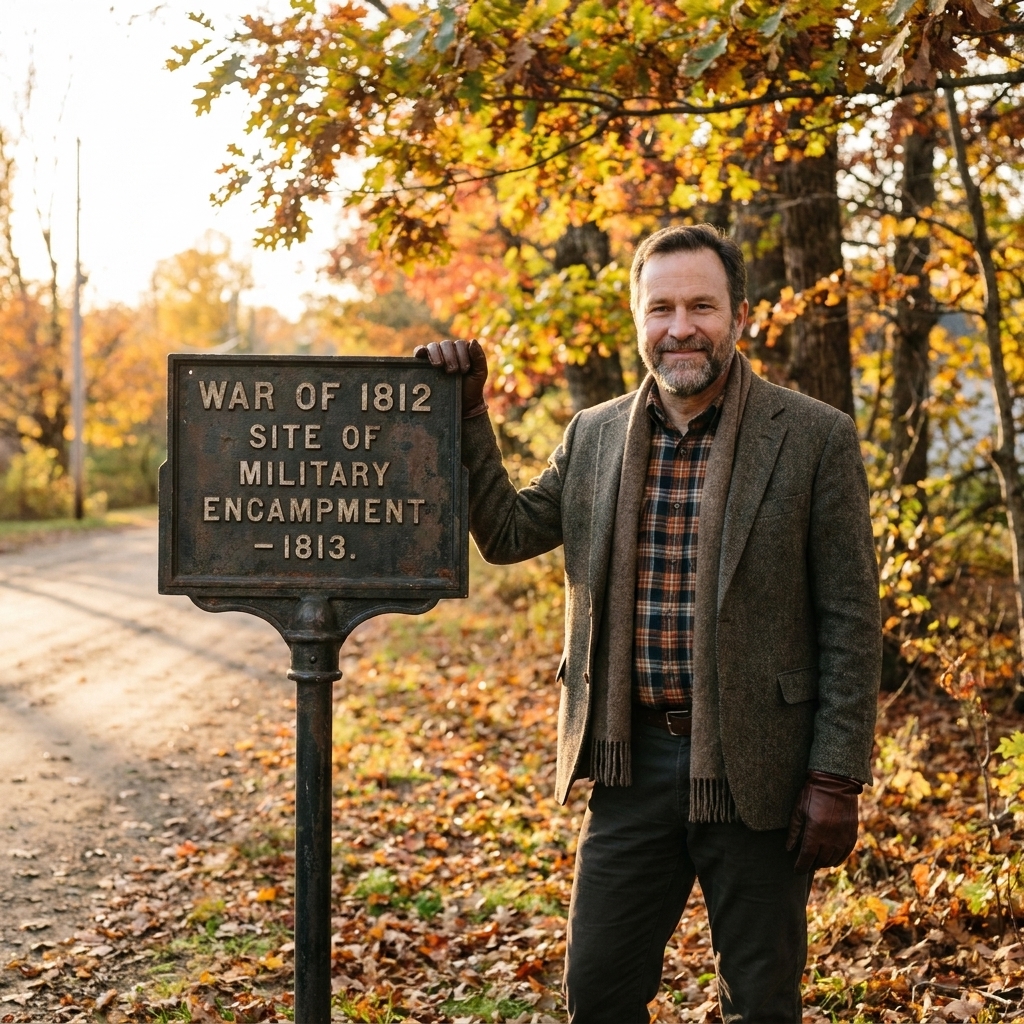

I grew up in upstate New York, close enough to old 1812 ground that my grandfather could take me on a “walk” and somehow turn it into a small campaign. He had a knack for spotting half-forgotten markers in the brush and saying, as if it were yesterday, “Someone stood right here and waited for orders that never came.”
That is the feeling you are chasing when you hunt down an ancestor’s War of 1812 record. Not just a date or a regiment, but the paper trail of a real person trying to get paid, trying to prove service, trying to support a widow or children, trying to be remembered by a government that was still learning how to keep records.
This guide walks you step by step through the most reliable ways to trace War of 1812 military service and pension records, what each record type can reveal, and how to keep going when the trail turns faint.
Start with what you know
Before you dive into archives and databases, gather your “home evidence.” It saves you hours later, and it helps you avoid the most common mistake I see: attaching the wrong soldier to your family tree because the name is the same.
Make a one-page ancestor profile
- Full name plus likely variations (for example: McCarty vs. McCarthy, Jonathon vs. Jonathan).
- Approximate birth year (even a guess helps).
- Where they lived around 1810 to 1820 (town and county if possible).
- Spouse name and any known children.
- Religion or church if known (some local records cross-reference militia rosters).
- Any family clues: an old discharge paper, a grave marker, “served at Sackets Harbor” passed down in the family, and so on.
Know the main service paths
Most War of 1812 veterans you meet on paper fall into one of these buckets. You can start broad and refine as the documents come in.
- U.S. Regular Army: longer enlistments, more standardized record-keeping, fewer men overall.
- Militia and volunteers: huge numbers, shorter tours, and records that are often local or state-held, sometimes echoed later in federal indexes or pension files.
- Navy and Marines: a different paperwork world, with muster books, enlistments, ship logs, prize-related material, and pension references that can read very differently from Army files.
If your ancestor lived in a border state or along major waterways, militia service is especially common. If your ancestor was young and single, Regular Army service is more plausible, but not guaranteed. If the family story includes a lake, a ship, a “gunboat,” or a captain whose title sounds naval, do not force it into an Army box.
Step 1: Check indexes and service files
For War of 1812 research, your first goal is usually an index or compiled entry that proves a man of that name served and gives you a unit, a state, or a clue for the next step.
Use the National Archives as your north star
The National Archives (NARA) is the official keeper for many federal military records. Even if you use a genealogy site to look things up, you want your results to map back to NARA record sets, especially:
- Service-related indexes and compiled entries that point to a unit and state
- Pension application files (often the richest packets for family details)
- Supporting administrative series that show pay, service statements, or later verification
Begin here for orientation and links to War of 1812 holdings:
Fold3: fast access to service and pensions
If you have access, Fold3 is often the quickest way to pull War of 1812 material together in one sitting, especially pension-related images. It is not perfect, but it is efficient for early passes, and strong for browsing digitized packet pages.
Tip from the trenches: Try the surname alone first, then narrow. War of 1812 indexes can be finicky with given names, and initials are everywhere.
FamilySearch: free, strong for proving identity
FamilySearch can be especially helpful when you need to build the case around the soldier, not just locate the soldier: census, marriages, probate, and local records that help prove the right John Smith is your John Smith.
Do not be surprised if you find an index entry without images. Treat it as a signpost, then go find the full file elsewhere.
If you only find an index entry
This is the fork in the road that trips people up. Here is a simple workflow I use when the record is just a line in an index:
- Copy every detail (unit, state, rank, dates, application or certificate numbers, widow name if listed).
- Compare it to your one-page profile (residence, age range, spouse name, migration hints).
- Look for the pension file next using those identifiers, even if the service line is thin.
- Then pivot to the state level for militia and many volunteer units, using the unit and county as your map.
Step 2: Pull pension files
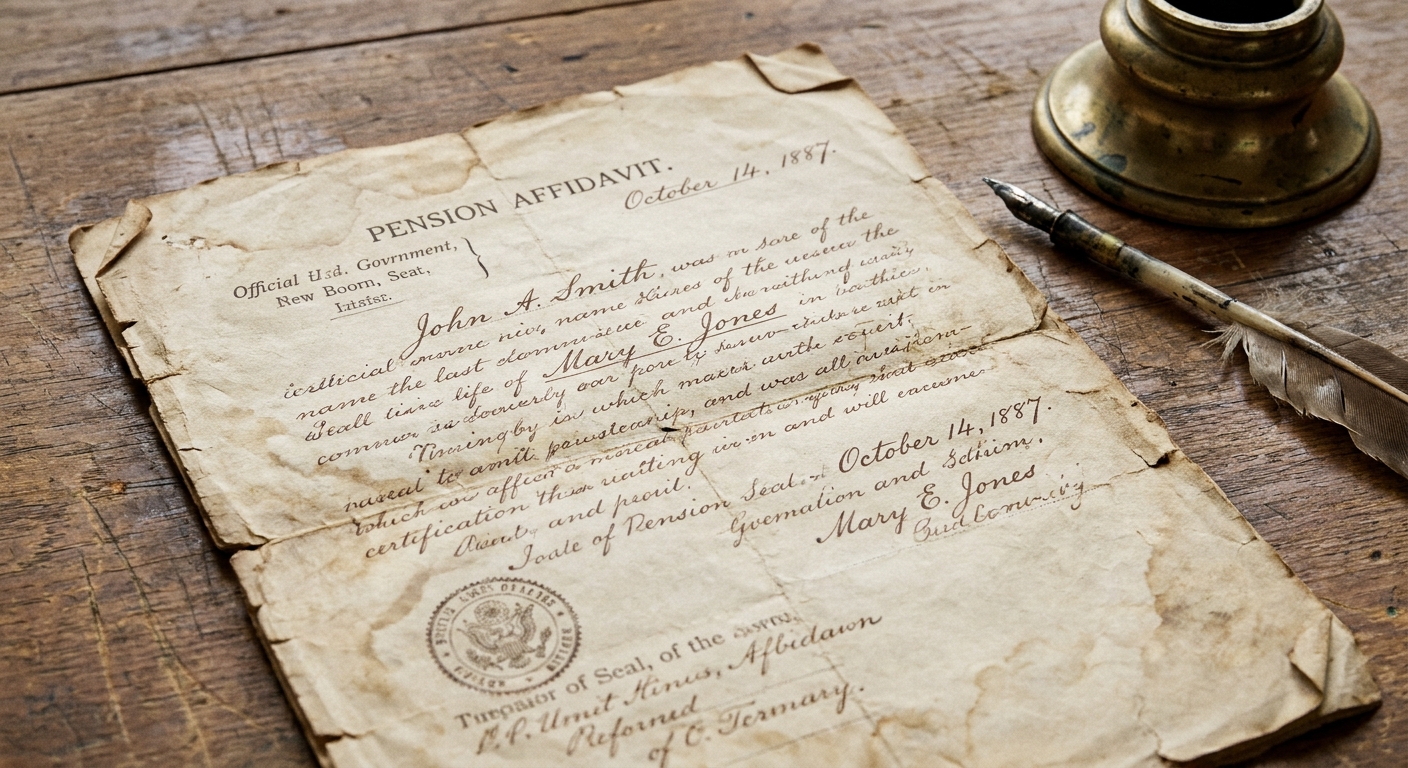
If you find only one thing, make it the pension file. Service records can be sparse. Pension packets can read like a small town drama, told under oath.
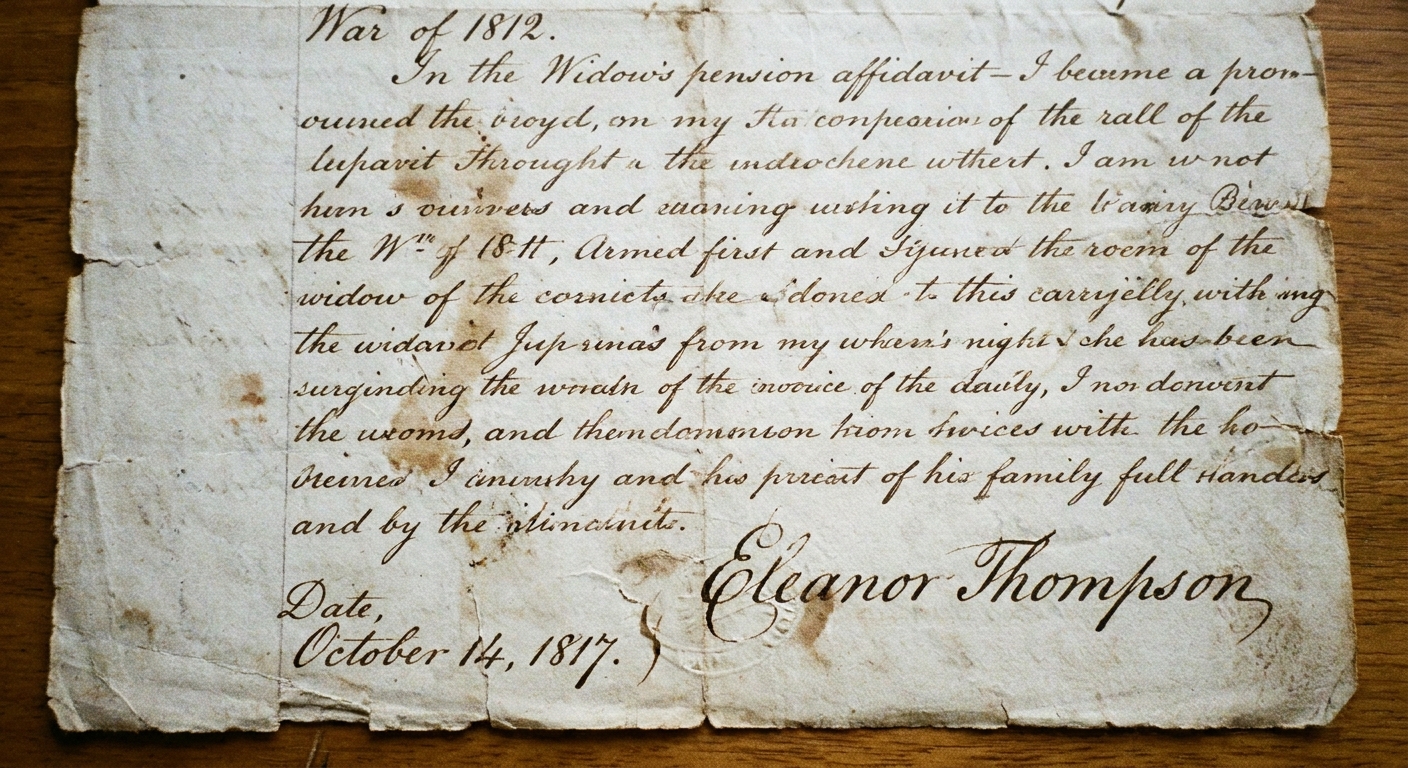
War of 1812 pensions often include:
- Age or birth information
- Place of residence after the war
- Unit details and service dates
- Affidavits by neighbors or former comrades
- Marriage proof for widows
- Children’s names and ages (sometimes)
- Handwritten signatures or marks
Understand the two pension patterns
You will see two broad patterns in pension paperwork:
- Early disability and hardship claims: filed closer to the war and often focused on wounds, illness, or inability to work.
- Later service-based and widows’ claims: a large wave of applications that came decades later as eligibility expanded, pulling older veterans and widows back into the paperwork long after the smoke cleared.
That later wave is why you can find a War of 1812 veteran living into the 1850s, 1860s, even later, still pushing papers across a clerk’s desk.
How to pull the right pension packet
- Start with a pension index (Fold3 often helps here).
- Write down every identifier: soldier name, unit, state, pension or application number, and widow name if listed.
- Match it to your ancestor profile: does the residence line up, does the widow name match, does the age make sense?
- Read every page. The clue you need is often on a back page, sideways, or added decades later.
A caution I learned the hard way: A widow’s application can be filed under her name, his name, or both, and clerks were not always consistent. If you have a widow’s first name, check it as its own lead.
Step 3: Match a unit to a place
War of 1812 service is intensely local. Militia companies can be tied to a specific county or even a cluster of towns. Your ancestor’s record will make more sense once you pin down where his unit likely mustered and where it served.
Use our People and Timeline guides
If you want a quick on-site refresher while you research, these guides help keep the bigger picture straight:
Even if your ancestor never fired a shot, understanding the local theaters of war helps you recognize unit names, garrisons, and why a man from inland New York might suddenly appear in records tied to the Lake Ontario shoreline.
Decode common unit wording
- “Infantry” can mean U.S. Regular infantry or militia infantry. The state name matters.
- “Volunteers” can mean different things. Some volunteer organizations were state-raised and operated alongside militia structures, while others were federally raised for specific campaigns. The paperwork and where it ended up can differ.
- “Mounted” or “Dragoons” can be misleading on the militia side. Sometimes it is a local label more than a true cavalry arm.
- Company and captain names are often more useful than regimental numbers in militia research.
When a record gives you a captain’s name, treat it like a compass bearing. You can sometimes locate a captain in local histories, county records, or state rosters and then confirm the company’s home area.
Step 4: Go state-by-state
Here is a truth that can sting: for militia service, the “best” record may never have been federal. It may sit in a state archive, an adjutant general collection, or a published roster. Sometimes it has been microfilmed, sometimes digitized, sometimes not.
Because every state handled militia paperwork differently, your strategy is to use federal indexes to identify the state and unit, then switch to state-level digging.
What to look for at the state level
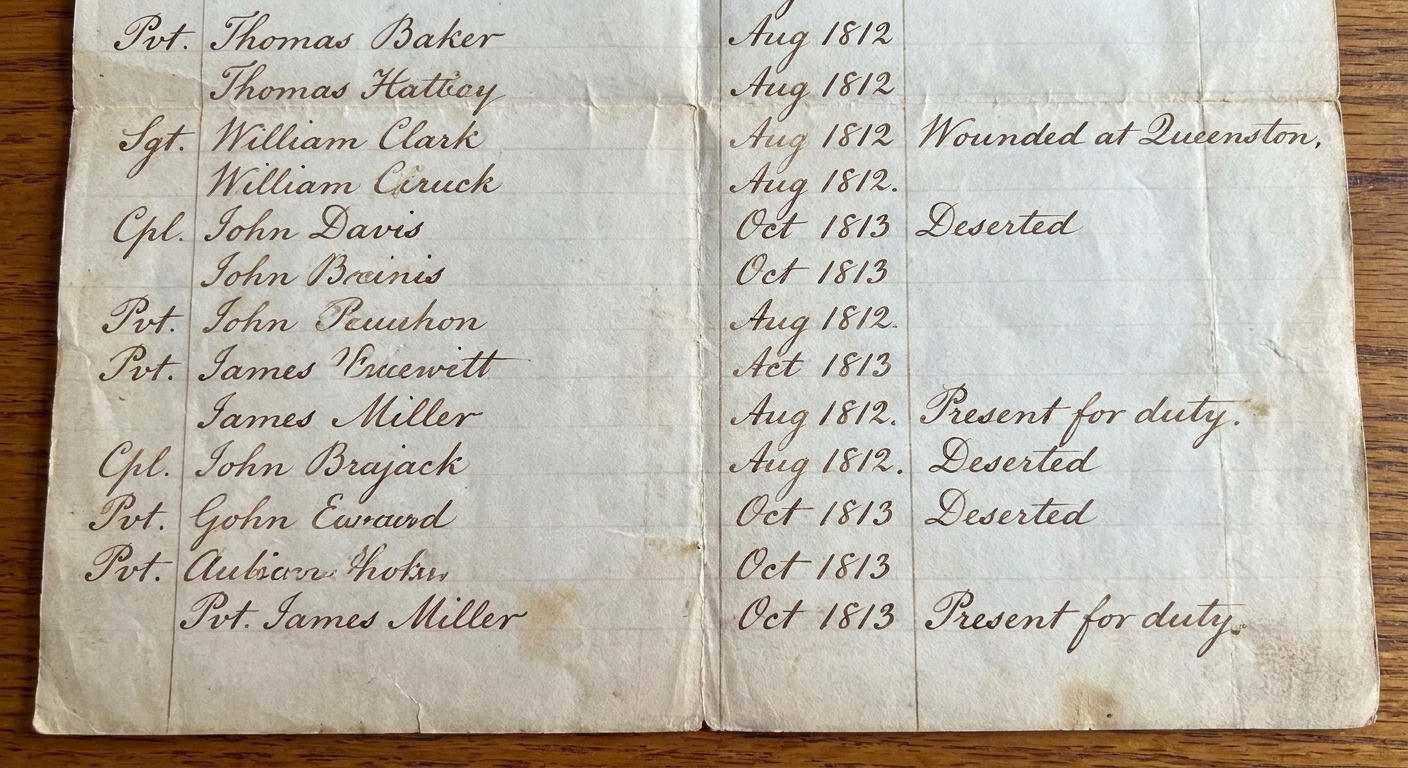
- Militia rolls and detachments
- Pay rolls and clothing accounts
- Muster and return lists
- Bounty land related material (limited and law-dependent for the War of 1812, and more likely to show up in particular circumstances than as a universal entitlement)
- County histories that reprint portions of rosters
Field note: If your ancestor served on the Niagara frontier, Lake Champlain corridor, Chesapeake, or Gulf Coast, the odds increase that you will find overlapping references across federal and state materials. Those regions generated paperwork because they generated movement.
Step 5: Use pensions to prove family
Most genealogists come to War of 1812 records for a simple reason: they want to prove a link. Pension packets are often the best bridge between a soldier and a family tree, especially when names repeat across generations.
Widows’ pensions can be packed with genealogy
Widows had to prove marriage, and that proof could take many shapes:
- Bible pages copied and sworn to
- Church marriage records or minister affidavits
- County clerk statements
- Testimony by relatives and neighbors
Pay attention to the witnesses. A witness is frequently a brother-in-law, a grown child, or a long-time neighbor who migrated with the family.
Watch for migration trails
A man might enlist in Vermont, apply for a pension in Ohio, and die in Michigan. The pension file can narrate that movement plainly, and it can also explain why your ancestor seems to “disappear” from one place and reappear in another.
Search habits that work
Try spelling variants aggressively
Clerks spelled by ear, and handwriting is its own trouble. If you are looking for “Beauchamp,” you also look for “Boshamp,” “Beecham,” and any other version you can stand to type.
Pair a first name with a place
If your ancestor has an uncommon first name, pair it with a county or state. This can separate the right man from a crowd of same-surname soldiers.
Use a captain’s name as a keyword
Once you spot a captain, try the captain and the state together. You may find rosters, printed histories, or other men from the same company that help confirm you are in the right neighborhood.
Do not ignore rejected claims
A rejected pension can still contain affidavits, marriage testimony, and service statements. In human terms, a rejection often means “not enough proof,” not “did not serve.”
Common-name problems
War of 1812 research can turn into a thicket when the name is common. When that happens, you need to build a case, not chase a single record.
Build a proof stack
- Census records after the war, to confirm age and household.
- Marriage records to match a widow’s name.
- Land and probate to place the man in a county.
- Neighbors from affidavits and witness statements, checked against local records.
When two John Smiths served, it is often the witnesses and the residence lines that separate them, not the regimental label.
Navy and Marine records
If your ancestor served on the lakes or at sea, shift your expectations early. Naval documentation can orbit around ships, stations, and cruises rather than regiments and companies. You may see:
- Enlistments and musters tied to a vessel or naval station
- Notes about capture, exchange, or hospital time
- Pension material that references naval service even when the service file feels thin
- Prize-related references in family lore that point you toward a maritime trail
If your family story runs toward the Great Lakes, I like to keep the naval side of the war fresh in mind while I work. Two good on-site reads for that orientation are 5 Naval Actions That Changed the War of 1812 and Perry’s Shipyard Miracle Before Lake Erie.
If there is no pension file
Sometimes there is simply no pension packet to be had. That does not mean your ancestor did not serve. It just means you need other anchors.
When pensions do not exist, I widen the circle to postwar and local sources:
- Graves and markers (especially when a unit is carved in stone)
- Local courthouse material like probate, land, or guardianship that names a “soldier” or “veteran” in plain language
- Newspapers that mention musters, departures, or later veteran notices
- State rosters and adjutant general material that may list detachments and short service stints
It is not as clean as a pension affidavit, but it can still get you to the same place: the right man, in the right county, at the right time.
What the ground can teach
I will admit my bias: once I find a unit, I want to walk where that unit walked. It does not solve every genealogical problem, but it makes the paper human.
If your research points toward a specific theater, our site guides can help you plan a visit that matches the history you are uncovering:
You can stand on a quiet rise and realize why a clerk described a march as “exhausting,” or why a man’s sworn statement emphasizes a river crossing, a storm, or a fever season.
Quick FAQ
Are War of 1812 records complete?
No. Some were lost, some never made it into federal custody, and some survive only as fragments. That is why pension files, state rosters, and local records matter.
My ancestor served in the militia. Does that mean there is no federal record?
Not necessarily. Many militia references show up in federal pension material, pay-related paperwork, or compiled indexes. Use federal tools to identify the unit and state, then pivot to state archives for deeper rolls.
What if I find multiple men with the same name?
Slow down and switch from “looking up” to “proving.” Compare residence, spouse name, age, witnesses, and migration. Do not attach a record until at least two or three details align cleanly.
What is the single best record to find first?
If it exists for your ancestor, it is the pension packet. It often contains the most family details and the best breadcrumbs for where to look next.
A final note
War of 1812 paperwork can feel like a scavenger hunt designed by three different governments and a hundred tired clerks. But when it clicks, it is worth it. A pension affidavit might tell you your ancestor limped from an old wound, or that a neighbor remembered the day he marched out, or that a widow carried the story long enough to put it on paper.
If you want to learn more about how I approach these stories beyond the documents, you can read more about me here: /author/josiah-harding/.