
The first time I stood on the Lake Erie shoreline with a stiff wind pushing low chop toward the beach, I understood something many timelines never quite admit. Control of the Great Lakes was not an abstract strategy. It was a daily contest against distance, weather, rot, and shortage.
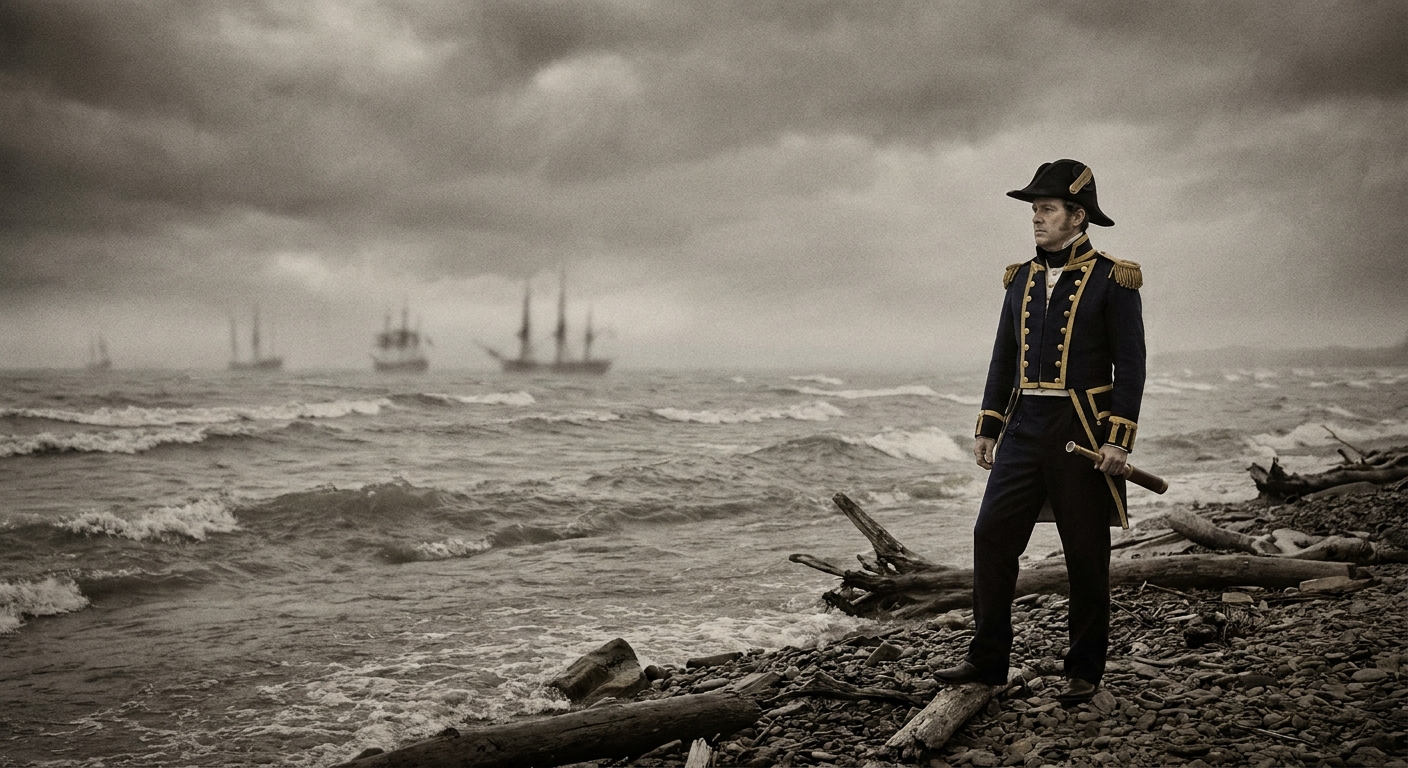
Oliver Hazard Perry is rightly remembered for the battle itself, for the smoke and the famous message, but his real masterpiece began months earlier in the sawdust. Before guns spoke on September 10, 1813, Perry and the men around him pulled off one of the war’s great logistical miracles: building a fleet in the wilderness fast enough, and strong enough, to challenge the British-Canadian squadron on the lake.
The problem Perry inherited
Lake Erie was a narrow, dangerous corridor of power. If the British controlled it, they could move troops and supplies along the lake faster than any army could march through the road-poor interior. If the Americans controlled it, the British position in Upper Canada and at Detroit suddenly looked shaky.
Perry was sent west in 1813 into a situation that looked simple on paper and ugly on the ground:
- No battle-ready squadron yet that could match Capt. Robert Heriot Barclay’s force operating from the Canadian side.
- A frontier shipyard at Presque Isle (today’s Erie, Pennsylvania) that had promise but lacked everything a coastal navy yard took for granted.
- A brutal clock set by seasons. Build too slowly and you lose the campaigning year to winter ice and storms.
Most accounts summarize this as “Perry built ships.” What they really mean is “Perry built a supply chain,” and then turned it into fighting power on a deadline.
Why Presque Isle mattered
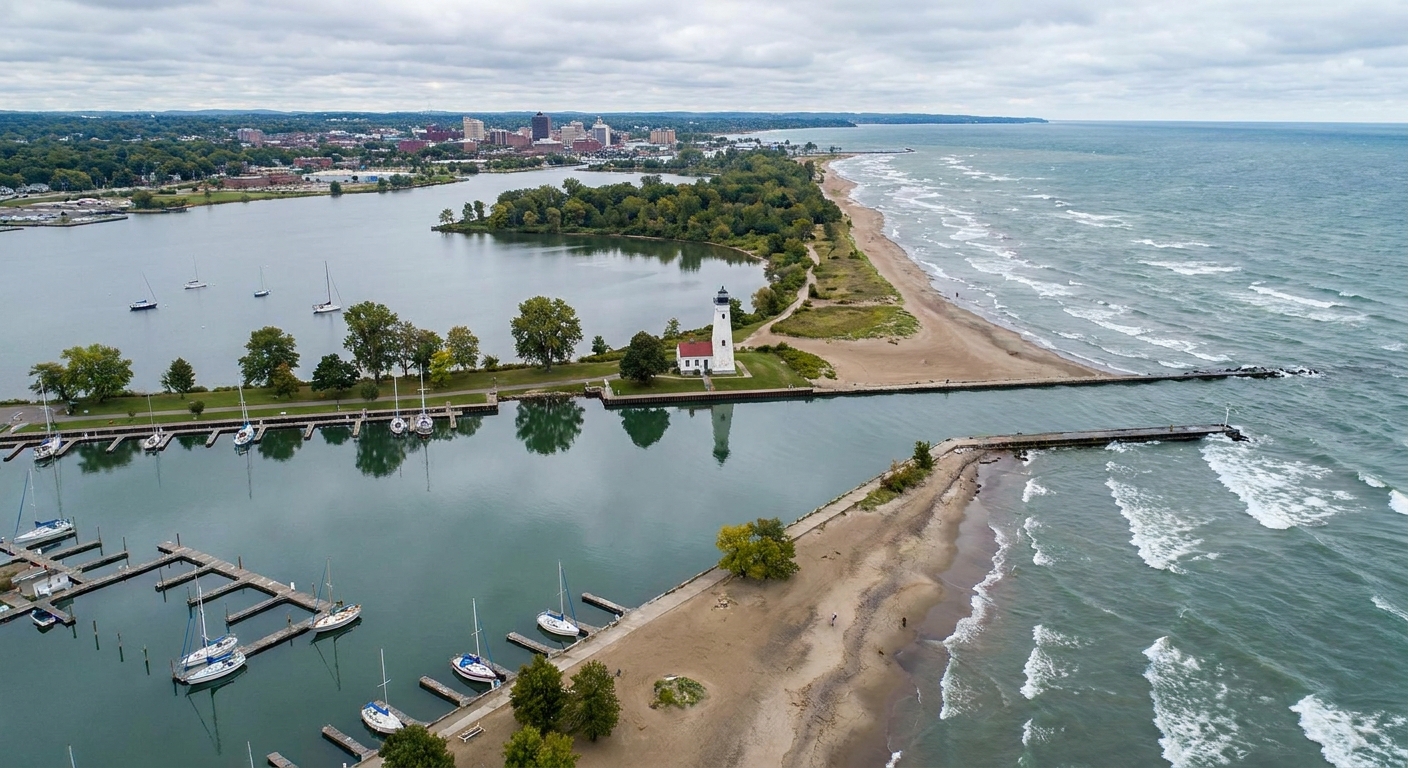
Perry’s strategy started with geography. Presque Isle offered a natural harbor protected by a sandbar. That protection was a blessing and a curse. It helped keep enemy cruisers from simply sailing in and wrecking the yard, but it also meant the largest American vessels would have to cross that bar to reach open water.
Choosing Presque Isle was not just about hiding a shipyard. It was about buying time. If British ships appeared off the coast, a sheltered harbor and shallow approaches could frustrate a quick strike while the Americans worked like mad behind it.
What they built there
“A fleet” can sound vague until you name planks and hulls. The heart of Perry’s striking force at Presque Isle was the pair of brigs that would carry the battle’s weight: Lawrence (his flagship) and Niagara. Around them came smaller, quicker craft that mattered more than they get credit for, including schooners like Ariel and Scorpion.
Battle-worthy on Lake Erie did not mean perfect. It meant hulls that could take punishment, rigs that could be repaired under stress, and gun decks that could be worked by crews who were still learning each other’s rhythm.
Timber: the fleet began as trees
The Great Lakes shipyards ran on wood, and not just any wood. You needed long, sound timbers for frames and keel pieces, straight pine for masts and spars, planking that would not split under strain, and knee timber with natural curves for strength. In a coastal yard, that material arrived as a managed flow. At Presque Isle, it had to be found, cut, hauled, and shaped with whatever hands could be gathered.
Local sourcing and hard choices
Perry’s builders relied on what northwestern Pennsylvania could provide, and that shaped the ships. When historians talk about “frontier-built” vessels, this is what they mean: designs had to flex to the material reality.
- Selection mattered. A rushed cut from a poor tree becomes a weak point at sea. The pressure to build fast fought constantly with the need to build stout.
- Green wood was a fact of life. Properly seasoned timber takes time. Perry did not have time. Fresh-cut wood is heavier and can warp as it dries, which complicates joinery and long-term durability, but speed demanded it.
- The forest had to meet the battlefield schedule. Every delay in cutting and hauling rippled forward into rigging, fitting out, and training.
If you want to feel the scale, imagine turning a stand of trees into a warship while also feeding workers, housing them, and protecting the whole operation from sudden British pressure.
Iron, canvas, and cordage
A wooden fleet is not only wood. The parts that often caused the worst headaches were the ones a wilderness yard could not easily manufacture.
Fastenings and hardware
Ships consume iron. Spikes, bolts, nails, straps, hinges, chain plates, shot, and the fittings that let rigging carry strain without ripping through the hull. When iron is scarce, builders improvise, reuse, and prioritize. A shortage of the right bolt can stall work on a section of hull just as effectively as a shortage of timber.
Sails and rope
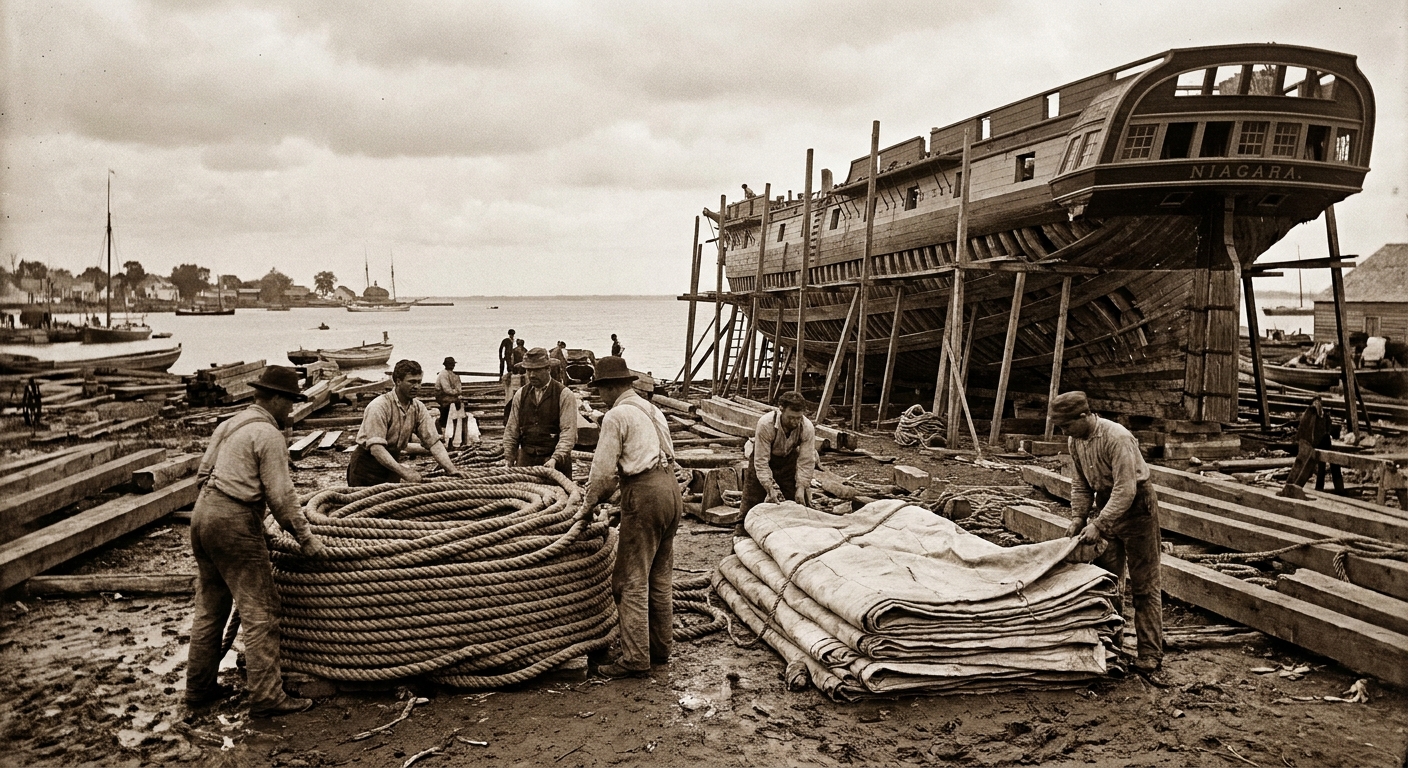
Canvas and cordage were strategic materials. A ship could be perfectly built and still be useless if it could not spread sail or keep its rig standing. On the lakes, where winds change quickly and storms can build fast, sound rigging was survival. Getting canvas and rope to Presque Isle was itself a logistical journey, one that depended on overland routes, wagons, pack animals, and waterways that did not always cooperate.
The manpower puzzle
Perry’s fleet was built by a mix of skilled craftsmen and men detailed from other duties. Frontier yards did not have endless shipwrights waiting around for contracts. Skilled hands had to be recruited, enticed, reassigned, or borrowed.
Two workforces, one deadline
- Shipwrights and carpenters turned raw timber into frames, knees, planking, and decks. Their work demanded experience. Mistakes were costly.
- Sailors and marines were needed to man the ships, but crews were often short and sometimes green. Training had to happen while construction still raged.
One of the least romantic truths of 1812 is that you can build ships faster than you can build seamanship. Perry had to knit a fighting crew together while also supervising a shipyard that was still swallowing supplies by the wagonload.
The team behind the yard
It is tempting to write this as a single-man story, but Presque Isle ran on relationships and competence. One name worth keeping in view is Daniel Dobbins, the Great Lakes sailor and local operator whose knowledge of the area and the lake’s realities helped make the yard more than a hopeful sketch on a map.
Perry’s talent was not only technical. It was organizational. He pushed, persuaded, reallocated, and kept pressure on every weak link, from materials to manpower to morale.
Perry’s strategy before battle
When people picture naval strategy, they think of formations and gunnery. Perry’s pre-battle strategy was more basic and more brilliant: he aimed to produce a concentrated, battle-worthy squadron from scattered resources, then bring it to the decisive point at the decisive time.
Standardize the mission
On a frontier, you rarely get uniformity in construction. You get what the woods and workshops can provide. Perry’s strength was treating the fleet as a system. Even if every bolt and plank did not match an ideal pattern, the goal stayed consistent: field ships that could carry heavy guns, hold together in a sustained fight, and be ready before Barclay’s squadron could tighten the noose.
Time as a weapon
Every week gained in building and fitting out was a week denied to British planning. The Americans were racing not only the enemy, but also the lake itself. Once autumn storms rolled in, the operational window narrowed fast.
For readers who like to follow the war’s flow across places and months, the broader sequence is easier to see laid out on our timeline guide.
Getting over the sandbar
That protective bar at Presque Isle did its job, and then demanded payment. The heavier American brigs had to be brought over shallow water to reach the lake and fight. This challenge shaped everything. A ship that cannot leave harbor might as well be a fort.
The solutions used at the time were practical and nerve-racking: lightening the ships by stripping weight, and using flotation aids often described as camels, then working the hulls across in stages when wind, water level, and nerves allowed it. The operation required patience, favorable conditions, and a steady grip on morale, because nothing feels more foolish than a warship stuck where it cannot float free.
When you read accounts that portray this as a simple step, remember that one misjudgment here could waste months of labor and hand the British the season.
Feeding the machine
Shipbuilding eats. It eats timber, iron, pitch, tar, paint, provisions, and people’s energy. A yard like Presque Isle had to become a small town that could keep itself functioning under strain.
What had to arrive
- Food and drinkable water for laborers and sailors, plus storage that could keep supplies from spoiling.
- Tools that broke, dulled, and needed replacement. Axes, adzes, saws, augers, caulking irons.
- Materials for finishing like tar and pitch for seams, and paints and oils to slow rot.
I have read enough period letters to recognize the pattern: big plans got kneecapped by small failures. A wagon bogged down and did not arrive. A shortage of nails stalls a deck. Sickness thins a crew right when you need hands on rigging. Perry’s achievement was keeping the machine fed long enough for it to deliver a fleet.
Why it mattered
By the time Perry sailed out to meet Barclay on September 10, much of the outcome had already been shaped by his pre-battle strategy. Not the tactics, not the bravery, but the simple fact that the Americans had managed to put a squadron on the water capable of standing and trading blows.
Logistics shows itself in battle in quiet ways:
- Hull strength determines how long a ship can take punishment without opening seams or losing structural integrity.
- Rigging quality determines whether a ship stays maneuverable after damage.
- Gun availability and fit determine whether a broadside is decisive or disappointing.
- Crew readiness determines whether opportunities are seized or missed in the smoke.
And the payoff did not end with a captured squadron. American control of Lake Erie made it possible to move an army, resecure Detroit, and press the campaign into the Thames corridor as British forces fell back. In other words, the shipyard’s “unromantic” work did not just win a battle. It opened a road through water.
If you want more Great Lakes and borderland context beyond Lake Erie alone, our battles guide is the best place to wander next.
Perry’s approach in five moves
When I try to explain Perry’s fleet-building strategy to friends who think they do not care about naval logistics, I boil it down to five plain moves:
- Choose a defensible build site where a small force could work without being instantly destroyed.
- Exploit local resources for timber and labor, even when that meant building with green wood and imperfect conditions.
- Pull critical manufactured goods inland like iron fittings, canvas, and rope, and treat delays as threats equal to enemy guns.
- Build and train at the same time because waiting for perfection meant losing the season.
- Concentrate combat power by getting the ships over the bar and onto the lake as a functioning squadron.
That is not romantic. It is not a trumpet-blast kind of heroism. It is the kind that smells like pitch and sweat. And it is, in its own way, the reason Lake Erie turned from British highway to American advantage in 1813.
For more on the people behind these campaigns, including commanders and the often-forgotten supporting cast, visit our people guide. You can also find more about my approach to traveling and writing this war at my author page.