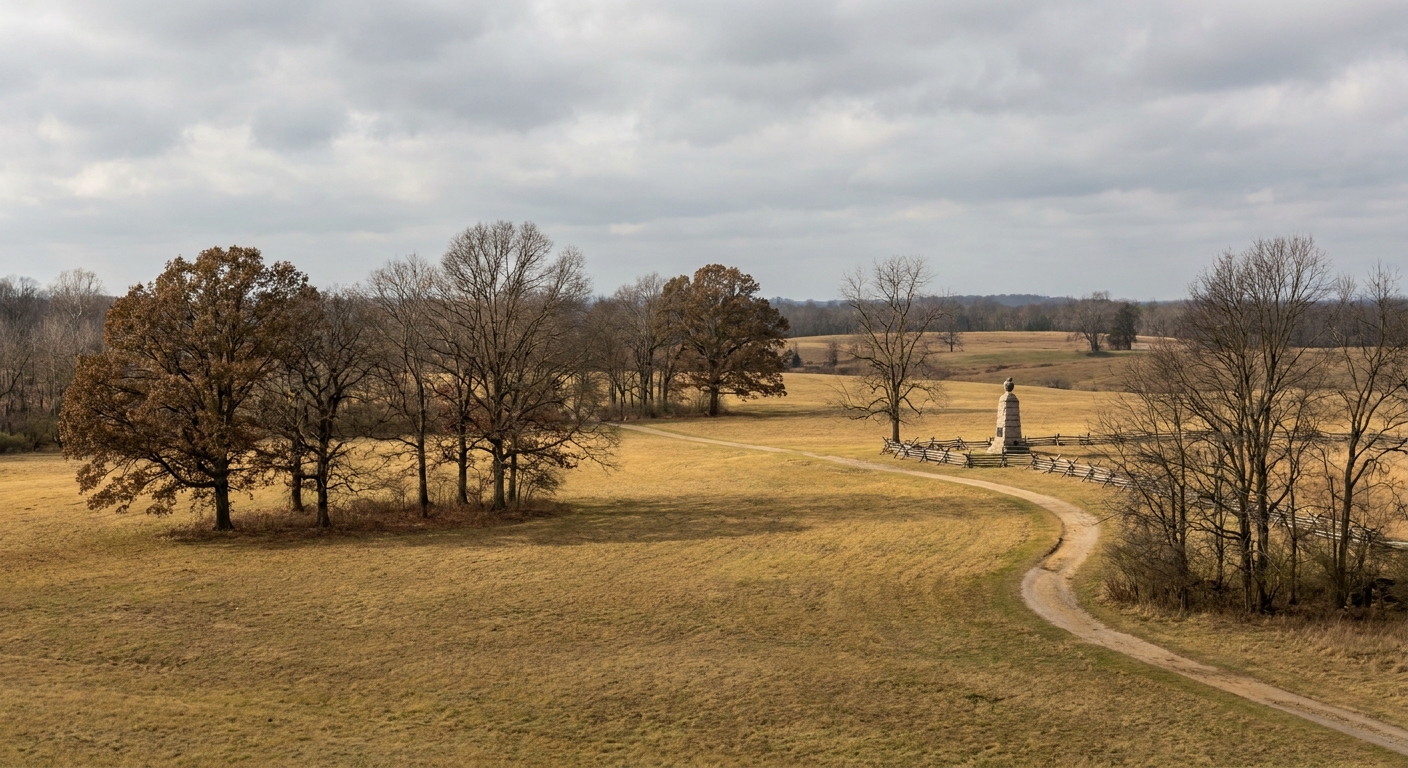

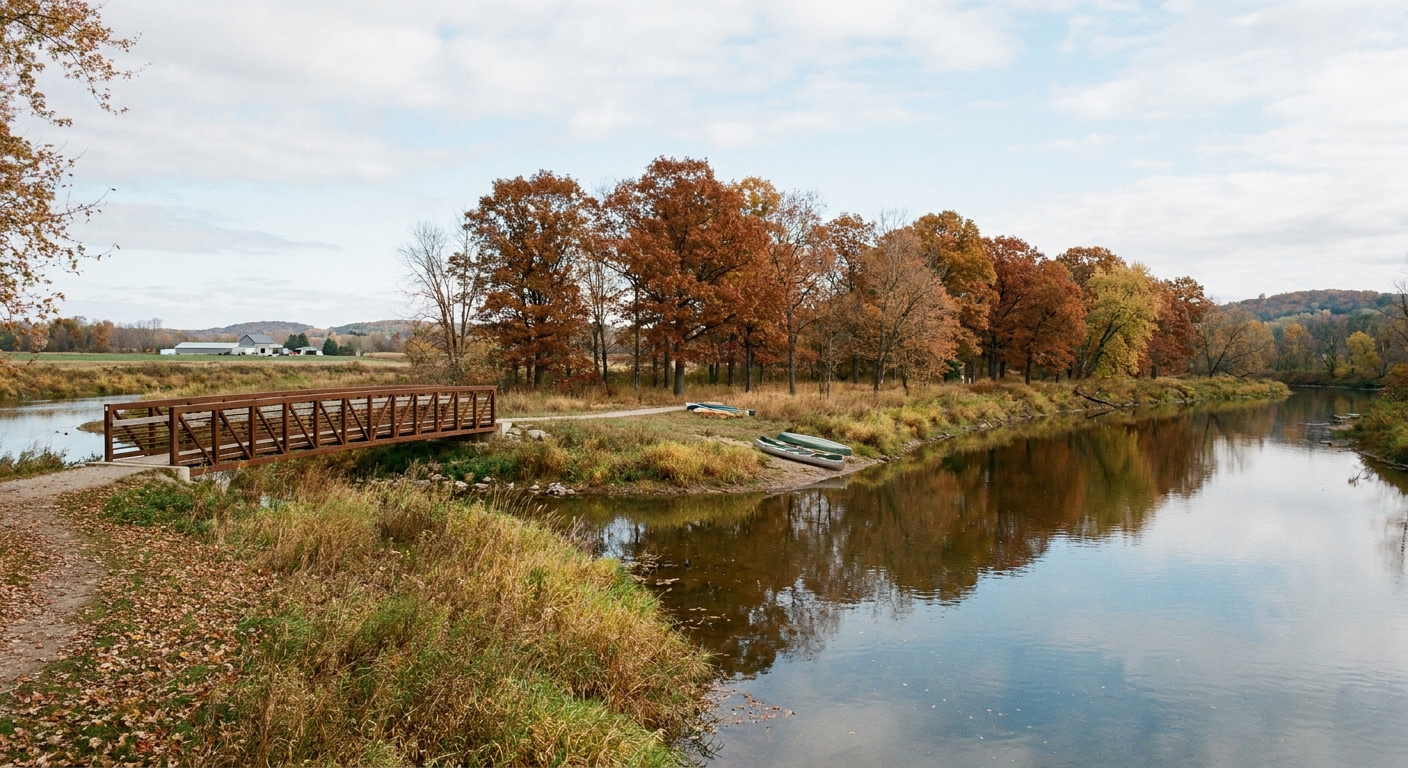
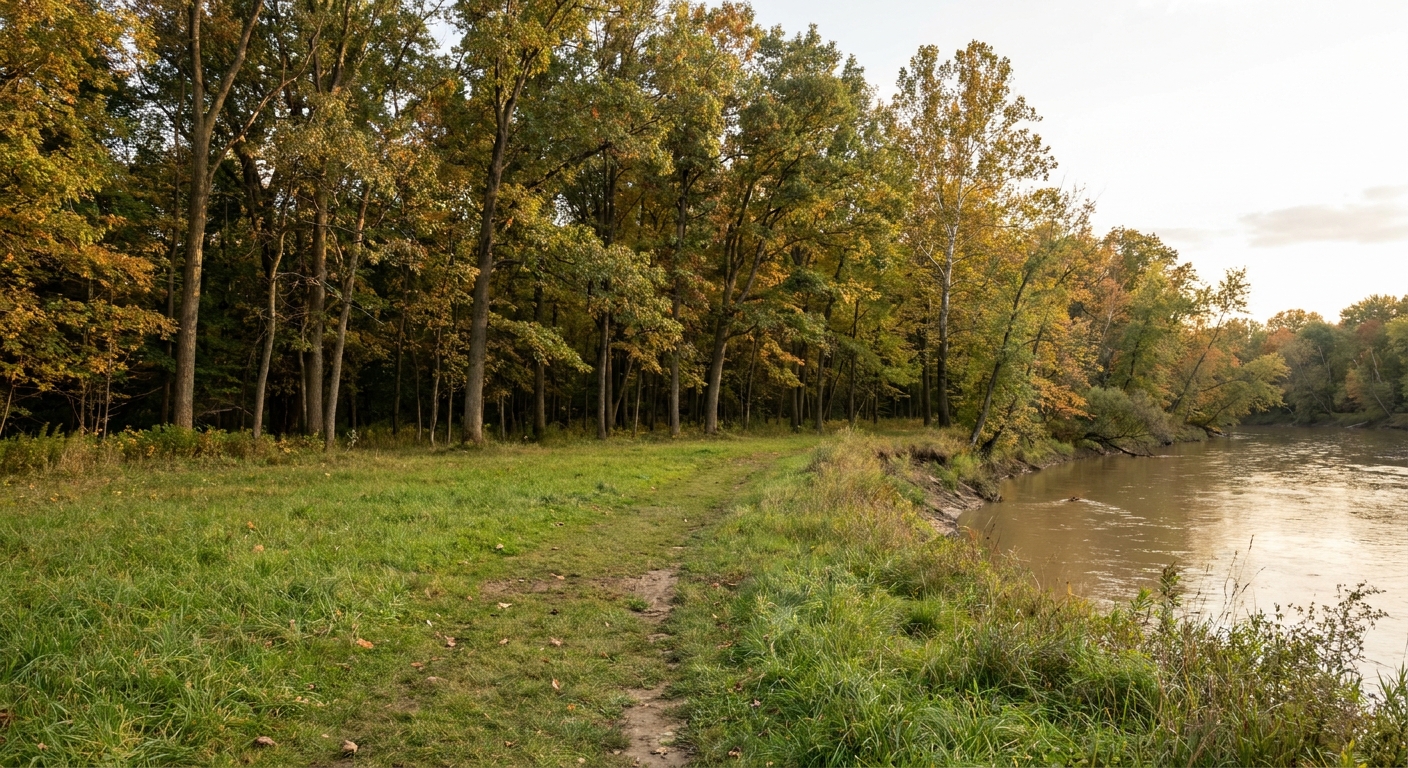
The first time I walked the low ground along Ontario’s Thames River, down in southwestern Ontario near where Moraviantown once stood, what struck me was not grandeur but closeness. The river presses in. The trees crowd the edges. Even on a calm day, you can feel how quickly a fight here would turn into a tangle of smoke, shouting, and sudden decisions. That is the right way to think about the Battle of the Thames on Oct. 5, 1813. It was not a chess match played on a clean board. It was a collision in cramped country where one army took a calculated risk the other could not absorb.
When people say the battle “broke Tecumseh’s confederacy,” they often make it sound inevitable, like a brittle thing finally snapped. But confederacies do not break from fate. They break when the battlefield goes wrong in a specific way, and when the political and logistical strains already pulling at them suddenly become impossible to ignore. At the Thames, that wrongness came fast. The British line gave way under pressure, and Tecumseh’s warriors found themselves fighting hard on ground that offered cover but not a clean way to restore what had already collapsed behind them.
This is a story about tactics and weapons, yes. But it is also a story about how terrain and morale can turn ordinary weapons into something far deadlier than their parts.
Battle basics
Date: Oct. 5, 1813.
Where: Near Moraviantown in present-day southwestern Ontario, along the Thames River corridor.
Who: U.S. forces under William Henry Harrison versus British troops under Henry Procter, alongside Tecumseh and allied Indigenous warriors.
Result: A rapid American victory. The British line broke, many British soldiers were captured, and Tecumseh was killed in the fighting on the flank.
Why the Thames happened
By early fall 1813, the western war had been pulled tight by supply and movement. American success on Lake Erie made the British position at Detroit and Amherstburg hard to hold. When the British commander Henry Procter began withdrawing up the Thames, Tecumseh and his allied warriors were dragged with him into a retreat they did not choose and did not trust.
Retreat changes an army’s relationship with its weapons. On the march, muskets bang against cartridge boxes, flints get knocked loose, powder gets damp, and men grow stingy with ammunition. Artillery becomes a burden that decides where you can go. In a fighting withdrawal, the question is not “What can we do?” but “What can we still do today?”
The Americans under William Henry Harrison pursued with a mixed force, but one element mattered most at the moment of contact: mounted infantry, particularly Kentucky men led by Richard Mentor Johnson. Mounted infantry is a tricky phrase. They were not cavalry trained to wheel in drilled formations. They were infantrymen using horses to move faster, then fighting on foot or, at the Thames, pressing in so quickly the defender had little time to reset.
If you want the broad arc of 1812 to 1815, our timeline guide helps place the Thames in the chain reaction created by the lakes, logistics, and border pressure.
Ground and position
Contemporary accounts generally describe a compressed battlefield: the Thames River close on one side, with woods and low, broken ground on the other, and a strip of more open country near the road in between. Exactly how wet, thick, or passable the far side was varies by description, but the tactical point stays steady. This was a corridor fight. There was room to form a line, and not much room to repair one.
Procter’s force placed British regulars near the road and river corridor with artillery positioned to cover the approach. Tecumseh’s warriors formed on the flank toward the timber. On paper, that is a familiar arrangement: regulars hold the center, Indigenous allies guard the flank and punish any attempt to turn the position.
But paper assumes time and cohesion. The British line at the Thames was a retreating line that had stopped because it had to, not because it wanted to. Many of the British soldiers were tired, hungry, and uncertain, and those conditions are poison to the small, exact habits that make volley fire and artillery support work.
Now add the most important practical detail: the American approach did not give the British position a long, comfortable warning period. Harrison pressed quickly, and contact came soon enough that the defense had to fight with what it had in hand, not what it might have preferred after time to dress ranks and set ranges.
Weapons on the field
British regulars
The British regulars, including men of the 41st Regiment of Foot, carried the standard smoothbore flintlock musket of the era, built for massed volley fire and bayonet work. In open ground, with disciplined ranks, that system can stop a rush. But it depends on three things that were in short supply at the Thames:
- Steady nerve to hold fire until the target is close.
- Time to fire controlled volleys instead of scattered shots.
- Cohesion maintained by officers and sergeants when the world collapses into noise and motion.
Without those, the musket is dangerous, but it is not decisive.
American mounted infantry
The Kentucky mounted men were armed in a mixed way. Muskets, rifles, and pistols appear in descriptions, and some men carried edged weapons as well. The exact distribution varied by unit and individual, but the tactical meaning is clear. They could arrive quickly and fight at close range in the confusion their own speed helped create.
Rifles, when present, had accuracy but were slower to load and usually lacked a bayonet. In a set-piece fight, that can be a liability. In a sudden smash into an already shaky line, it could be enough. Pistols and short arms become especially dangerous when the distance collapses to a few yards.
Tecumseh’s warriors
Tecumseh’s confederacy fighters used a range of weapons shaped by years of trade, capture, and adaptation: smoothbore muskets and rifles acquired through British supply or other means, along with traditional edged weapons and tomahawks. Their battlefield strength was not a single tool. It was an approach: using cover, choosing angles, and exploiting disorder.
At the Thames, that approach was constrained in a specific way. With the river corridor narrowing movement and the British center positioned between Tecumseh’s line and the road, a sudden collapse in the center threatened to cut off coordination and limit options for an organized withdrawal. Cover in the woods can help you fight. It cannot always help you reconnect a battle that has broken apart.
Artillery
British artillery was present, but it was limited and quickly swallowed by events. Many accounts mention a small gun, frequently described as a single 6-pounder, covering the approach. In theory, that should have been a sharp edge. In practice, a small piece needs clear lanes, steady crews, and time to get more than one clean effect. Against fast-moving mounted men, a gun either bites early and hard or it gets rushed, abandoned, or neutralized in the general collapse.
What happened
The battle’s sequence is not long, which is part of why it matters.
- Contact and deployment. Harrison’s pursuing force closed on Procter’s position along the road near the river. The British and their allies formed to fight in the corridor rather than continue retreating.
- Brief exchange. The British center, supported by its limited artillery, attempted to check the advance and impose a conventional infantry fight.
- The decision. Seeing a line that looked brittle and pressed for time, the Americans took a risk and sent mounted infantry directly against the British regulars rather than spending precious minutes on a slow, methodical attack.
- Break in the center. The charge and close-range fire appear to have helped shatter timing and formation. Once gaps opened, the line could not easily be resealed in that narrow ground.
- Flank fight. Tecumseh’s warriors fought fiercely in the woods and broken ground as the center unraveled. Tecumseh was killed in this phase.
- Aftermath. The British position collapsed into retreat and capture. Procter escaped, but the western British field force was badly damaged, and the coalition that Tecumseh had held together lost its central leader.
The charge that decided it
The heart of the battle is the choice to send mounted infantry straight at the British line. Read that again and let it feel odd, because it was. Standard wisdom warns against charging formed infantry head-on, especially if they have bayonets and discipline.
But tactics are not laws. They are bets placed against a particular enemy on a particular day.
Why it worked
- The British line looked unsteady. A retreating, tired force is less likely to hold fire, less likely to keep formation, and more likely to crack when the first men fall and the second rank starts to doubt.
- The corridor allowed momentum. There was enough open space near the road for mounted men to build speed, and speed shortens the defender’s decision time.
- Shock disrupted coordination. Smoothbore muskets are most effective when coordinated. A mounted rush can wreck that coordination. Men fire early or not at all. Gaps appear. Once gaps exist, riders and horses can pour through.
- The ground punished a rupture. With the river and woods pressing in, a break was not just a hole. It was a spill, and the spill turned into a rout.
Mounted infantry are sometimes described as improvised cavalry. At the Thames, the improvisation was precisely the point. The Americans were not trying to perform a textbook cavalry action. They were trying to break the center before Tecumseh’s flank could make the woods decisive.
Tecumseh’s stand
While the British center was being smashed, Tecumseh’s warriors fought hard on the flank. This part of the battle is often remembered as a dramatic last stand, and it was certainly costly. Tecumseh was killed, and with him went a kind of strategic gravity that had kept a difficult coalition aligned.
Tactically, the tragedy is simpler. A strong flank can turn a battle if the center holds long enough for the flank’s work to matter. If the center collapses quickly, the flank is suddenly fighting without the fixed point it needed. It can hurt an enemy. It can slow pursuit. It cannot easily rebuild the battle’s shape.
In the woods and broken ground, Indigenous fighters could use trees as cover, shift positions, and punish overconfident pursuit. They did. But they were now fighting a battle that had changed behind them, in a corridor that made rejoining forces and moving as one much harder than it looks on a map.
If you want to place Tecumseh among the war’s major figures and understand how relationships and alliances shaped outcomes, start with our people guide.
Weapons and distance
In close woodland, the advantage of a bayonet is not as absolute as it looks on parade. Visibility is short. Targets appear and disappear. Shots come from angles. In that kind of fight, the useful weapons are the ones you can bring to bear quickly: a musket fired from behind a tree, a rifle shot from cover, a pistol at close range, a tomahawk when the world collapses into arm’s-length violence.
It was also a place where leadership mattered more than drill. Tecumseh’s presence, by most accounts, helped keep cohesion under immense pressure. When he fell, cohesion had nothing left to hold it at that scale.
What broke the confederacy
It is tempting to say Tecumseh’s confederacy broke because he died. That is emotionally true, but incomplete. Strains were already at work before the Thames: hard logistics, setbacks, and the simple fact that different communities could not always accept the same risks at the same moment. A confederacy breaks when it loses a credible path forward.
The Battle of the Thames removed three things at once:
- A British western anchor. With Procter’s force routed and many men captured, British ability to materially support allied operations in that immediate theater weakened.
- A leader who could unify and negotiate. Tecumseh had the rare ability to bring diverse communities into coordinated purpose.
- Confidence in protection nearby. Not because Britain vanished, but because this fight showed how quickly a British position in the west could fail under sudden pressure.
On the ground, the breaking looked like bodies and flight. Strategically, it looked like communities calculating whether continued resistance could be supplied, coordinated, and survived.
Lessons from the Thames
Speed can substitute for doctrine
The American mounted infantry did not need perfect cavalry training. They needed a fast, committed blow against a vulnerable center.
Weapons do not change, usefulness does
A musket is still a musket. A gun is still a gun. But fatigue, hunger, and doubt can turn “effective” into “possible,” and then into “not today.”
Terrain rewards the first break
The Thames corridor limited maneuver. Once the British line cracked, the confinement helped turn defeat into rapid unraveling.
For more on how individual battles connect to the wider conflict, browse our battles guide.
Quick breakdown
| Element | What it looked like | Why it mattered |
|---|---|---|
| When and where | Oct. 5, 1813 near Moraviantown, Thames River corridor | A narrow battlefield magnified shock and collapse |
| American choice | Mounted infantry charge into the British center | Disrupted fire discipline and formation quickly |
| British center | Regulars, including 41st Foot, with muskets and bayonets | Needed steadiness and time, both in short supply |
| British artillery | Limited pieces, often described as a single 6-pounder | Had little time to produce sustained effect before being rushed |
| Tecumseh’s flank | Warriors fighting from timber and rough ground | Could punish pursuit, but could not restore a broken center |
FAQ
Was the mounted charge a fluke?
No. It was a risk, but not a blind one. The Americans read a line that appeared unsteady and used the corridor’s open strip to generate speed and shock.
Did rifles decide the battle?
Not by themselves. The deciding moment was about disruption and collapse, not slow marksmanship. Mixed weapons mattered most once the fight compressed into close range.
Why was Tecumseh’s death so consequential?
Coalition leadership is not just bravery. It is trust, diplomacy, and coordination across communities with different needs. Tecumseh provided that. After the Thames, there was no comparable figure to hold the confederacy together under pressure.
Where does the Thames fit in the wider war?
It is one of the clearest examples of how control of supply routes and mobility decide inland outcomes. Lake Erie, Procter’s retreat, and the sudden break on land are linked parts of one chain. Our timeline lays that chain out in order.