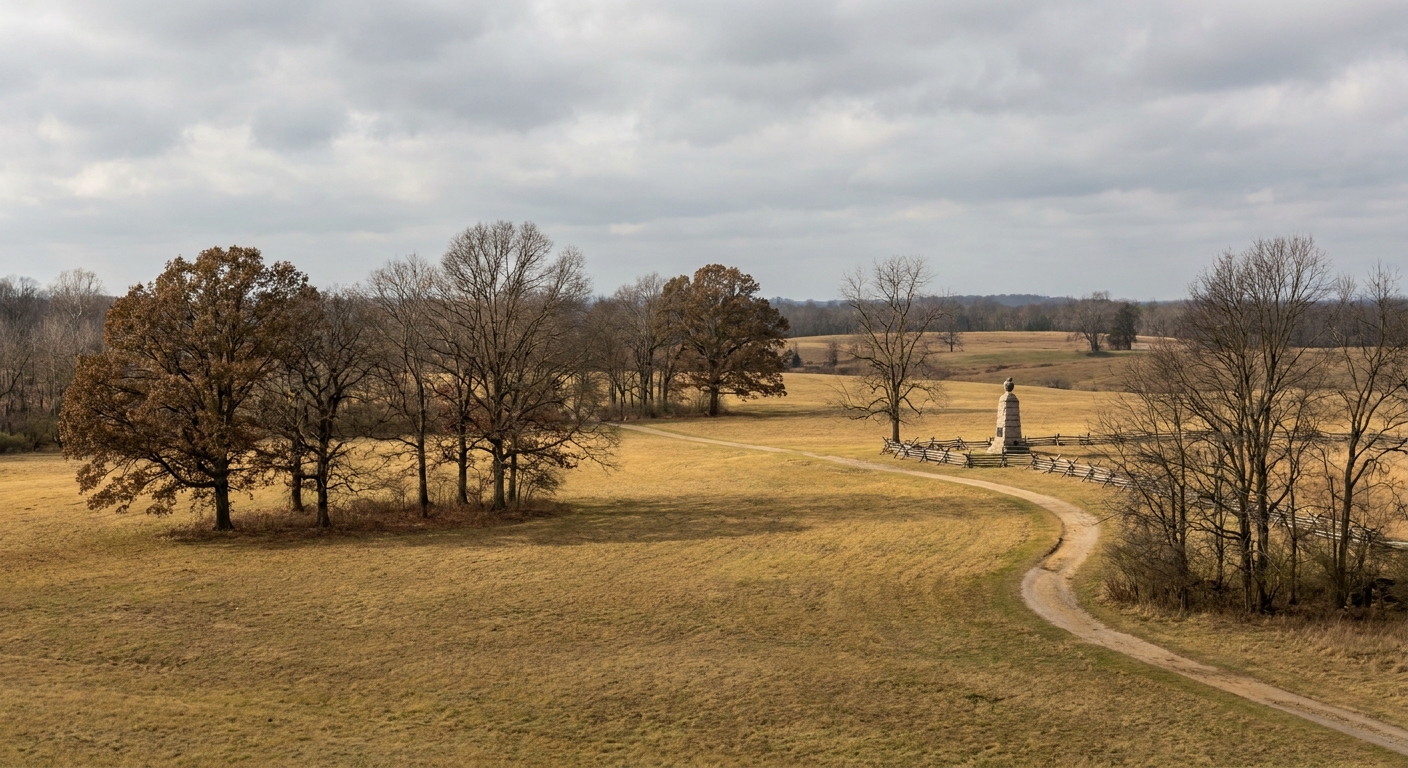

The first time I stood on the ground near Moraviantown, I expected the place to feel loud in my imagination. Drums. Orders. The crack of muskets. Instead, it felt like what battlefields often feel like two centuries later: quiet enough that your own footsteps sound intrusive.
That silence is part of why Tecumseh’s death hits so hard. Not just because a leader fell, but because a whole political experiment lost its center of gravity. The Shawnee confederacy that Tecumseh helped shape was more than a wartime alliance. It was an argument about the future: that Indigenous nations could stand together, halt the sale of land piece by piece, and force the United States and Britain to deal with them as a unified power.
And then came October 1813. Tecumseh was killed in the fighting during the Battle of the Thames. The exact circumstances and location have been debated ever since, but the strategic meaning was immediate. His brother, Tenskwatawa, the spiritual leader remembered as “The Prophet,” did not die there. He lived on into the era of treaties, removals, and narrowing options. If you want to understand the long tail of the War of 1812 for Indigenous people, follow Tenskwatawa after the guns quieted.
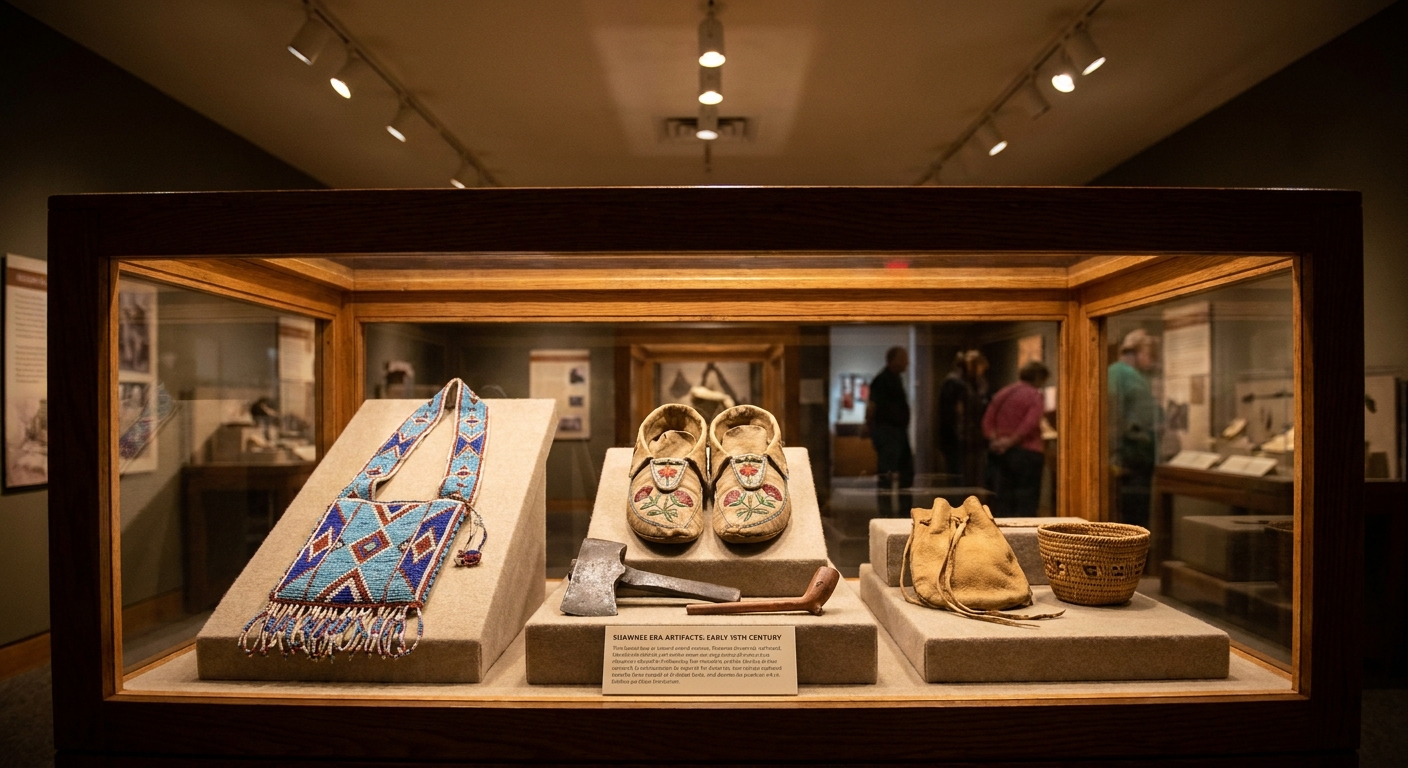
Tenskwatawa before the fall
It is easy to flatten Tenskwatawa into a single scene: the prophetic figure whose movement surged in the years before Tippecanoe, then the brother who allegedly “failed” Tecumseh. Real lives do not follow that kind of clean moral arc.
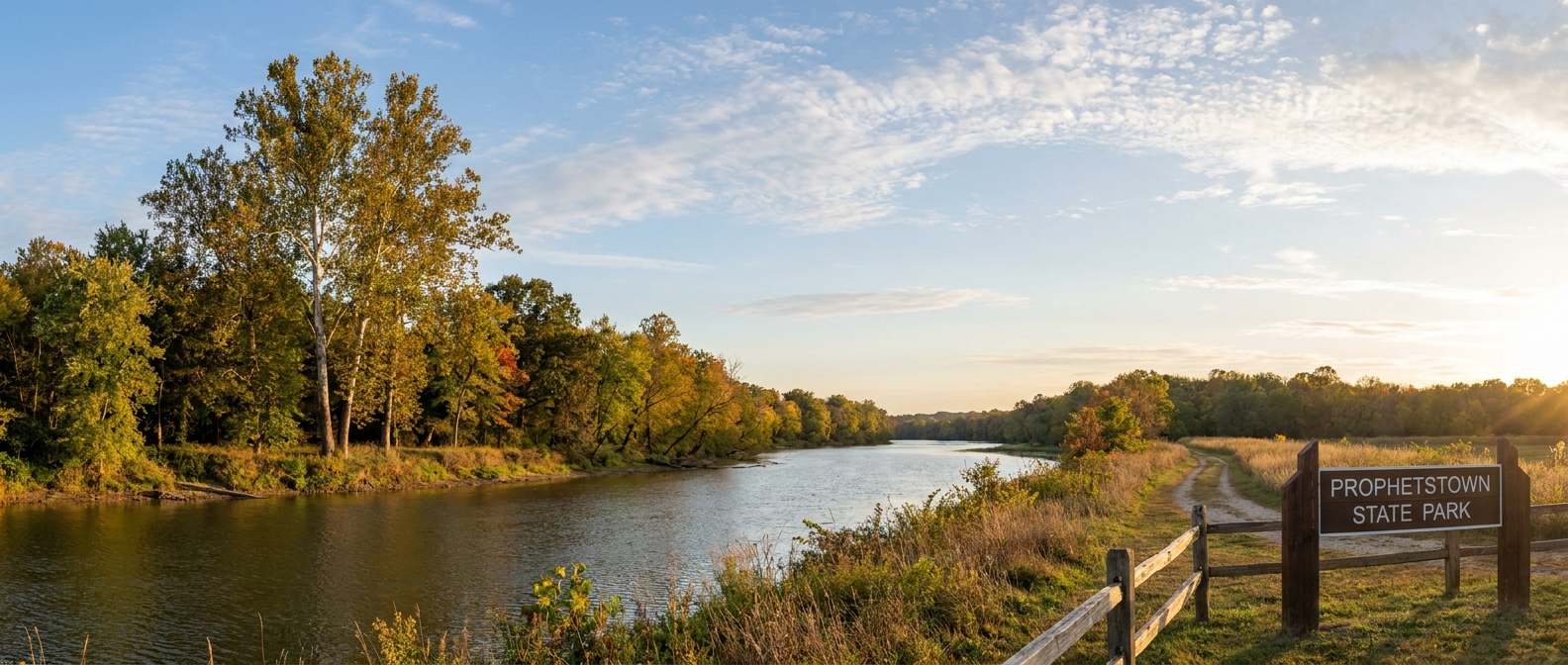
Tenskwatawa’s power was spiritual, social, and practical all at once. His religious revitalization preached a return to Indigenous ways and a rejection of dependence on American trade goods and alcohol. At Prophetstown, that message built a multi-tribal community that could feed itself, train, and gather people across language lines. Tecumseh carried the political diplomacy and military strategy outward. Tenskwatawa held the center.
That division of labor mattered after 1813, because it shaped what happened when the political center collapsed. Without Tecumseh, Tenskwatawa still had a name that carried weight. But influence does not survive on reputation alone. It needs a place, protection, and allies willing to pay a cost.
After the Thames
When Tecumseh fell, the confederacy did not just lose a war leader. It lost the one person who had the relationships to keep disparate nations pointed in the same direction while British strategy shifted and American pressure intensified.
A leader without a base
By late 1813 and into 1814, Tenskwatawa’s options narrowed fast. Prophetstown had already been destroyed after the Battle of Tippecanoe in 1811, and the British, facing their own constraints and priorities, were not building a lasting Indigenous buffer state in the Old Northwest. The United States, with victory at the Thames and momentum on the frontier, was in no mood to entertain a united Indigenous land policy.
In the immediate aftermath, he moved among Indigenous communities and British-held spaces in Upper Canada, especially around the Detroit River corridor where so many refugees, fighters, and families were trying to find some margin of safety. Saying he “lived in Canada” can sound settled. In practice it meant displacement and dependence, a life lived under other people’s strategic umbrellas, and constant uncertainty about what would be defended and what would be traded away.
From war to treaties
There is a hard transition that rarely makes it into popular retellings of the War of 1812. Once major campaigns ended, Indigenous nations were pushed into an exhausting grind of treaties and “settlements,” each one ceding tracts, setting boundaries, and locking communities into annuities and promises that rarely matched the pressure on the ground. A wartime leader could rally people for a campaign. Postwar leadership meant navigating survival inside a tightening legal cage.
Tenskwatawa did not vanish. But he was no longer steering a confederacy. He was trying to preserve a following, preserve a religious message, and keep a community intact while the map changed around him.
The collapse was gradual
People sometimes talk about Tecumseh’s death as if it ended the confederacy on the spot. On the ground, alliances fray the way ropes do. Slowly, strand by strand, under constant strain.
Why unity was hard
- Different aims: Not every nation in the wider movement wanted the same endgame. Some sought restoration of specific lands. Others sought security guarantees. Some wanted to avoid total destruction above all.
- Local survival pressures: Communities had to think about food stores, hostages, burned towns, and the safety of families. “Stay united” is harder when your children are hungry and your village is exposed.
- British priorities shifted: Britain’s commitments to Indigenous allies were real in the moment, but they were also conditional. Once the larger war’s stakes shifted, Indigenous objectives became negotiable in ways Indigenous leaders could not accept.
- American leverage expanded: With military victories came bargaining power. Treaty-making became a tool of war by other means.
If you want a broader sense of how quickly fortunes could change for allied nations in this era, it helps to look south as well. The postwar world that followed the Creek War offers a parallel story of military defeat feeding into political dispossession. We explored that pattern in detail in our Horseshoe Bend aftermath piece.
What the confederacy was
The confederacy was never a single centralized government with a tax base and an army that could stay in the field year after year. It was a diplomatic and spiritual coalition built to meet an emergency: accelerating American expansion and piecemeal land cessions. In wartime, coalition can look like a nation. In peacetime, when pressure turns to paperwork, it often gets treated like a nuisance.
What happened to Tenskwatawa
Tenskwatawa lived for decades after the war. Depending on which part of his life you are reading, he appears as a religious figure, a political exile, a man living with the consequences of choices made when there were no good choices. After 1814, he is generally described as losing political prominence and spending long stretches away from the center of Shawnee decision-making, even while his name still carried weight.
He also surfaces in the record in more practical roles than the caricature allows: as a recognized figure moving with Shawnee groups as they tried to regroup, and as someone whose authority was strongest when he could speak to community discipline and spiritual renewal, not when he was asked to replace Tecumseh’s diplomacy.
A short timeline
- 1811: Prophetstown is destroyed after Tippecanoe, long before the Thames, leaving Tenskwatawa without the movement’s physical center.
- Oct. 1813: Tecumseh is killed during the Battle of the Thames; the confederacy loses its primary political and military anchor.
- 1813 to 1815: Tenskwatawa lives in displacement, moving among Indigenous communities and British-held areas in Upper Canada along the western Great Lakes frontier.
- 1820s to 1830s: As Shawnee removals and resettlements accelerate, Tenskwatawa is increasingly associated with Shawnee communities pushed west.
- 1836: He dies near present-day Kansas City, in the Shawnee settlement in what was then Indian Territory.
Late in life, his story ends far from the Old Northwest homelands that gave his movement its original urgency. If you have ever stood at a historic site where the interpretive sign ends with a neat sentence like “and they later removed west,” this is the human content of that sentence: elders, families, sacred objects, and memories forced to travel.
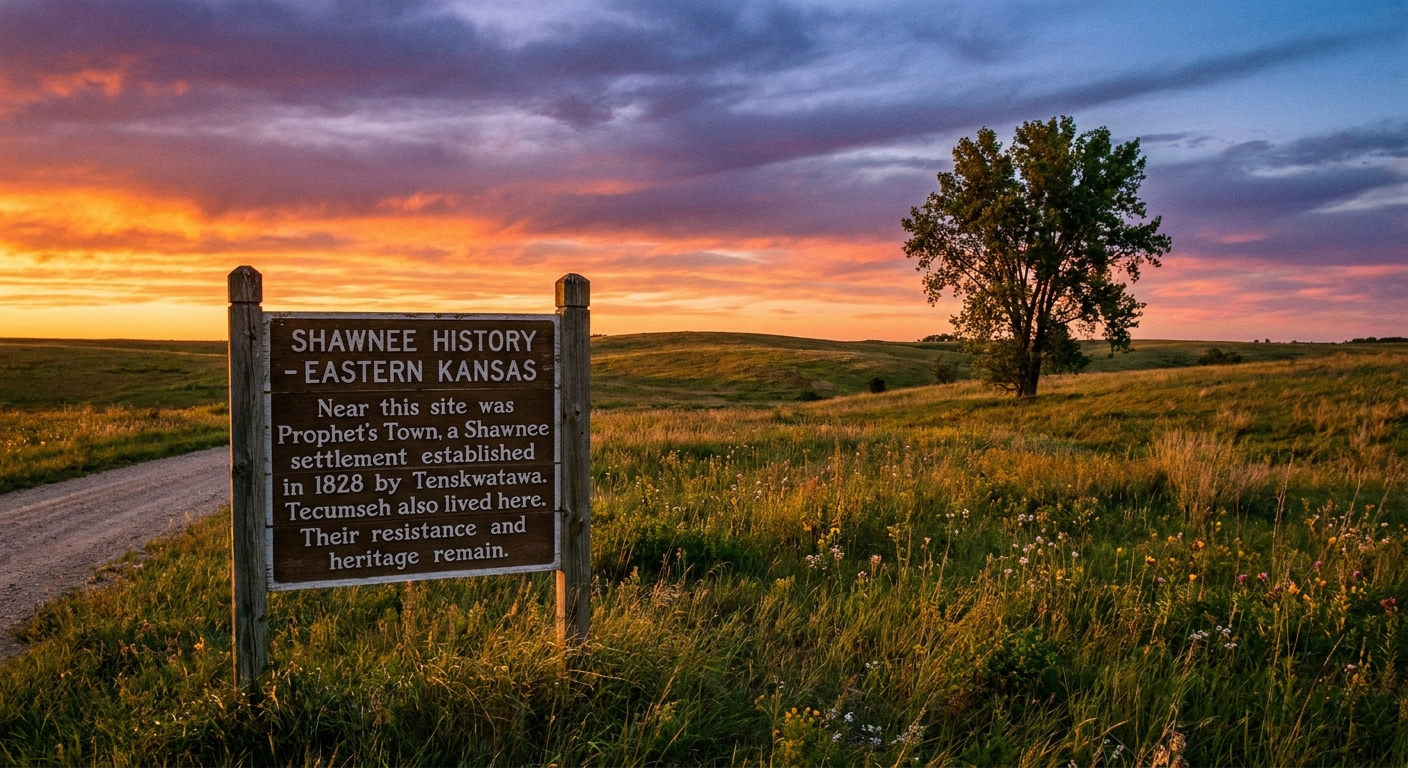
Fallout after 1814
The War of 1812 is often packaged as a border war with a dramatic ending. For Indigenous nations, the “ending” is misleading. 1814 and 1815 did not close the story. They opened a new phase of it.
Politics: the buffer idea fades
For years, Tecumseh and other leaders pushed the idea that land could not be sold by one nation at a time, because the land was held in common by many. He argued this publicly in the years before the war, especially in confrontations with U.S. officials over the legitimacy of treaties that ceded vast tracts without the consent of all the nations who lived on and used that land. It was a direct challenge to the treaty system the United States preferred.
Tecumseh’s death and the confederacy’s weakening made it easier for the United States to resume the old pattern: negotiate, pressure, divide, purchase or seize, repeat. Britain’s postwar priorities did not include forcing the United States to recognize an independent Indigenous boundary state in the Old Northwest. Once that larger diplomatic aim slipped away, Indigenous leverage slipped with it.
Culture: revitalization under stress
Tenskwatawa’s religious message did not evaporate. Messages rarely do. They adapt, travel, and sometimes go quiet for a generation before resurfacing in new forms. But the postwar world made the Prophet’s original social project much harder. A movement rooted in place, in community discipline, and in controlling trade and alcohol runs into immediate problems when people are scattered and dependent.
Memory: the story without the afterlife
There is a habit in American storytelling where Tecumseh becomes a tragic hero and Tenskwatawa becomes a cautionary tale. The trouble is that this framing often skips the grinding years afterward. Tenskwatawa’s later life forces us to confront what “defeat” really looked like. Not a single surrender, but a slow constriction of options.
Questions I hear
Did Tenskwatawa lead after Tecumseh died?
Not in the same way Tecumseh had. Tenskwatawa retained spiritual influence for some followers, but the multi-tribal political coalition Tecumseh built could not be held together by religious authority alone, especially once military and diplomatic realities turned against it.
Was Tenskwatawa blamed for Tecumseh’s death?
He was blamed by some people for earlier disasters, especially Tippecanoe, and that blame colored later interpretations. But Tecumseh’s death at the Thames was the result of a broader military collapse of the British and Indigenous position in that campaign, not a single decision by one man.
What happened to the Shawnee?
Shawnee communities endured a long sequence of land losses and forced relocations, eventually including removal west of the Mississippi. The details vary by band and by treaty, but the overall direction was consistent: less land, more pressure, and constant demands to move.
Where can I get the big picture?
If you want the broader scaffolding of the war years, start with our site guides, then circle back to the people. I find that approach keeps the human stories from getting lost in dates. Here are three good entry points: the War of 1812 timeline, our people guide, and the historic sites guide.
Why it matters
When I walk these places, I try to remember that history is not just what happened at the loudest moment. It is also what happened after, when a movement had to live with the consequences.
Tenskwatawa’s story after 1814 is not a tidy epilogue. It is the long, human aftermath of a collapsed alliance and the problem of keeping a people together when the geography of their lives is being rewritten. It is also a reminder that Indigenous resistance and Indigenous identity did not end with Tecumseh’s death. They shifted forms. They endured. And they carried forward, even when the maps said otherwise.