
The first time I stood on the earthworks at Fort McHenry, I did what I always do at War of 1812 ground. I stopped talking and started listening. The place still has a kind of measured quiet, like it is waiting for the next report of a gun. It is easy, standing there in modern calm, to imagine the British bombardment as a simple endurance contest: shells fell through the night, the fort survived, the flag stayed up, and everyone went home.
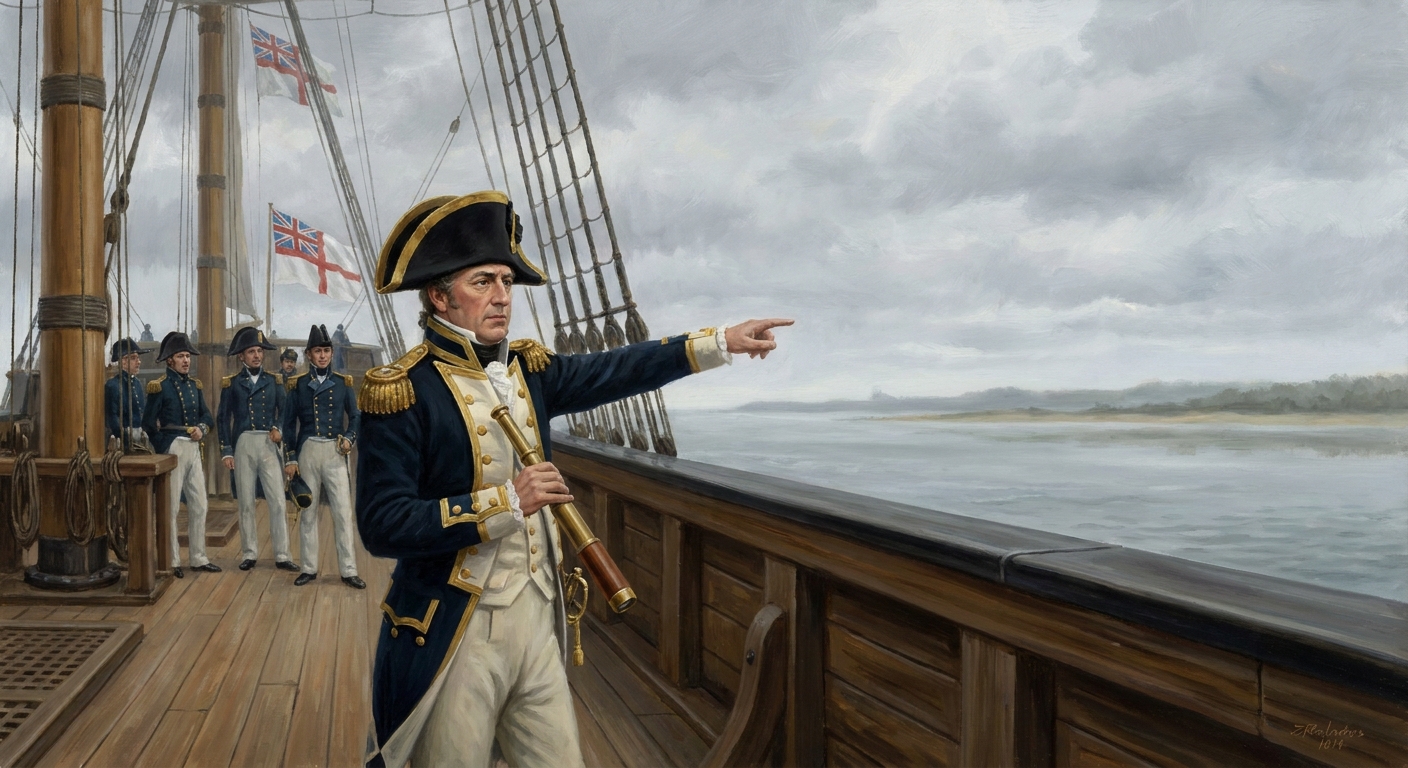
But the British naval attack of September 13 to 14, 1814 did not fail because the Royal Navy lacked courage, or because the Americans got lucky once. It failed because the technical problem the British needed to solve was harder than the dramatic story suggests. The fleet had to do more than frighten Baltimore. It had to disable a fort designed to absorb punishment, while operating at ranges and angles that made accurate, decisive fire extremely difficult. Add wind, tide, smoke, shallow water, and man-made obstructions, and you get a battle where the physics of 1814 mattered as much as the politics.
What the British needed to do
In plain terms, the British objective was not simply to bombard Fort McHenry. It was to open the water road into Baltimore so the city could be pressured, attacked, or forced into surrender. Fort McHenry guarded the approach through the Patapsco River’s channels. If the fort and the other harbor defenses kept firing, the British could not safely bring heavy ships into the inner harbor.
Even if Fort McHenry had gone quiet for a time, that still would not have meant a clear run. The approach was constrained by narrow, shallow channels and an obstruction system intended to complicate any push toward the city. In other words, silencing the fort was necessary for British success, but it was not automatically sufficient.
That left the British with two main ways to try to change the situation:
- Close in and batter the defenses with direct ship gunfire at shorter ranges.
- Stand off and lob shells and rockets in an attempt to disable guns, start fires, or shake the defenders into stopping their fire.
Baltimore’s geography and its layered defenses pushed the British toward the second option. That choice is a big part of why the bombardment looked terrifying and sounded apocalyptic, yet produced limited tactical results.
If you want the wider campaign context, including the British shift toward the Chesapeake in 1814, the best starting point on the site is our War of 1812 timeline.
Not just a naval puzzle
Fort McHenry also sits inside a bigger, messier reality: this was a combined operation. While the bomb vessels and rocket ships worked the fort, the British were also trying to bring land pressure to bear on Baltimore. That meant timing, coordination, and risk calculations that were not purely about gunnery.
By the time the naval bombardment settled into its long grind, the British army had already fought at North Point and lost momentum. If your land force is not clearly winning, you become less willing to gamble your largest ships in tight water under multiple batteries. Naval caution and land uncertainty fed each other.
The range problem
Stand-off weapons, stand-off accuracy
Fort McHenry is most famous for surviving a rain of bombs and Congreve rockets. Those weapons had a psychological power that round shot did not. You could see their arcs. You could feel their impacts. They also had real destructive potential when they hit something vital.
The problem was that in 1814, stand-off bombardment was not precision work. A shell lobbed from a mortar vessel depended on:
- Range estimation without modern optics
- Consistent powder charges
- Fuzes that burned as intended
- Platforms that still shifted on moving water
- Visibility through smoke, spray, and darkness
Even a small misjudgment in elevation or fuze length meant the shell burst too early, too late, or not at all. Rockets could scatter even more unpredictably, especially when wind took hold of their already temperamental flight.
It was longer than one night
People often remember the action as an overnight ordeal. It certainly felt that way to anyone under it. But the bombardment lasted into the next day, stretching to roughly a full day of pressure rather than a single dramatic burst of darkness and dawn. That matters because it underlines the core point: the British did not simply fire a little and quit. They worked at it, and the results still did not open the channel.
Why the British could not just anchor closer
When people ask why the British “didn’t just sail in,” they are really asking why the fleet did not shift the fight into the range where ship broadsides could smash exposed masonry and gun platforms. The answer is a mix of water depth, narrow approaches, obstructions, and defensive planning.
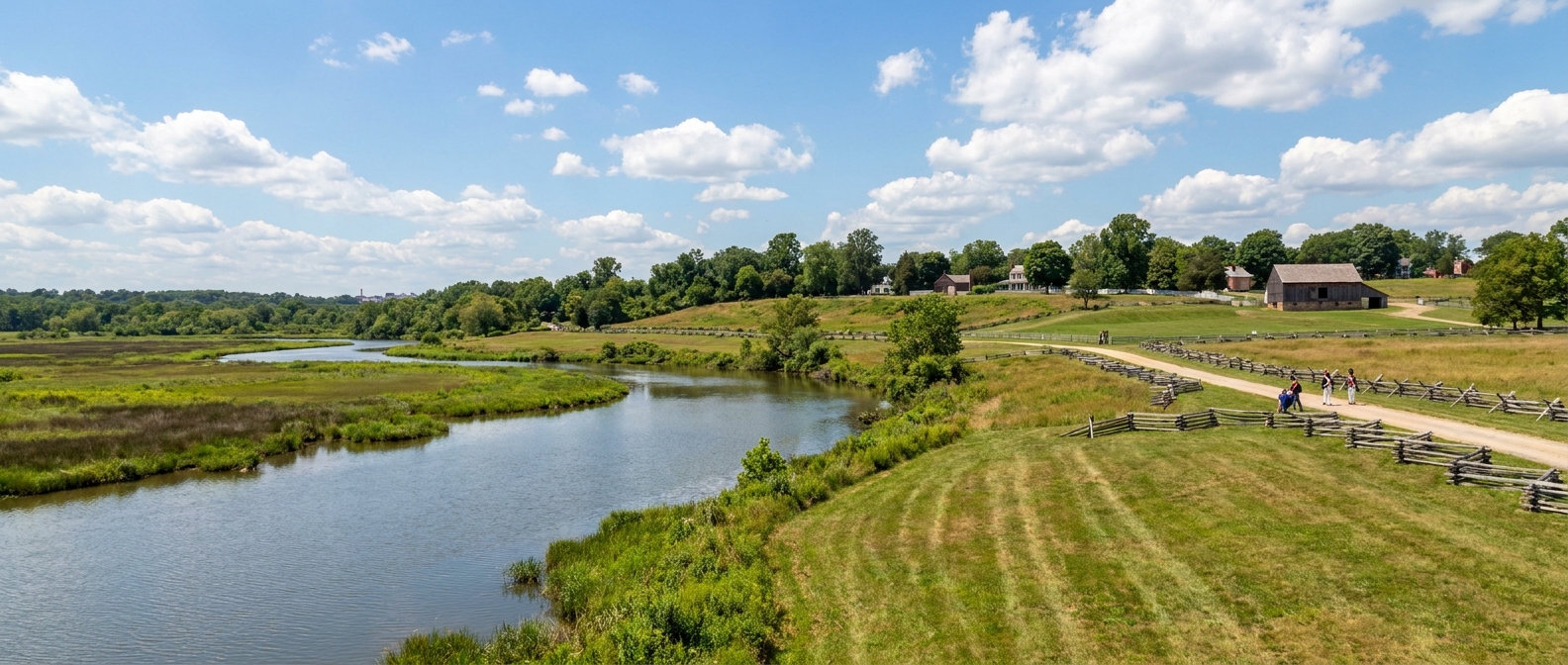
The channels approaching Baltimore were not a wide, deep highway. They were navigable, but constrained by bars and bends, and made more dangerous by deliberate obstacles. Fort McHenry and supporting batteries were positioned to punish any ship that tried to press closer. Pushing big ships into restricted water under fort fire is the kind of move that can turn a powerful navy into a stuck, damaged target.
So the British chose a method that reduced risk to their largest ships. That method also reduced their ability to deliver decisive results.
Fort McHenry’s earthworks
Earth that swallowed impact
I have walked a lot of War of 1812 positions where the “fort” is basically a memory, a contour in the grass, a ditch you notice only when the light is low. Those humble shapes are not accidental. Early 19th-century engineers understood something brutal and simple: earth absorbs energy.
Masonry can be shattered. Stone can spall, crack, and cascade inward when struck repeatedly. Thick earthworks, by contrast, tend to:
- Absorb impact instead of fracturing
- Keep fragments from becoming lethal flying debris
- Allow rapid repair by shoveling and tamping
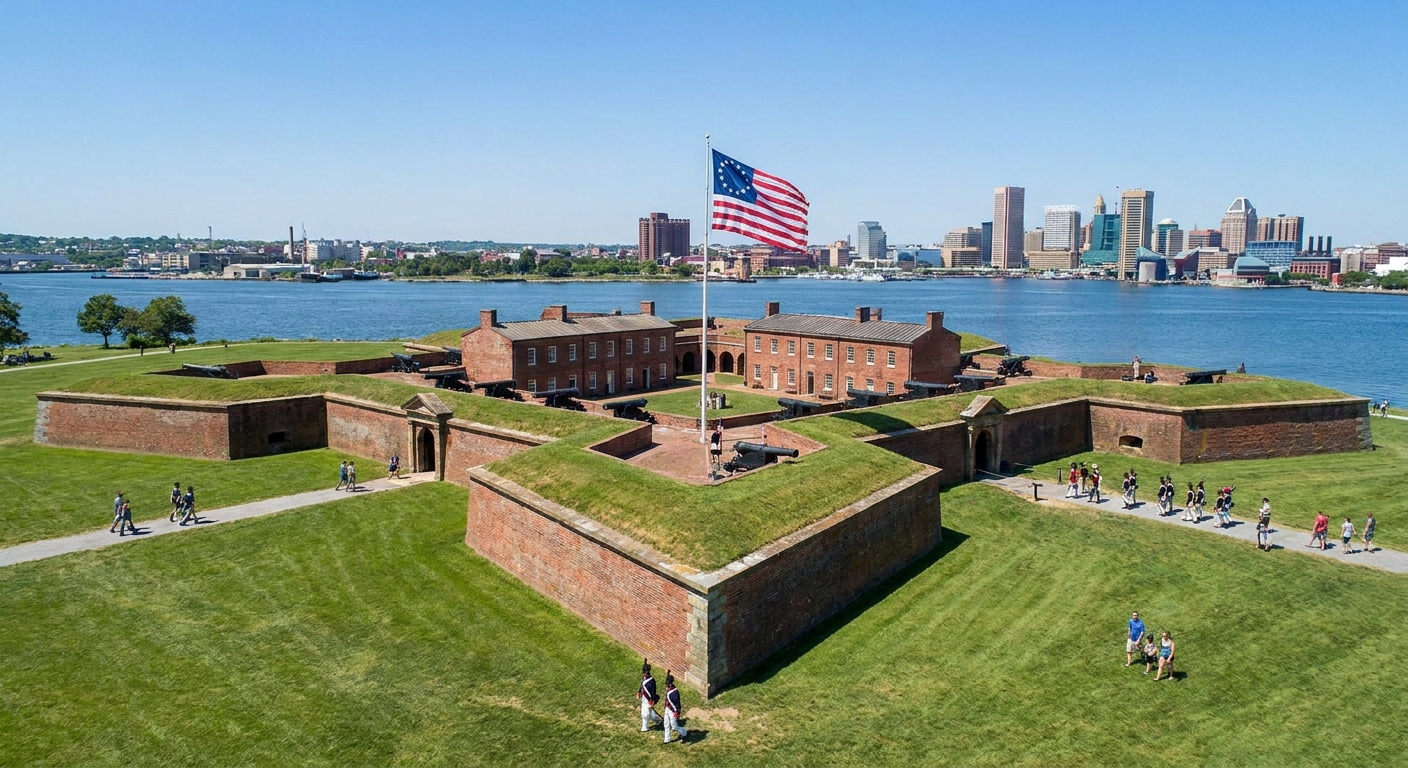
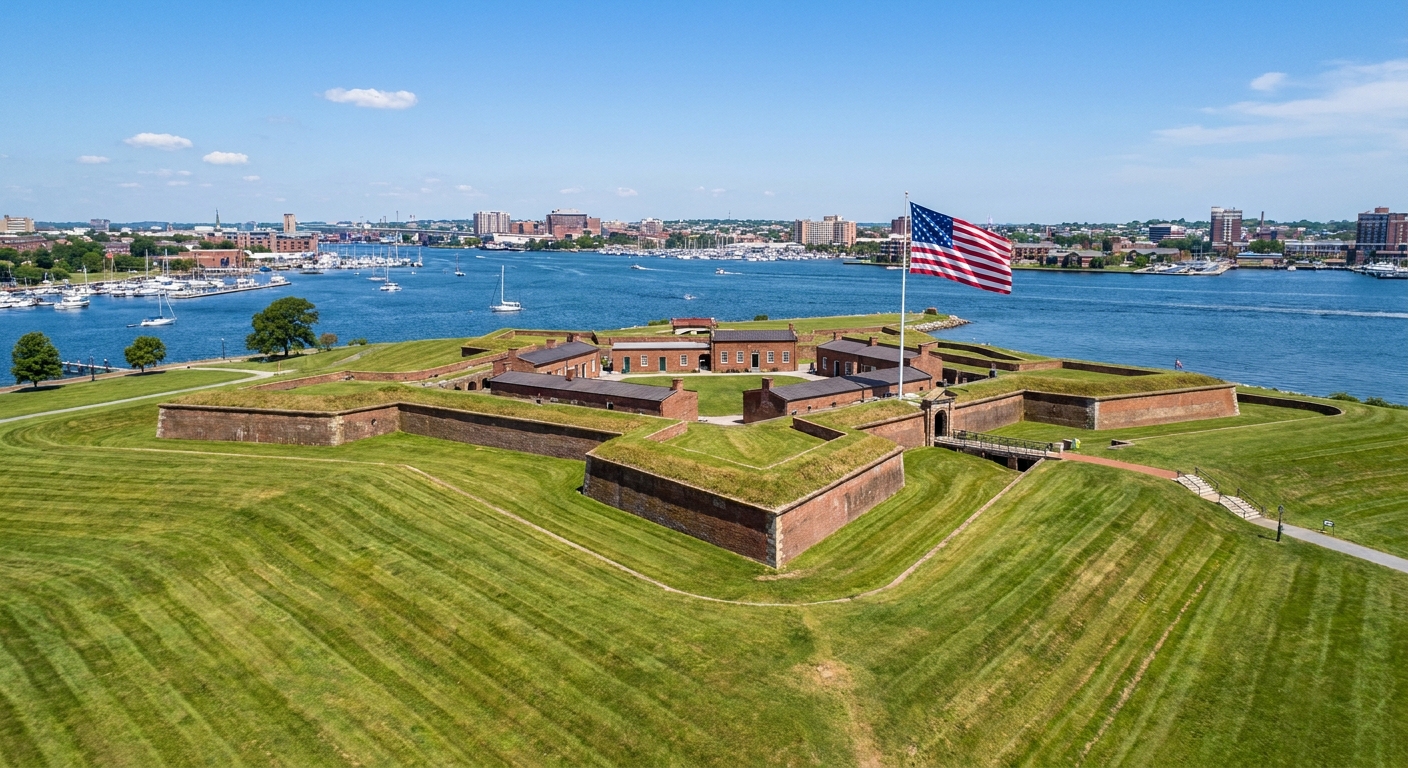
Fort McHenry had masonry buildings and structural elements, but its defensive strength rested heavily on earth-backed forms. A shell that lands in soft ground might throw up dirt and terror, but it does not necessarily open a breach the way concentrated, close-range fire can against exposed stone.
Angles that made targets smaller
The fort’s star layout was geometry in service of survival. Angled faces reduce the amount of surface presented squarely to incoming fire, and they support overlapping fields of fire along approaches.
From the British perspective, this meant there was no obvious “front door” to pound flat from a safe distance. From the American perspective, it meant the garrison could keep shifting attention and keeping guns in action, even under bombardment.
American guns and good placement
A technical truth that gets lost in the legend is that Fort McHenry did not need to outgun the entire Royal Navy. It needed to deny safe passage and punish any attempt to close distance. That is different.
The American guns could be effective because:
- Their target area was predictable: ships attempting to approach had limited room to maneuver.
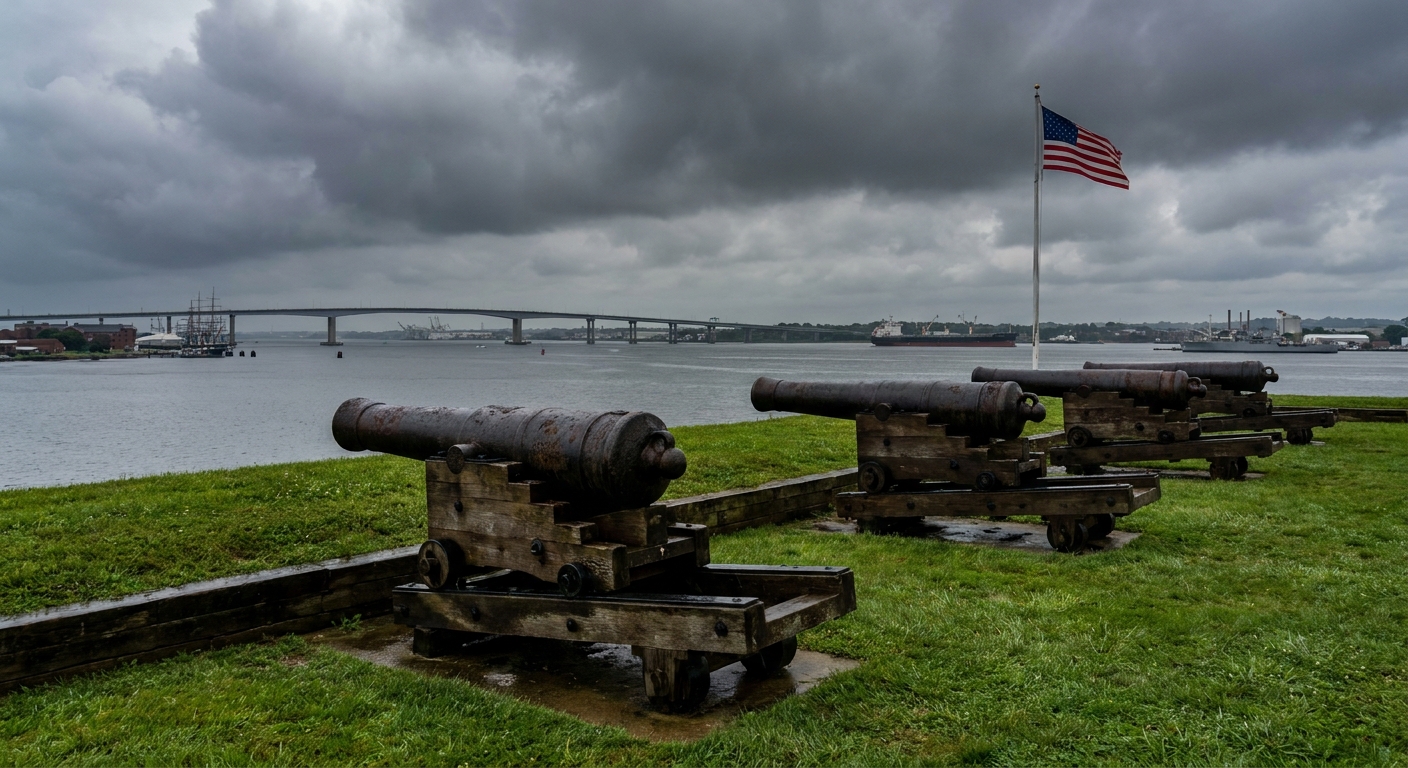
- They fired from stable platforms: a gun on an earthwork does not heave like a weapon on a rolling vessel.
- They did not need perfect hits: damage to rigging, spars, hull planking, or steering could force withdrawal.
And there is the human reality. A ship captain might accept casualties during a stand-off bombardment. Pushing into shallower, tighter water under fort guns is another kind of wager entirely. You cannot count on “tacking your way out” quickly if wind or tide turns against you.
Weather, wind, and tide
Any sailor will tell you the same thing my grandfather used to tell me on our long walks near old upstate New York markers: battles happen in weather, not on paper. At Fort McHenry, conditions mattered in several ways at once.
Wind and rockets
Rockets were at the mercy of wind. A gust can shift their already variable trajectories. Even when they landed in the fort, that did not guarantee decisive destruction. A rocket that hits soft ground or bursts in open space can scare men and rattle nerves without disabling guns.
Smoke, darkness, and adjustment
Night bombardment sounds like a clean tactical idea: the enemy cannot see you well, so you are safer. But it also means you cannot observe your own results with any reliability. If a mortar crew cannot clearly see where shells are landing and how the fort is responding, adjusting fire becomes educated guesswork. Add powder smoke hanging low over water, and the engagement becomes less like a marksman’s shot and more like throwing heavy stones into the dark.
Tide and holding position
Anchoring and holding position in constrained water is never trivial. Tidal movement affects where a ship can safely sit, and a fleet trying to maintain a careful stand-off distance is always managing the environment, not just the enemy.
British limits in this fight
The Royal Navy in 1814 was arguably the most experienced naval force in the world. Fort McHenry is not a story about British incompetence. It is a story about constraints.
Bomb vessels and rocket ships were specialized tools, and they could be brutally effective in the right circumstances. But a stand-off bombardment rarely compelled a well-built, well-manned earthwork position to surrender quickly, especially when the attacker could not safely close to direct, sustained breaching range.
This is why the bombardment can be both true as legend and underwhelming as siege science. The British threw a tremendous amount of explosive force. What they could not reliably do was place that force precisely enough, for long enough, on the vulnerable points that would have ended the fight.
Baltimore was layered
One of the most common misconceptions is treating Fort McHenry as if it stood alone, a solitary shield. In reality, Baltimore in 1814 was defended by layers: fortifications, militia, supporting positions, obstructions in the water approaches, and a city that had prepared for attack.
That broader readiness matters because it shaped British decision-making. Even if the fleet had bullied past the fort at high cost, what then? In September 1814, the British needed several steps to go right: suppress key defenses, work through constrained channels, coordinate with the army, and break the city’s will. Fort McHenry was a gate, but beyond the gate waited more resistance.
For other battles where plans ran hard into geography and preparedness, see our battle guides at Guide: Battles.
Why the fort stayed functional
The technical talk is important, but it only explains so much without the human piece. A fort does not “endure.” People endure.
During bombardments, defenders did the unglamorous work that keeps positions alive:
- Shifting men away from threatened points
- Checking for fires and smothering them quickly
- Repairing parapets and gun platforms as best they could
- Keeping ammunition moving and guns served when opportunities appeared
This kind of resilience is the opposite of cinematic, and it is exactly what wins defensive fights. If a fort can prevent panic and keep its basic functions working, a stand-off bombardment becomes an expensive way to make noise.
What British success meant
The British did not have to lose ships in flames for the operation to fail. In practical terms, the bombardment failed because it did not achieve the operational requirement: reduce the harbor defenses enough to let the fleet threaten the city directly and support the wider attack.
By the end of the bombardment, Fort McHenry was battered, but not broken. The defenders could still contest the channel. The British could still fire, but they had not created disabling damage that justified escalating risk by moving closer. When you are stuck in that position, the options narrow fast: continue a costly bombardment with diminishing returns, or withdraw.
Fort McHenry in the war
Fort McHenry tends to live in American memory as a single image: the flag, the dawn, and a song. I do not blame anyone for holding onto that. It is a powerful moment. But if you want to understand why Baltimore held, look at the less poetic details: constrained channels, obstruction fields, stand-off weapon accuracy, the physics of earthworks, and disciplined defenders who did not mistake noise for defeat.
And if you want a reminder that 1814 in the Chesapeake was full of surprises and reversals, it is worth reading our piece on Beyond the Bladensburg Races.
Questions from the ramparts
Did the British stop because they ran out of ammunition?
Ammunition expenditure mattered, but the deeper issue was effectiveness. The British could keep throwing shells, but if the fort and the wider harbor defenses remained functional enough to deny passage, more bombardment did not automatically translate into success.
Why didn’t rockets burn the fort down?
Rockets could start fires, but Fort McHenry was not a tidy wooden village. Earthworks and dispersed military structures reduce the chance of a single spreading blaze deciding the fight. Defenders also worked continuously to spot and smother fires.
Was Fort McHenry the only defense of Baltimore Harbor?
No. The fort was central, but Baltimore prepared layered defenses, including other batteries and obstacles in the approaches. The British had to think beyond the fort to what awaited them inside the harbor and on land.