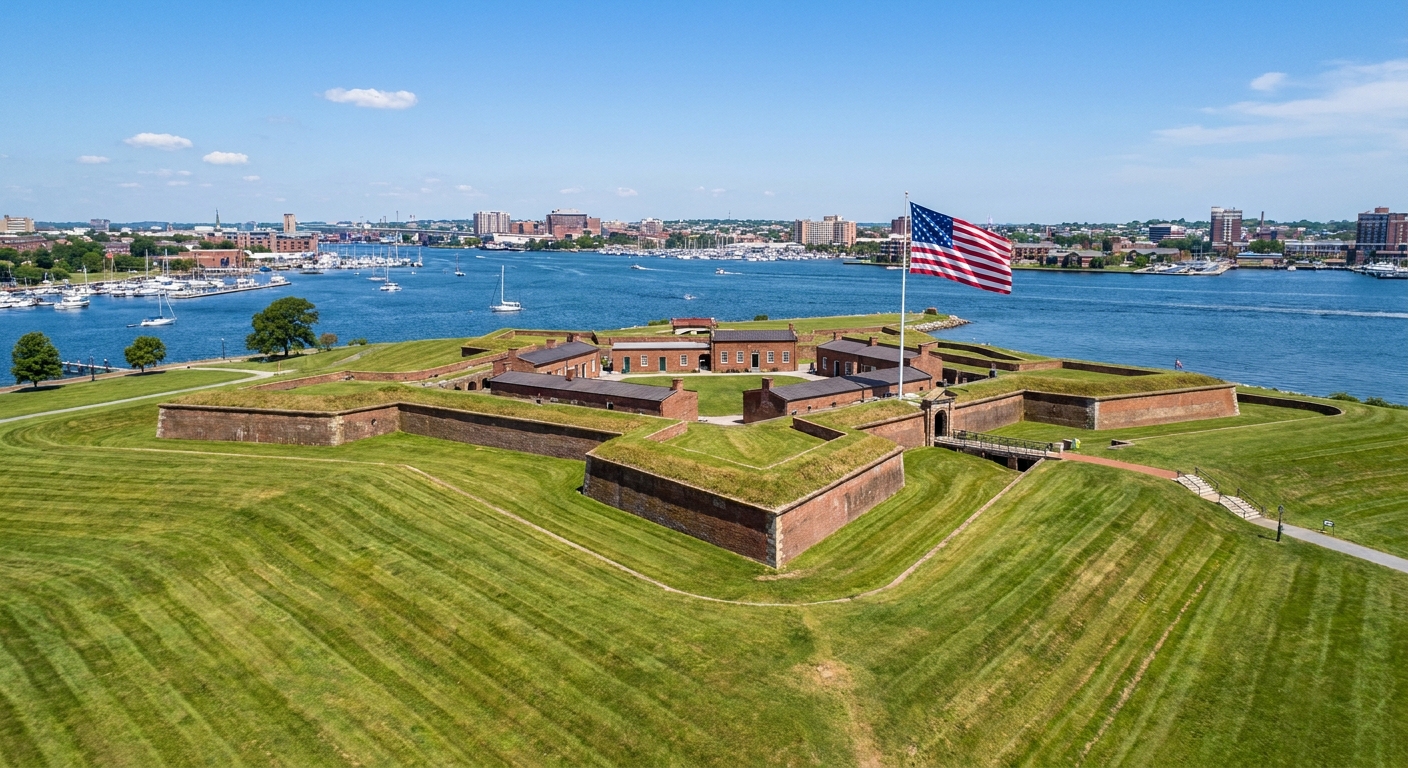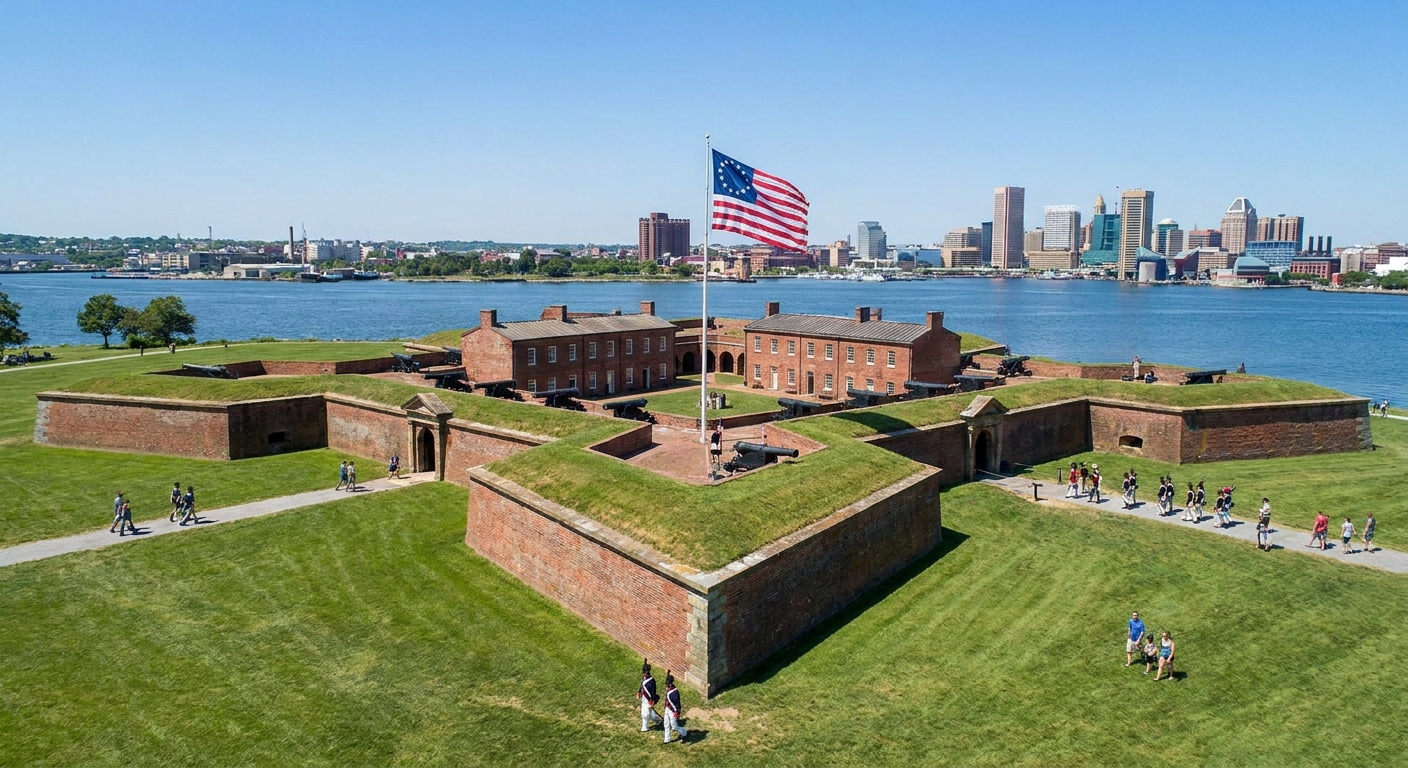

The first time I stood within sight of Fort McHenry, I tried to picture the famous flag as a finished object, already heroic, already inevitable. But the older I get, the more I picture it as a job first. Wool bunting and cotton. Salt air. A deadline. A contract. And somewhere in Baltimore in 1813, a woman in a work-stained dress doing what war always forces cities to do: turn fear into production.
That woman was Mary Pickersgill, and what we often call “the Star-Spangled Banner” began as the output of her business. Not a lone seamstress stitching history by candlelight, but a small shop managing materials, labor, and a government customer who needed a symbol large enough to be read by an enemy fleet.
A contract, not a legend
Long before the September 1814 bombardment made the flag famous, Fort McHenry’s commander, Major George Armistead, planned for a simple wartime problem: visibility. He wanted a very large “garrison flag” for clear weather and a smaller “storm flag” for rough conditions. The point was blunt and practical. If British ships appeared, the fort would show a flag so big that vessels in the harbor and vessels offshore could not miss it.
Armistead’s order is generally dated to 1813, and most accounts treat the garrison flag as made, delivered, and paid for that year, well before the British actually arrived at Baltimore in 1814. That timing matters. This was not a last-minute burst of inspiration. It was procurement: preparation made physical.
If you want the military side of this story, and why the fort held during the bombardment, my walk-through is here: Fort McHenry: Why the Bombardment Failed.
Pickersgill at work
Mary Pickersgill was not an accident of history. She was a businesswoman shaped by the port economy and by the realities women faced when they needed income that did not depend on a husband’s wages. Widowed, she ran a flag and banner-making operation in Baltimore that served ships, militia units, and government clients.
It is easy, two centuries on, to flatten her into a single moment: the flag. But the flag makes more sense when you remember what a port city demanded every week of the year.
- Customers with urgent needs: Ships required signal flags, merchants wanted banners, militia companies needed standards, and wartime commanders needed durable, visible emblems.
- Material logistics: Wool bunting for the body of the flag, cotton for stars, and linen thread for seams and reinforcement. A flag that tears or runs dye is not symbolism. It is embarrassment.
- Labor management: Large work needs hands, and hands need housing, food, and supervision. This is where the story gets complicated, fast.
On the shop floor
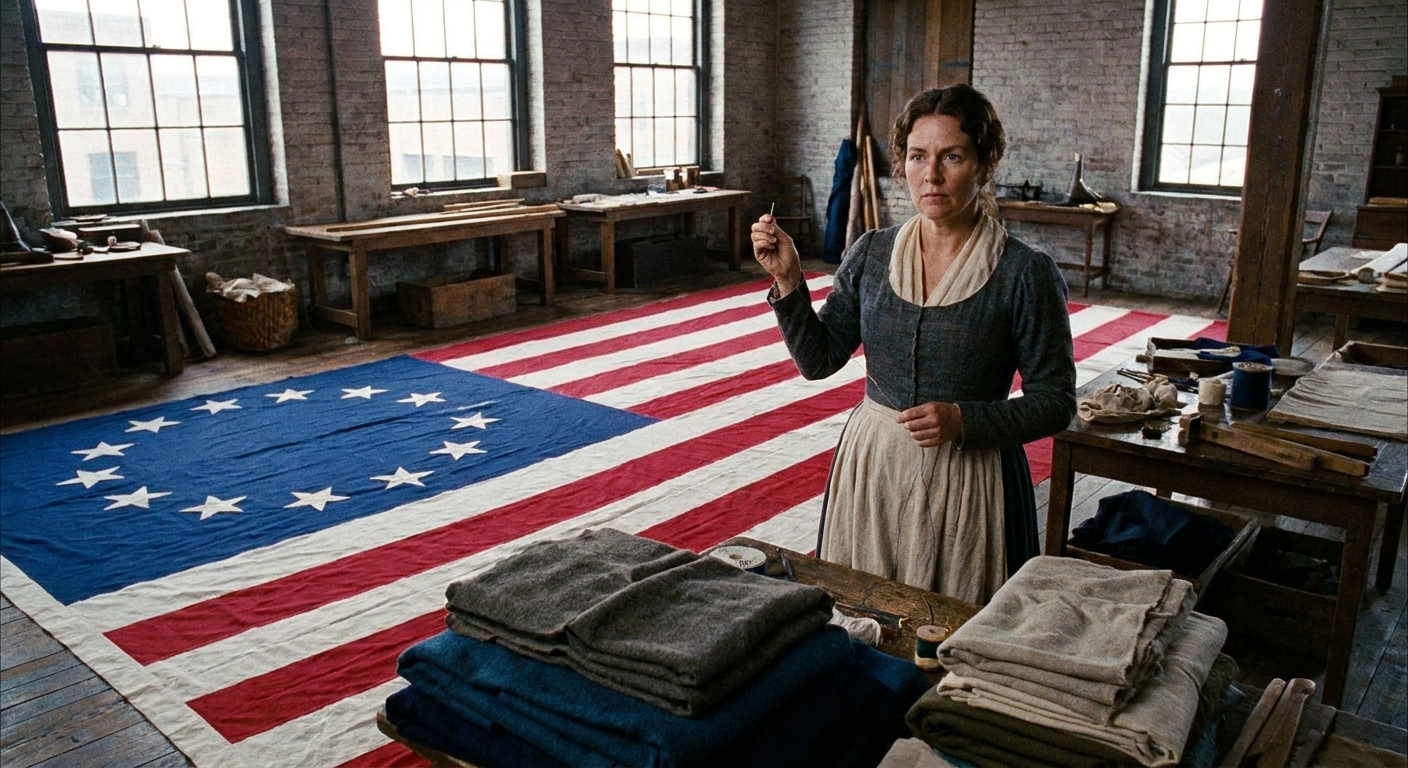
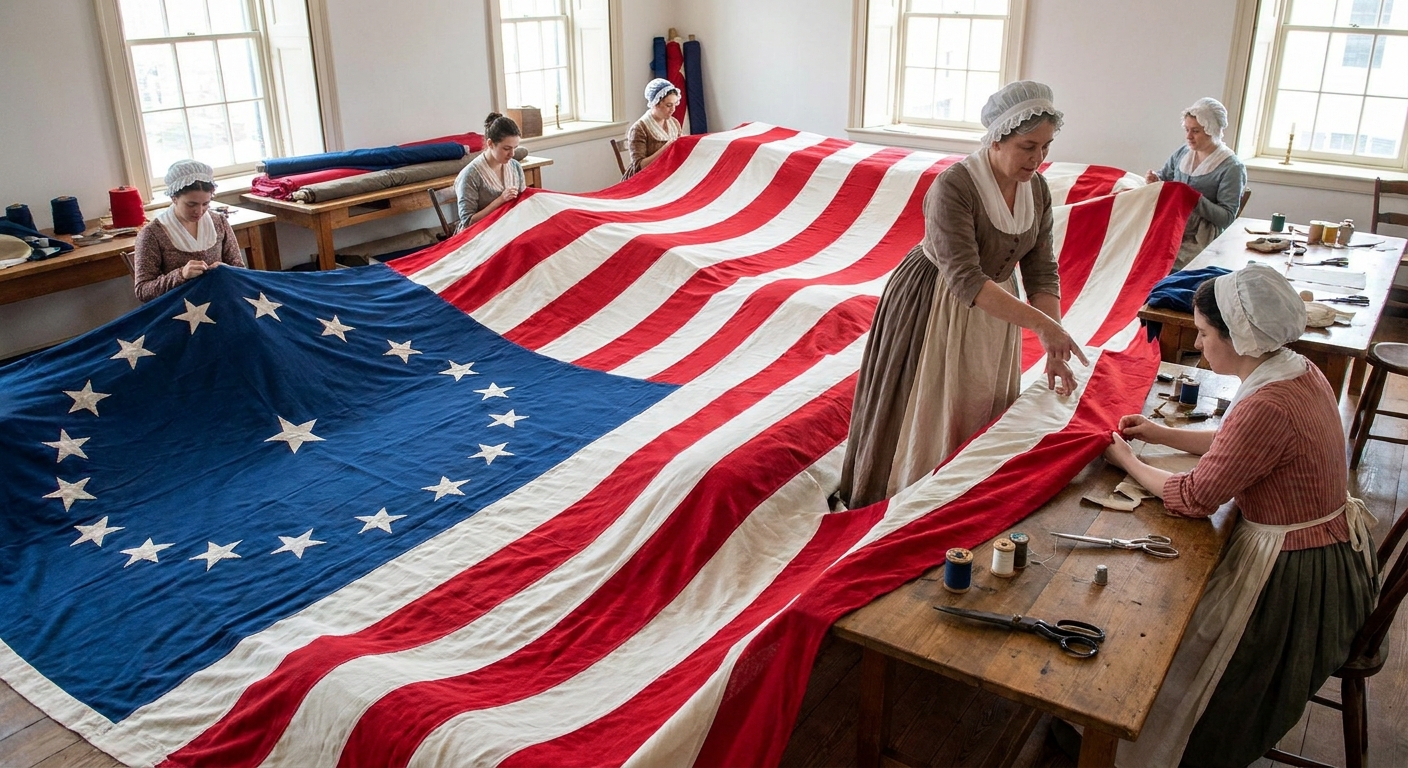
When people say “she sewed the flag,” I always want to ask: have you ever handled something that large, even just to fold it? A garrison flag meant to be read at a distance is not a dainty parlor project. It is heavy. It pulls at your shoulders. It drags on floors. It has to survive wind, rain, and rough handling on a flagstaff.
The garrison flag associated with Pickersgill is commonly described, as originally made, as enormous, roughly 30 by 42 feet, with fifteen stars and fifteen stripes, matching the U.S. flag design in use at the time. Even if you never memorize those numbers, try to picture the scale of the task. Nothing about it is casual.
Pickersgill did not work alone. Later documentation and long-repeated accounts point to a small team that included her daughter and Grace Wisher, often described as a young Black indentured servant in the household. In practice, that likely meant long days of cutting, piecing, and hand-stitching long lengths of cloth into stable seams, then attaching stars and reinforcing stress points. The work is repetitive until it suddenly is not, because one weak seam can fail at the worst moment.
Some accounts also place portions of the sewing in a larger borrowed space, because the flag was simply too big for a typical room. That detail feels right to me. If you have ever tried to keep a giant piece of fabric clean and aligned, you know you do not do it on a cramped table by accident.
Bound labor
Grace Wisher’s presence in this story is more than a footnote, and it is one of those details that pulls the romance right out of the room. “Indenture” is often softened in popular retellings, as if it were simply an apprenticeship. In reality, indentured servitude was a legal structure that bound a person’s labor for years, with limited power to refuse work, leave a household, or negotiate conditions.
That matters because the Star-Spangled Banner is frequently framed as pure national inspiration. But it was also the product of a labor system that made big jobs possible through bound, controlled labor. This is the business of war up close: contracts and patriotic urgency leaning on unequal arrangements.
When I read about the flag’s making, I try to hold two truths at once:
- Pickersgill’s skill and management were real. She ran a shop capable of fulfilling a demanding military order under pressure.
- The labor behind the output was not equally free. The story includes an indentured young Black servant whose work helped complete a government deadline.
That tension is not an add-on. It is the period, in miniature.
What Armistead bought
Major Armistead was not simply buying cloth. He was buying visibility. A large flag served as:
- A signal to Baltimore: as long as the flag flew, the fort still resisted.
- A message to the fleet: the fort was not silenced, not taken, not cowed into lowering its colors.
- A morale device: for defenders who needed something tangible to represent endurance after a night of shellfire.
In my mind, that is why the size mattered so much. The more smoke, the more darkness, the more chaos, the more a giant, bright flag becomes a kind of proof of life.
September 1814
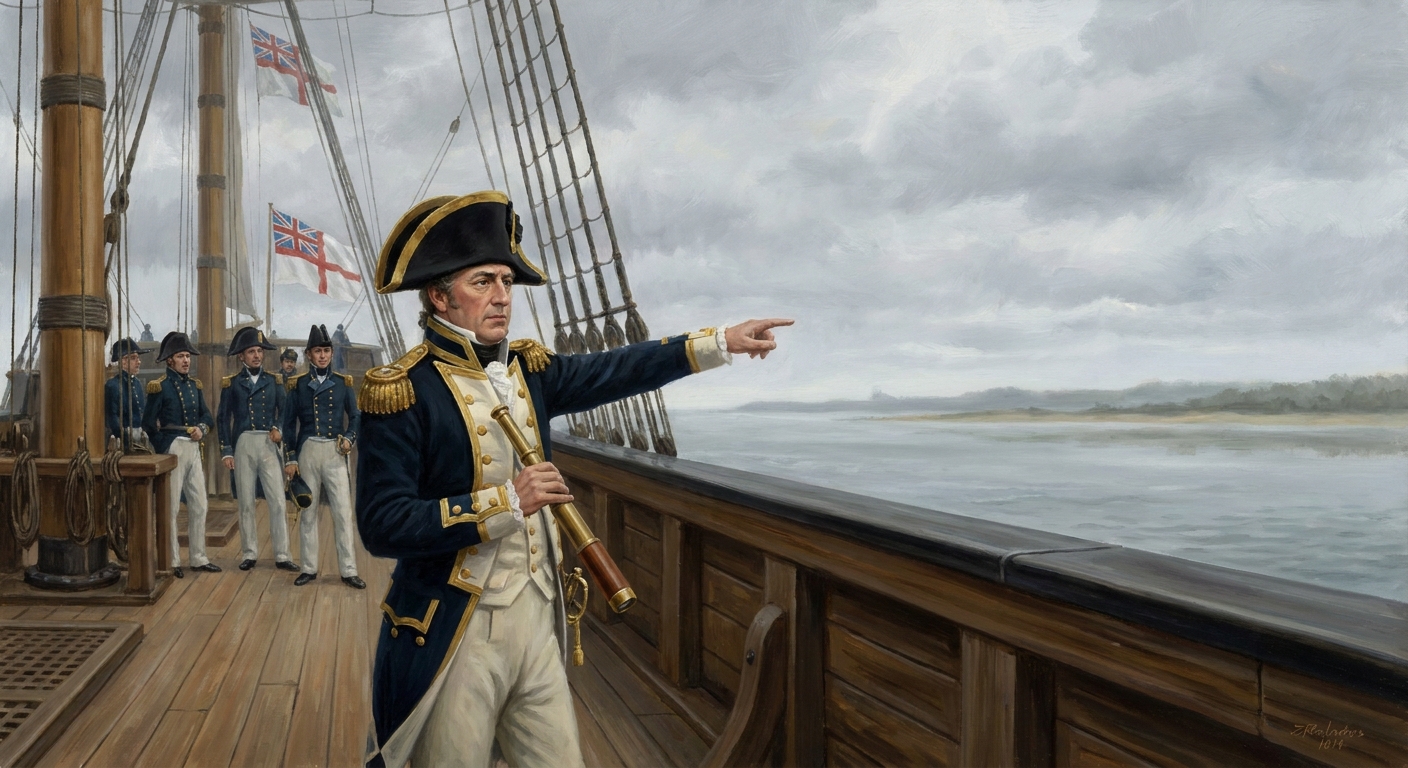
By the time the British attacked in September 1814, Baltimore’s defenses were a mix of strategy and improvisation, earthworks and militia, shore batteries and naval threats. The city’s survival was not decided by one dramatic moment. It was a chain: the land fighting outside Baltimore and the fort’s endurance in the harbor working together, each buying time for the other.
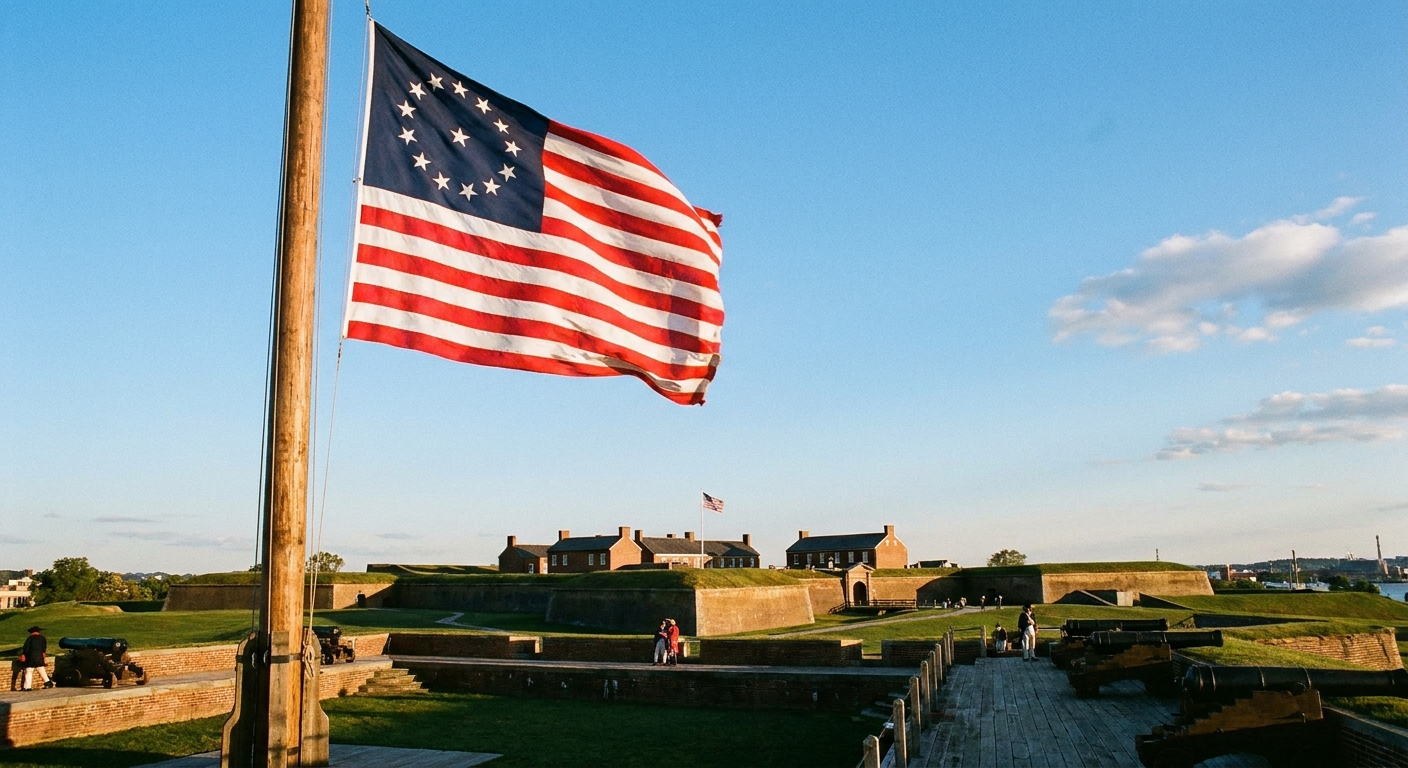
When the bombardment came, it was the kind of event that chews through the neat edges of any story. At dawn, when the smoke thinned enough for watchers to see what still stood, the flag did what Armistead paid it to do. It communicated, instantly, across distance: the fort held. And Baltimore was still out of British hands.
If you want to zoom out from the shop floor to the campaign context, pair this story with Beyond the Bladensburg Races for a sense of how quickly American confidence could collapse and then harden again in 1814.
Visiting today
If you make the trip to Fort McHenry, bring the sewing rooms with you in your imagination. Not the mythic workspace, but the real one: a business keeping accounts, managing cloth, and pushing human hands through repetitive work until a deadline is met.
A few ways to keep the visit honest:
- Ask “who labored?” Not only who commanded or wrote.
- Notice scale. Try to picture the weight and awkwardness of a massive flag before it is hoisted.
- Look for the city behind the fort. Ports run on trades, and trades run on people who rarely make the plaques.
And if your War of 1812 travel tends to snowball the way mine does, start with our Historic Sites guide to find other places where the civilian story is still readable in the landscape.
Legacy
Mary Pickersgill deserves to be remembered, but not as a cardboard heroine. Her real achievement was more interesting: she ran a shop that could meet a high-stakes government contract in a city on edge. She understood materials, labor, and deadlines. She delivered a product that became a national icon, even though it began as an itemized necessity.
The flag’s physical survival has its own complicated afterlife. It was kept by Armistead’s family and later altered over time, in part because pieces were cut away as souvenirs, before it became the preserved object people travel to see today.
Her story also reminds me that war economies have long relied on women’s management and on coerced or constrained labor, even when the public-facing narrative celebrates cannons and commanders. The Star-Spangled Banner can still move you. It moves me too. But if we only tell it as inspiration, we miss the human machinery that made that inspiration visible in the first place.
For more character-driven stories like this one, you can browse the People guide.
What to remember
There are three details I always come back to when the flag story gets sanded down into pure legend.
It was teamwork
Pickersgill led the job and is rightly associated with the contract, but the sewing and assembly took multiple hands, including family members and Grace Wisher. A flag built for distance and weather is not something one person casually finishes alone.
The size was the point
The garrison flag was meant to be seen from far out on the water. Armistead wanted no ambiguity. If the British were looking for a signal of surrender, he wanted to deny them that comfort.
Production had a cost
Grace Wisher’s indenture matters because it places this famous object back inside the real labor world of 1813 and 1814. The flag can be a powerful symbol and still be the product of unequal arrangements. In fact, that is often how wartime production works.