
I grew up in upstate New York, close enough to the old War of 1812 corridors that my grandfather could stop mid-walk, point into the trees, and say, “There. That was the line.” Sometimes it was a real marker. Sometimes it was only a memory that survived because someone cared enough to repeat it.
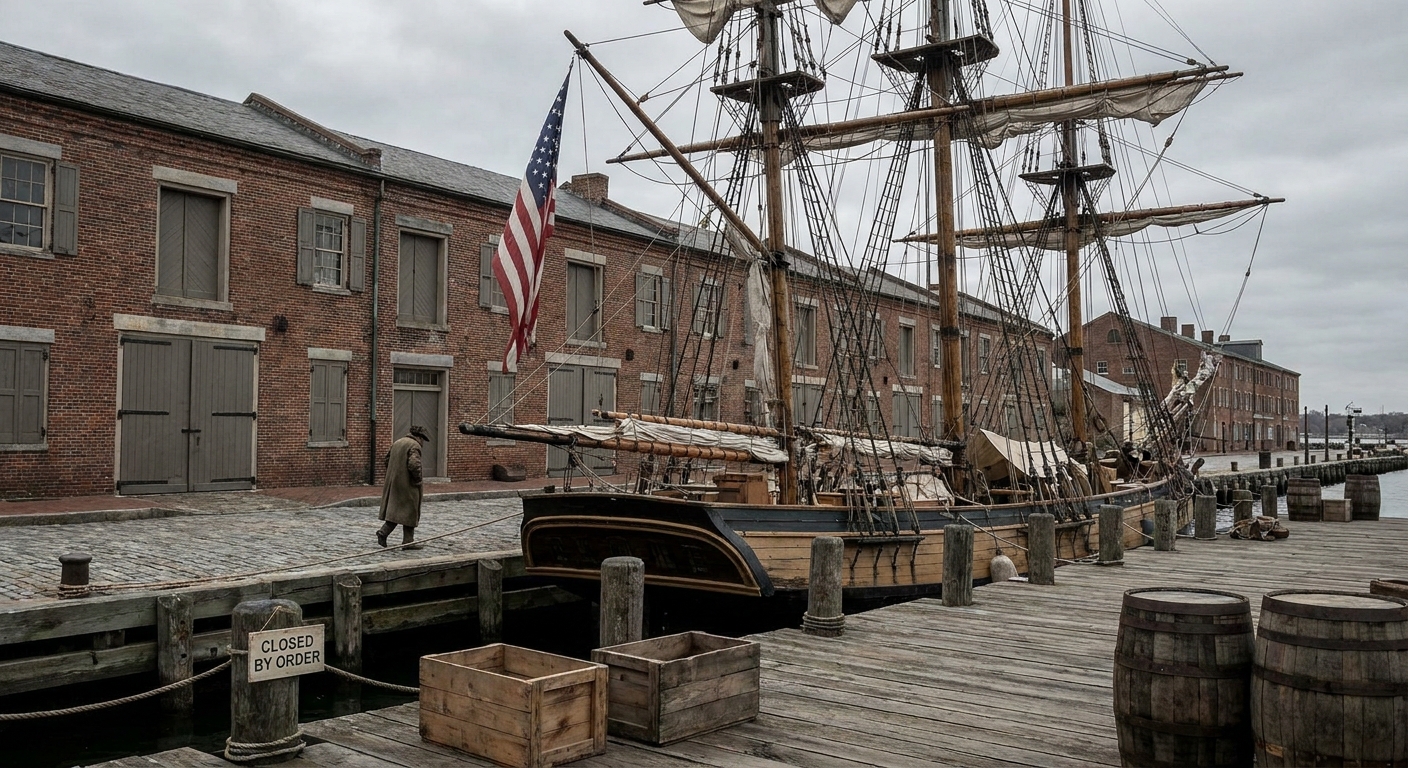
Plattsburgh has always felt like one of those places where the ground remembers more than the roadside signs can hold. When most of us say “the Battle of Plattsburgh,” we picture the lake fight, masts and cannon smoke, and the neat phrase “a turning point.” But if you stand where civilians once stood, what comes forward is not neat at all. It is barns, fences, store shelves, kitchens, and sickrooms, all jolted by the sudden arrival of armies and the knowledge that your home has become the edge of a nation’s argument.
This is the civilian side of Plattsburgh, the part that does not fit cleanly into a battlefield diagram. It is what farmers, merchants, children, and working people endured before the guns opened, while they roared, and after the last echo drifted off Lake Champlain.
A town in the path
In September 1814, Plattsburgh sat in an awkward, dangerous position. It was a lake town, a river town, and a road town all at once. Goods, gossip, and troops moved along the same narrow approaches. That meant that when Sir George Prevost brought a large British force south along the Richelieu River and Lake Champlain line, Plattsburgh was never going to be a backdrop. It was the stage.
What I keep in mind when walking places like this is how little room civilians had to negotiate. They could not vote the armies away. They could not pause the harvest. They could not make their roof any less flammable. Their choices were small, often physical, and often immediate: hide valuables, move children, decide what food can be spared without risking hunger, decide whether to stay near home or slip out into the countryside with whatever can be carried.
If you want the broader arc of the campaign, our Guide to Battles and Timeline Guide can help you get oriented. The civilian experience at Plattsburgh, though, lives in the hours between those headline points.
The week, plainly
If you compress the campaign into the parts that mattered most to households, it looks something like this: Prevost’s army pushing down the Champlain Valley, U.S. regulars under Brigadier General Alexander Macomb and local militia tightening their line at the Saranac River crossings, pressure building at bridges and fords, and then a single day when water and land fights collided.
There is a domestic version of that same timeline, too. Troops arrive and need space. Wagons and teams are leaned on hard. Prices shift and ordinary errands start to feel like risks. Even before the main action, the town’s private rooms and outbuildings could be pulled into public use, sometimes by request, sometimes by sheer necessity.
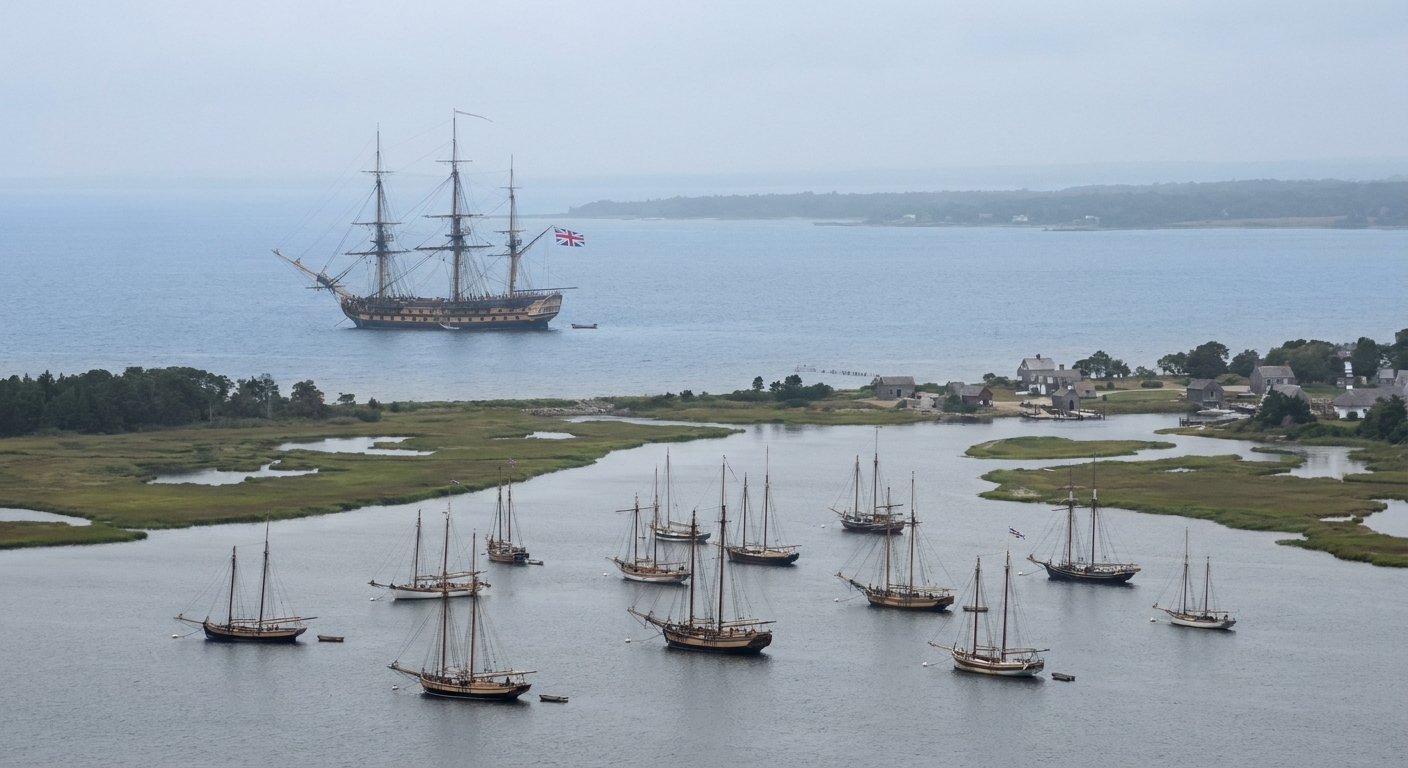
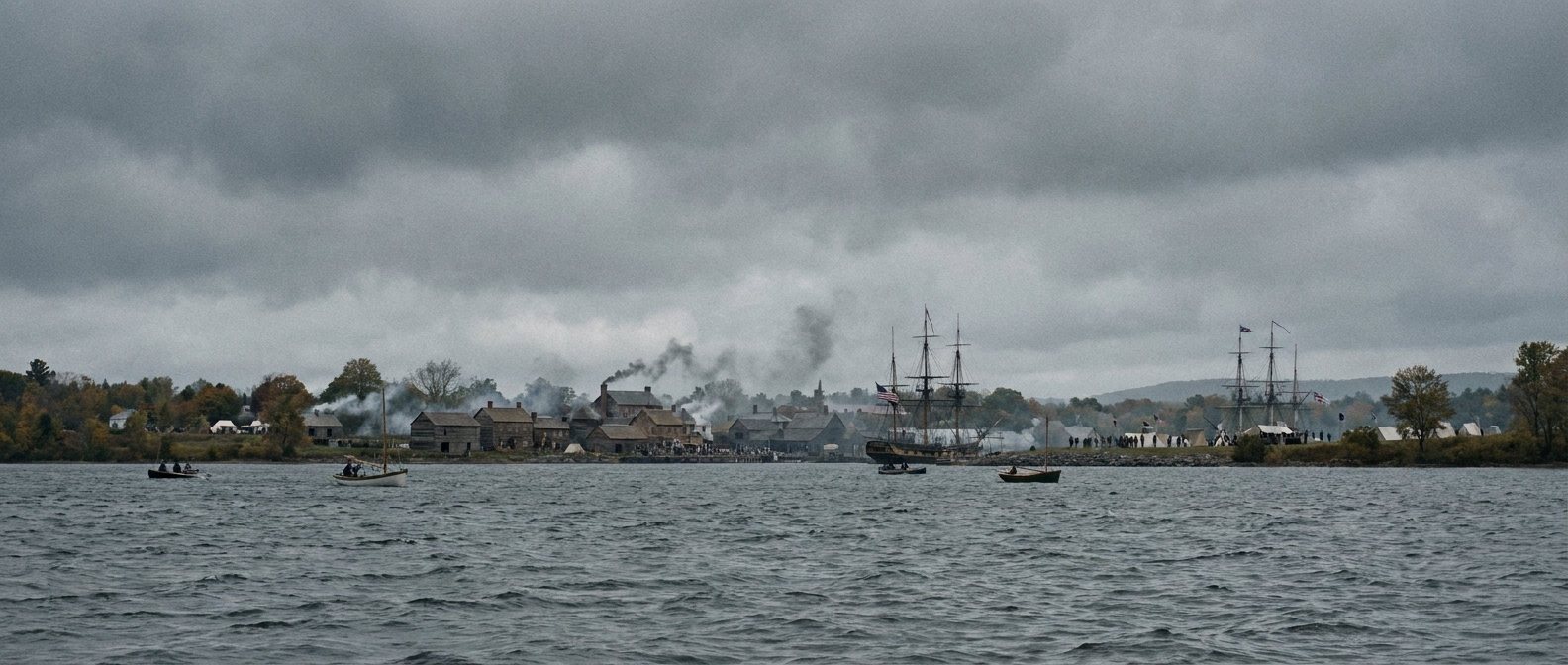
On September 11, 1814, the naval battle in Plattsburgh Bay, led by Thomas Macdonough, and the land fighting along the Saranac unfolded in the same tense span of hours. The British squadron, commanded by Captain George Downie, was close enough that the outcome carried all the way into kitchens and backyards.
After the British squadron was defeated in Plattsburgh Bay, with key vessels captured and the shattered flagship left behind in the wreckage of the fight, Prevost’s position became hard to hold. Without command of Lake Champlain, supplying and covering a forward army became a gamble, and Prevost chose withdrawal rather than risk a deeper push that could not be reliably supported. The retreat that followed was quick enough to feel, to the people on the ground, like a storm pulling back. The debris and the damage stayed.
Before the guns
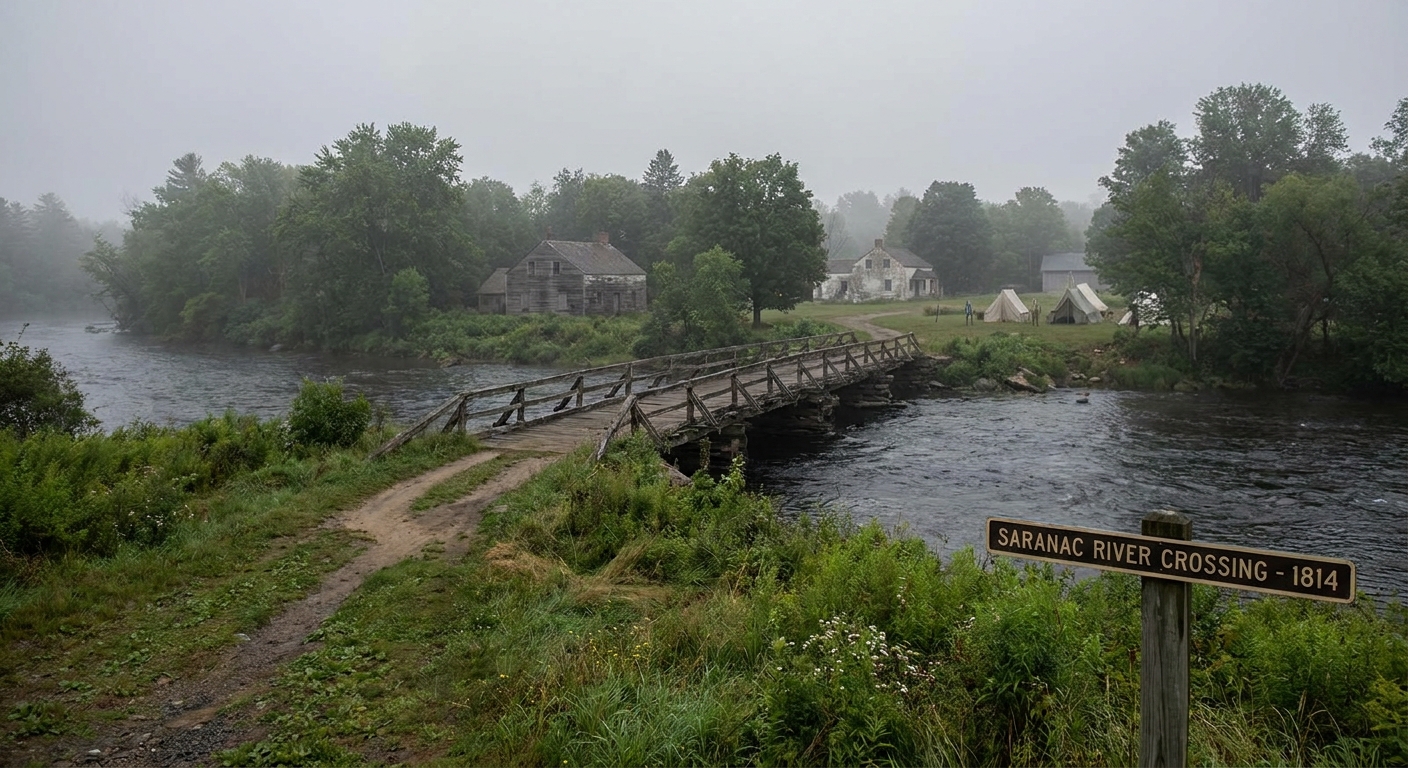
Long before the naval engagement in Plattsburgh Bay and the land fighting along the Saranac, disruption seeped in like damp through a boot. Civilians felt it in three ways at first: information, movement, and supplies.
Rumor moved faster
In a border region, news is rarely clean. One person swears an enemy column is days away. Another insists the threat is exaggerated. Someone else repeats that a fleet is on the lake. Even when the facts are right, the timing is wrong. Living with that churn changes daily decisions. Do you take produce to market, or keep it back? Do you let a child run errands, or keep them close? Do you sleep in your bed, or in your clothes?
Roads turned military
Plattsburgh’s civilians watched their familiar travel ways turn into military corridors. Tracks that carried flour and timber suddenly carried detachments, artillery, and supply trains. That pressure did not require a single shot to be disruptive. Horses needed feed. Men needed food. Wagons needed repairs. Local labor and local animals were pulled into the war whether owners volunteered them or not.
Supplies meant survival
In theory, “requisition” sounds organized, almost polite. In practice, the line between purchase, forced sale, and outright taking could blur quickly, especially under urgency. In communities around Plattsburgh, the needs were predictable and relentless: hay and grain for animals, cattle and flour for men, timber and tools for defenses and repairs. Even when officers issued receipts, a piece of paper was not the same as winter feed in the barn, and it was never a guarantee of timely payment.
The record is uneven. Some losses show up in official paper, some only in family memory. Still, one of the most grounded windows into civilian loss after this campaign is the paper trail it generated: claims, petitions, and receipts, often described in that blunt era-language of “losses” and “depredations.” Those documents do not read like speeches. They read like lists. A fence line. A stack of hay. A wagon. A few head of cattle. The plain accounting of what made a household function.
During the battle
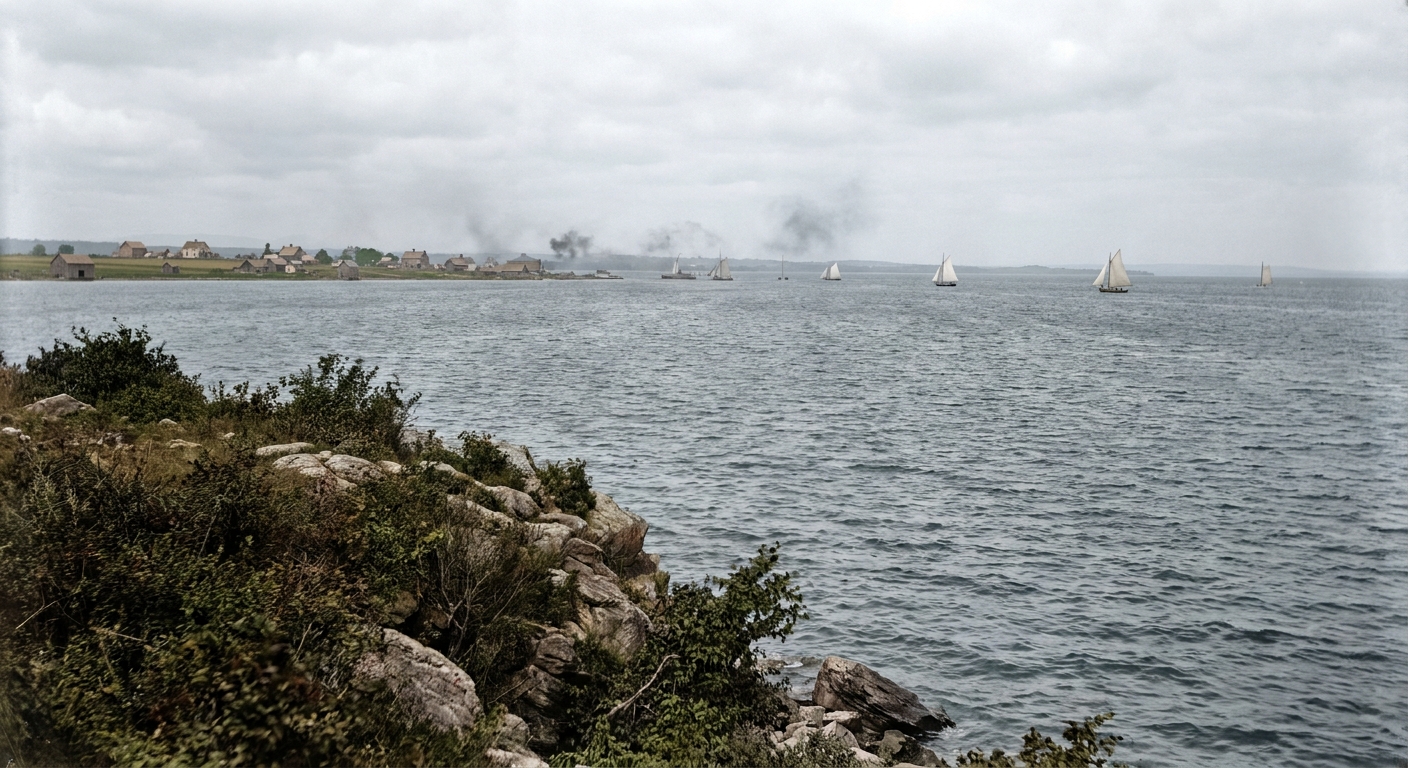
When the fighting came, it was not only nearby. It was present. It had sound, vibration, smoke, and a kind of uncertainty that makes every ordinary object in a home feel temporary.
Windows shook
Even if your house was not struck, you lived with the knowledge that a stray shot did not care about property lines. Windows rattle in cannonade. Animals panic. Children hear fear even when adults try to disguise it. Families packed bundles they might need if they fled and watched for smoke that could mean a structure fire starting blocks away.
Farms became material
Armies see terrain in a way civilians do not have the luxury to. A fence is lumber. A barn is shelter. An orchard can hide a line of men. A rise in a field can protect a gun. Along the Saranac, those needs could chew into the careful boundaries that made a farm function. Once rails are pulled, gates broken, and paths churned into mud, the damage keeps costing you after the soldiers leave.
Care found any room
One of the hard truths about battles near towns is that civilians often become part of the first medical response. At Plattsburgh, with action on both lake and river, the wounded did not wait for neat arrangements. When formal medical capacity is strained, people clear floor space in homes, taverns, and other usable buildings, heat water, tear cloth into bandages, and try to keep the worst of the pain at bay until surgeons can reach them.
Billets and burdens
Even without a cannonball through the roof, war could still walk straight into the front room. Towns on a campaign route had to contend with billeting, storage, and the simple fact that bodies require food, fuel, and space. A spare bed becomes an officer’s bed. A loft or barn becomes a temporary storehouse. Taverns and larger homes take on the work of feeding strangers fast, because the waterfront and the river line are suddenly too busy for normal rhythms.
Some arrangements were negotiated. Some were not. Either way, the effect on civilians was similar: less privacy, tighter supplies, and the constant calculation of what you could share without hollowing out your own winter.
Flight and return
Not everyone stayed in town to listen to the guns. In a place like Plattsburgh, flight did not always mean a dramatic wagon caravan. Sometimes it was a mother taking children to a neighbor’s farm a few miles back from the lake. Sometimes it was an older couple choosing the woods edge over a house that felt too visible. Sometimes it was a family splitting up, one person staying to watch property, the rest leaving to reduce risk.
Returning could be its own kind of shock. A familiar road looks different when it is rutted by heavy wheels and cut by hurried traffic. A field looks smaller when part of it has been trampled into the earth. A pantry looks like a ledger, because you are counting what is left and how long it has to last.
After the firing
Victory, when it came, did not magically return Plattsburgh to routine. In some ways, the end of the main fighting was when civilian burden became heaviest, because the adrenaline of crisis gives way to the arithmetic of loss.
Damage cost daily
A splintered fence is not just an eyesore. It means livestock can wander, crops can be trampled, and a farm that ran on tight margins now has to spend time and materials it cannot spare. Broken wagons and injured horses slow everything. A burned stack of hay is a winter problem, not a summer one.
Trade restarted slowly
Even after armies moved on, the region’s commerce had to find its footing again. Transportation routes had been strained. Some stock was gone. Some customers had fled or were buried. Prices could swing because scarcity and fear distort markets. A merchant could survive the battle and still fail afterward.
Who bore the worst
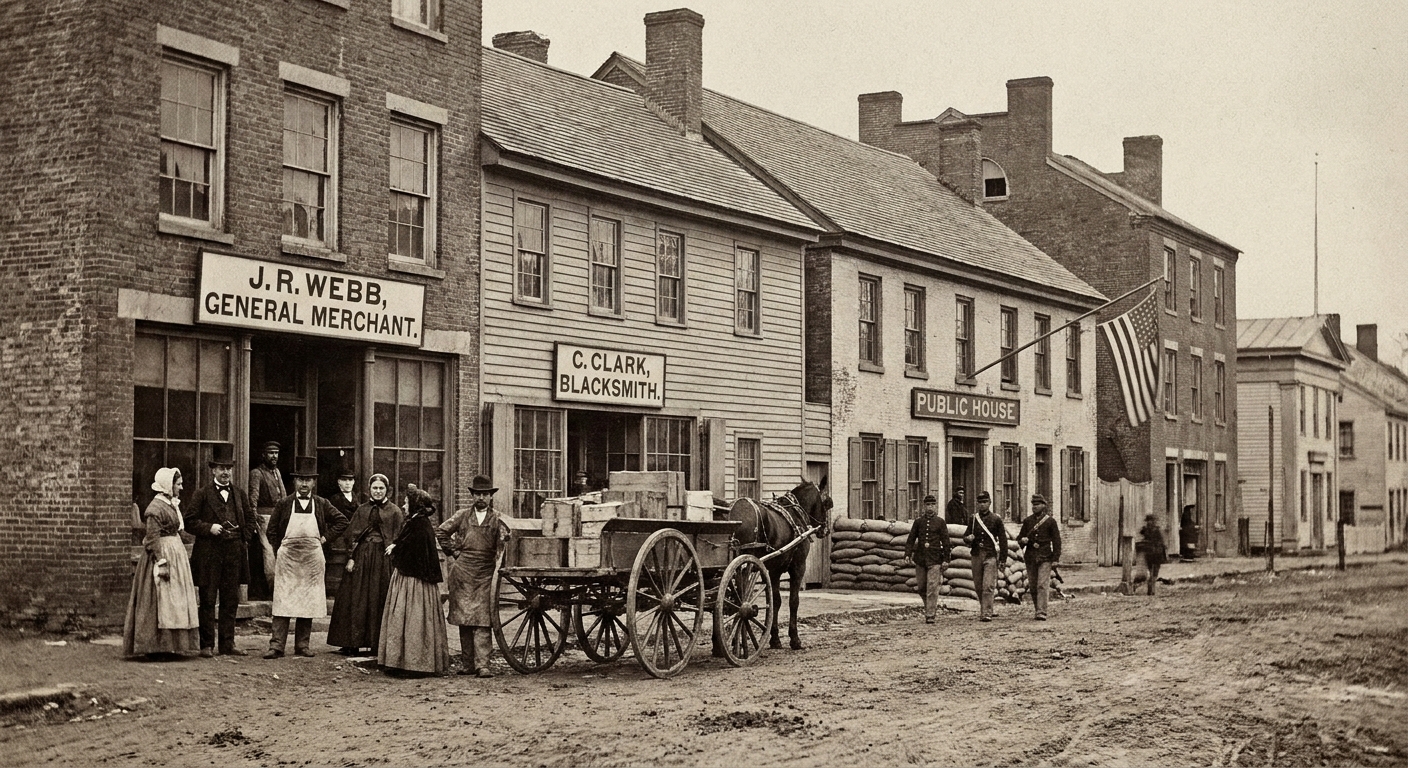
When we talk about the civilian experience, it is tempting to treat civilians as one group. They were not. Plattsburgh’s disruption hit people unevenly, depending on land, wealth, health, vulnerability, and proximity to the routes the armies needed.
- Farm families faced immediate losses in livestock, fodder, fencing, and labor. If a son was pulled into militia service or a horse was taken, the farm’s entire rhythm could collapse.
- Town merchants and craftsmen had stock exposed to emergency demand and opportunistic taking, and livelihoods exposed to sudden credit failure and disrupted supply lines.
- Widows, the elderly, and the sick had less ability to flee, rebuild, or absorb shortages. The same event that was inconvenient for one household could be catastrophic for another.
- People without secure property often had the least protection and the least recourse when wartime needs overran normal rules.
There is also the question of who shows up clearly in the paperwork. New York was, as a state, in a long and uneven transition away from slavery in this period, with a mix of legal statuses under gradual emancipation. In the North Country, too, documentation can be patchy and easy to misread in hindsight. What matters for the civilian story, and what the broader pattern of war supports, is that people with the least power and the fewest reserves were the least insulated. When food ran short, when wages stopped, when a household fled, the shock fell hardest on those who had the fewest choices.
When I read local accounts and period letters, what stands out is not just loss, but how fast loss compounds. A broken fence leads to a lost cow. A lost cow leads to a winter without enough meat or milk. A winter without enough food leads to illness. Then spring comes, and there is still a field to plant.
Why the lake mattered
The naval engagement on Lake Champlain is often told as a contest of commanders and ship handling, and it was. But the civilian meaning was simpler: control of the lake shaped whether Prevost’s army could be supplied and sustained.
For civilians, that strategic fact translated into a blunt, personal question: will this become an occupation, or an invasion that passes through? When the British squadron was defeated in Plattsburgh Bay, Prevost withdrew his army rather than press on under worsening supply and support conditions. That decision did not erase damage already done, but it changed what came next for people trying to decide whether to stay put, to run, or to return.
If you want to place Plattsburgh alongside other naval turning points, I keep a shortlist at 5 Naval Actions That Changed the War of 1812. It helps to see how water control could decide what happened to communities that never volunteered to be on a front line.
Walking it now
When you visit battle landscapes, it is easy to hunt for the dramatic angles, the grand view, the place where a famous officer stood. I make myself take a different kind of walk. I measure the ordinary distances.
- House to shoreline. Close enough to hear guns clearly? Close enough that smoke would drift in?
- Field to road. How easily could an army move through a working farm, and how hard would it be to stop them?
- Slope of ground. A gentle rise can be a perfect place for a gun. It can also be the rise your children used as a sled hill, until the war redefined it.
For practical trip planning and context, our Guide to Historic Sites can help you think through what to look for at places where the landscape still does some of the talking. And if you like stepping into living history carefully and respectfully, I put together 7 Essential Tips for Attending War of 1812 Battle Reenactments.
Names in the record
I cannot promise you that every local anecdote survives cleanly in the record, because some of the truest memories live in families more than in archives. Plattsburgh does, however, leave us something sturdier than a story told once and then polished by retelling. It leaves names in ink.
One of the clearest civilian windows comes from the post-campaign claims and petitions that households and businesses filed afterward, trying to be made whole, or at least trying to be seen. In Plattsburgh’s case, the name that shows up with real weight in local civic life is Peter Sailly, a prominent merchant and public figure. He was not a commander on the Saranac, but he was exactly the sort of civilian the war leaned on hardest: the person with goods, storage space, wagons, and administrative responsibility when a town suddenly becomes a supply point and a target.
Those papers are not poetic. They are not meant to be. They are the war translated into household math.
One claim, in ink
One of the most revealing things about Plattsburgh’s civilian losses is how they appear in itemized form, with no room for romance. In post-campaign claim records associated with Peter Sailly, the story is not about battlefield glory. It is about services and materials pressed into wartime use, and the attempt afterward to put a dollar value on what a household or business had been made to absorb.
The categories that tend to surface in this kind of paperwork are the unglamorous essentials: hauling and cartage, provisions, and the use of private property and equipment.
That may sound small until you picture what it means on the ground. Cartage is not a line in a book. It is your team hitched up at daylight. It is your wagon running until its joints complain. It is a driver pulled from his own work to haul someone else’s emergency. It is the kind of service a community can provide for a day or two, and then feel in its bones for weeks.
And even when an officer signed a receipt, a receipt did not feed a horse in January.
Small losses, big weight
The temptation, when you write about civilians, is to fill gaps with tidy hypotheticals. Plattsburgh does not need much of that. The claims and receipts already tell you what the war felt like to people who did not get a uniform or a monument.
- Fence rails and timber appear because they were torn out of working property to meet immediate military needs.
- Hay and grain appear because animals ate whether families could spare it or not, and because winter was still coming.
- Wagons, harness, and horses appear because movement was everything, and civilian equipment was the first thing armies reached for when time ran short.
- Food and household goods appear because a town at war becomes a town that is consumed, one item at a time.
Read that list slowly and you can see the shape of a household behind it. That is why I like the unromantic record. It does not let us pretend the cost was abstract.
A civilian turning point
Plattsburgh is remembered as a military pivot, but it is also a civilian lesson. Border communities paid in advance for decisions made far away. They paid in fence rails, cattle, and the steady confidence that tomorrow would look like yesterday.
When I stand near the water in that part of New York, I always think about how many people must have tried to keep their voices calm inside their homes while listening to the lake speak in cannon fire. History books can tell you who won. A town’s civilians can tell you what it cost.
If you want to keep exploring the human side of the war, the best starting points are our guides to People and the larger context pages at Timeline Guide. I will keep chasing the smaller stories in the margins, because that is where most people lived, and where most people, in any war, still live.