
I grew up in upstate New York where the war feels like it happened on the next ridge. But the first time I stood on Baltimore’s waterfront and tried to picture 1812, the story that came alive was not a tidy naval battle line. It was motion and money. Fast schooners and brigs slipping out past the capes. Investors counting risk like a grocer counts beans. Captains reading the wind and reading the law, too, because a privateer’s most important weapon was paper: a commission that made legalized raiding possible.
What follows is a timeline of Baltimore’s privateering surge during the War of 1812, with an eye on tactics and financial outcomes. Some cruises came home heavy with prize goods, crews flush with shares, and shipowners suddenly respectable. Others ended in blockades, prisons, and lawsuits over whether a “prize” was a prize at all.
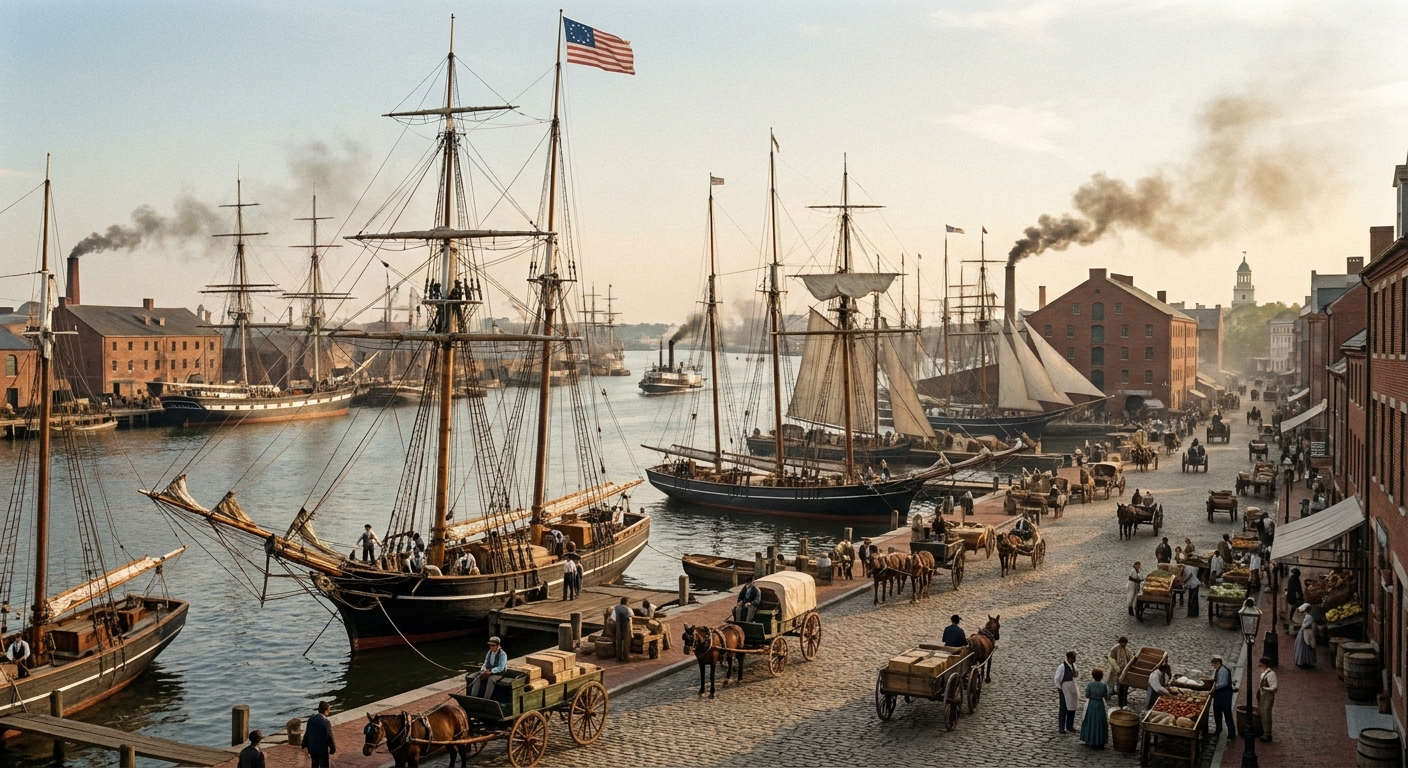
Privateering, in plain terms
Privateers were privately owned vessels licensed by government to capture enemy merchant ships. In the United States that authority came through a letter (or letters) of marque, sometimes described in the older constitutional language as “letters of marque and reprisal.” A captured ship and its cargo could be condemned in admiralty court and sold, with the proceeds split into shares among owners, captain, officers, and crew.
That last part is why Baltimore matters. It was a shipbuilding and maritime finance town with the right recipe for privateering: quick hulls, skilled seamen, deep commercial networks, and an active prize-court system. In practice, many Chesapeake prize cases were heard in federal court for Maryland, with the court sitting at Baltimore for a large share of the region’s wartime maritime business.
- Tactics: speed, deception (including false colors, generally with true colors shown before actual engagement), aggressive boarding, and quick return to friendly ports.
- Financial reality: high upside and high variance. One rich prize could make a cruise. A tight blockade could ruin an entire season.
- Risk: capture meant imprisonment, sometimes for long stretches depending on exchanges, logistics, and the slow churn of diplomacy. For a vivid look at where captured sailors could end up, see Inside Dartmoor Prison.
What made Baltimore vessels dangerous
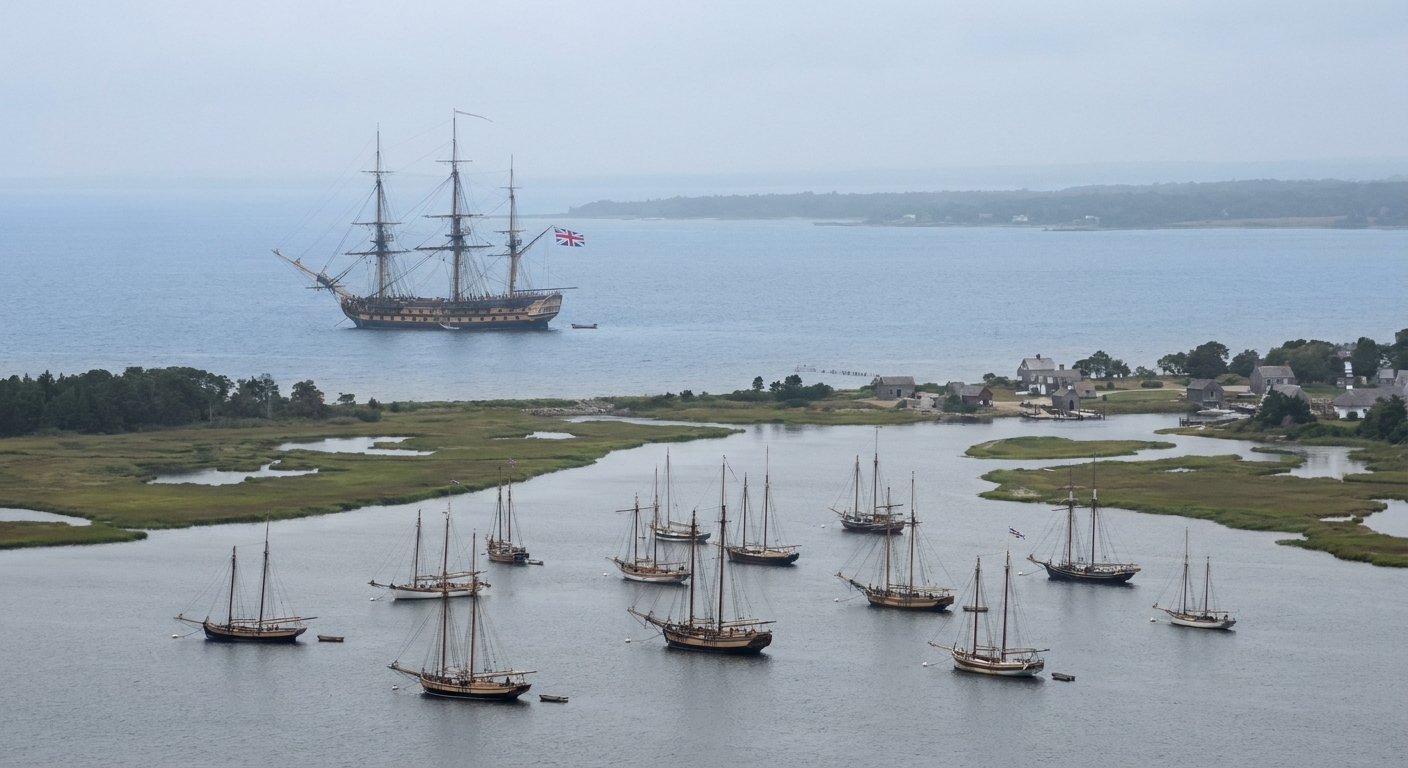
People toss around “Baltimore clipper” like it is a single blueprint, but the useful idea is simpler: Baltimore yards built and refined fast, weatherly vessels well before 1812, and the embargo era only sharpened the incentive to make speed pay. Many were schooners and brigs with raked masts, relatively narrow hulls, and sail plans that rewarded an aggressive hand on the sheets.
That design logic fit privateering perfectly. You did not need to outgun the Royal Navy. You needed to pick your fight, overtake a merchantman quickly, and still have the legs to run when a blockading cruiser appeared on the horizon.
Timeline: rise, peak, squeeze
Before June 1812: built for contested seas
Late 1790s to 1811: Baltimore-style fast craft were already part of the port’s reputation, and the 1807 embargo years pushed merchants and builders into an even tighter relationship with risk, paperwork, and speed. When war arrived, the tools and the talent were already on the waterfront, waiting for legal authority to turn speed into income.
For the wider economic backdrop of how trade pressure reshaped American business before war, I keep a running chronology here: From Embargo to Boom: War of 1812 Economy Timeline.
June to December 1812: commissions and hard lessons
June 1812: War declaration triggers a rush for commissions. Baltimore owners outfit vessels quickly, often converting existing merchant vessels and commissioning new schooners and brigs built for speed. Crews sign on because privateering offers a kind of lottery ticket wage. Risky, but potentially life-changing.
As word spreads in mid 1812: A few names recur in Baltimore accounts because they represented a particular kind of confidence: fast hulls, aggressive captains, and owners willing to bankroll risk. Vessels like Rossie and Comet belong to that talk, the kind of schooners Baltimore people pointed to when they wanted to argue that speed and nerve could still embarrass an empire. Names can be repetitive in this era and ports reused them, but in Baltimore’s privateering memory these became shorthand for early-war audacity and early-war profit.
By late 1812: Baltimore’s waterfront keeps turning out fast raiders. One of the most famous, the schooner Chasseur, was built in Baltimore in 1812, but her most celebrated work came later, when she found the open-water rhythm that made her reputation stick.
Summer 1812: Early cruises test the basics: can you find prey, can you take it, and can you get it home through a growing British presence. Many captures are small or medium merchantmen, but even modest cargoes can pay well when sold quickly.
Autumn 1812: Adaptation begins on both sides. Captains learn that getting home is often harder than making the capture. Financial success becomes less about raw aggression and more about route planning, intelligence from friendly coasters, and avoiding predictable approaches to the Chesapeake.
Early 1813: a business system forms
January to March 1813: Baltimore privateering matures into a pipeline. Owners line up financing and provisions. Prize agents, clerks, and lawyers become just as important as gunners. The federal docket fills with prize matters, and the city’s maritime economy starts to feel a wartime pulse.
How a prize case actually moved: after a capture, the captor (often through a prize agent) filed a libel in federal court, the seized vessel and cargo were inventoried, and witnesses were examined on oath. If the papers were inconsistent, if the capture looked unlawful, or if the property turned out to be neutral, the court could refuse condemnation. The money did not flow because a captain said so. It flowed because a judge said so.
A Baltimore-flavored example, in miniature: the cleanest cases tended to move faster, meaning a plainly British-owned merchant cargo with straightforward ship’s papers. The slow cases often looked “simple” at the dock and then turned legal once somebody claimed neutrality, or a bill of lading did not match the story told under oath. In those disputes, a captured vessel could sit while fees piled up and perishable goods lost value, and sailors spent their shares in imagination only. This was not just courtroom drama. It changed whether a cruise felt like a windfall or a long, hungry delay.
April 1813: Some cruises range farther into the Atlantic and toward the approaches of major trade routes. The odds of encountering merchant traffic rise, but so do the dangers of escorts, armed convoys, and lurking cruisers.
Mid to late 1813: the vise tightens
June to December 1813: Pressure in the Chesapeake grows in phases, not as a single switch flipped overnight. Raids, patrols, and the threat of blockade force captains to treat the bay’s exits like watched doorways. You can track that tightening pressure in my Chesapeake chronology: Chesapeake Bay Raids Timeline (1813 to 1814).
One concrete effect: taking a prize is only half the job. You also have to man it. Every prize crew you peel off weakens your own deck, and that weakness can turn a profitable capture into a future capture of your own vessel.
Late 1813: Financial results swing more wildly. Successful cruises can still be spectacular, but failed cruises become more common due to interception risk and the difficulty of running prizes into port through increasingly active blockading squadrons. Captains face hard choices: take a prize that slows you down, or let it go to preserve your own escape.
Early 1814: blockade math
January to May 1814: As blockade pressure increases and enforcement grows more consistent, the tactics that worked in 1812 and early 1813 degrade fast. It becomes harder to get out, harder to get in, and hardest of all to shepherd a captured vessel into a friendly harbor. That changes the math: cruises last longer, costs rise, and prize probabilities fall.
What changes financially: investors who once spread money across multiple cruises now face a season where vessels may not sail at all, or may sail and return empty. Crew recruitment becomes harder, and the “share” system looks less like opportunity and more like a gamble stacked against the sailor.
A cautious scale marker: depending on how historians count, Baltimore and the surrounding Maryland waterfront sent out well over a hundred privateering cruises during the war, and the tally can plausibly climb into the hundreds if you count short cruises, re-commissionings, and vessels that sailed under refreshed papers. I keep the phrasing cautious on purpose because vessels changed ownership, changed names, and blurred the edges of bookkeeping. Still, the scale matters: this was not a handful of one-off ventures. It was a sustained wartime industry.
Summer 1814: the Chesapeake becomes a front
June to August 1814: Coastal raids intensify and the Chesapeake feels like a front line. Privateering does not vanish, but it becomes constrained by patrol patterns, by fear of interception, and by the blunt fact that a port under threat cannot function as a reliable prize-processing hub.
August 1814: The burning of Washington jolts the region. The privateering world feels this immediately: instability at major ports, rising insurance risk, and a sense that the war’s violence is no longer “out there” on blue water. For the pace of that month, see Burning of Washington Timeline and Recovery.
September 1814: Baltimore holds
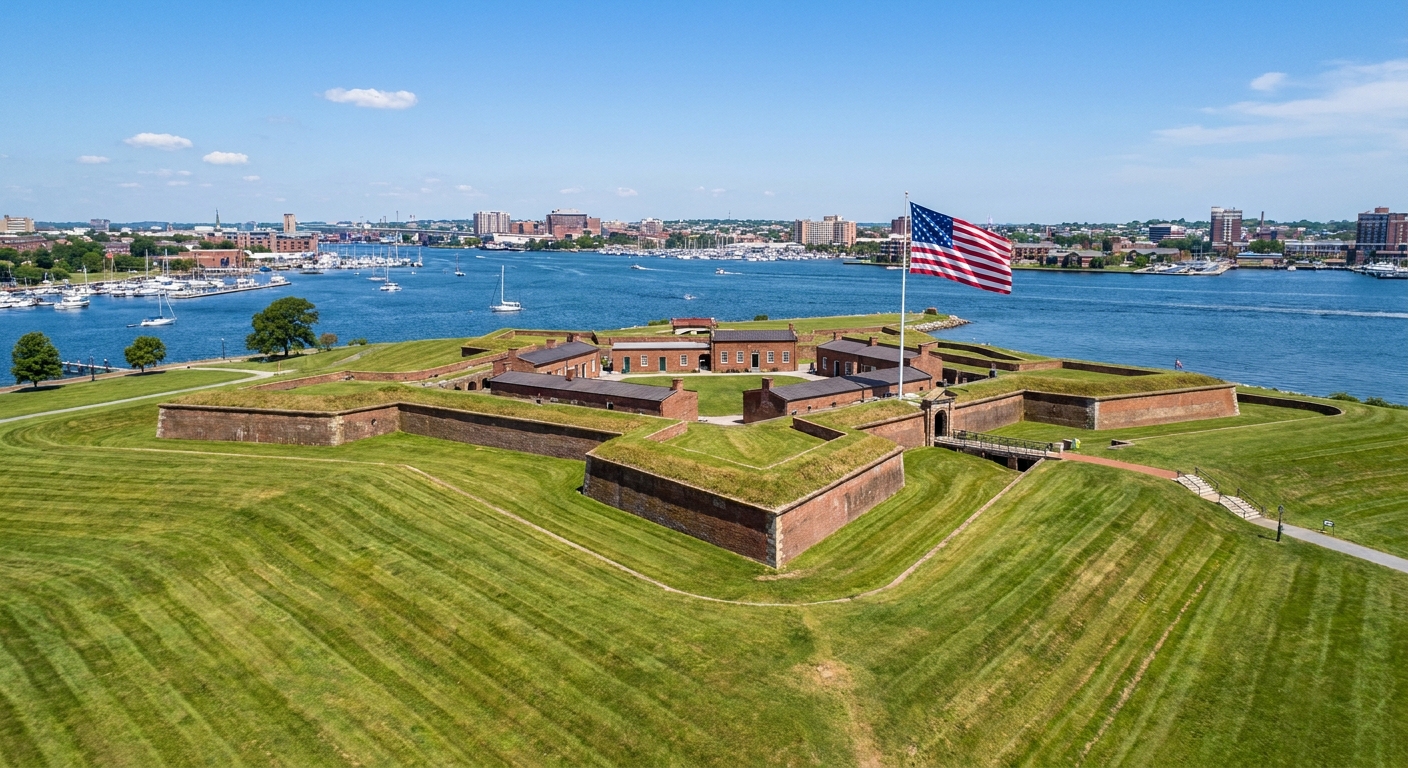
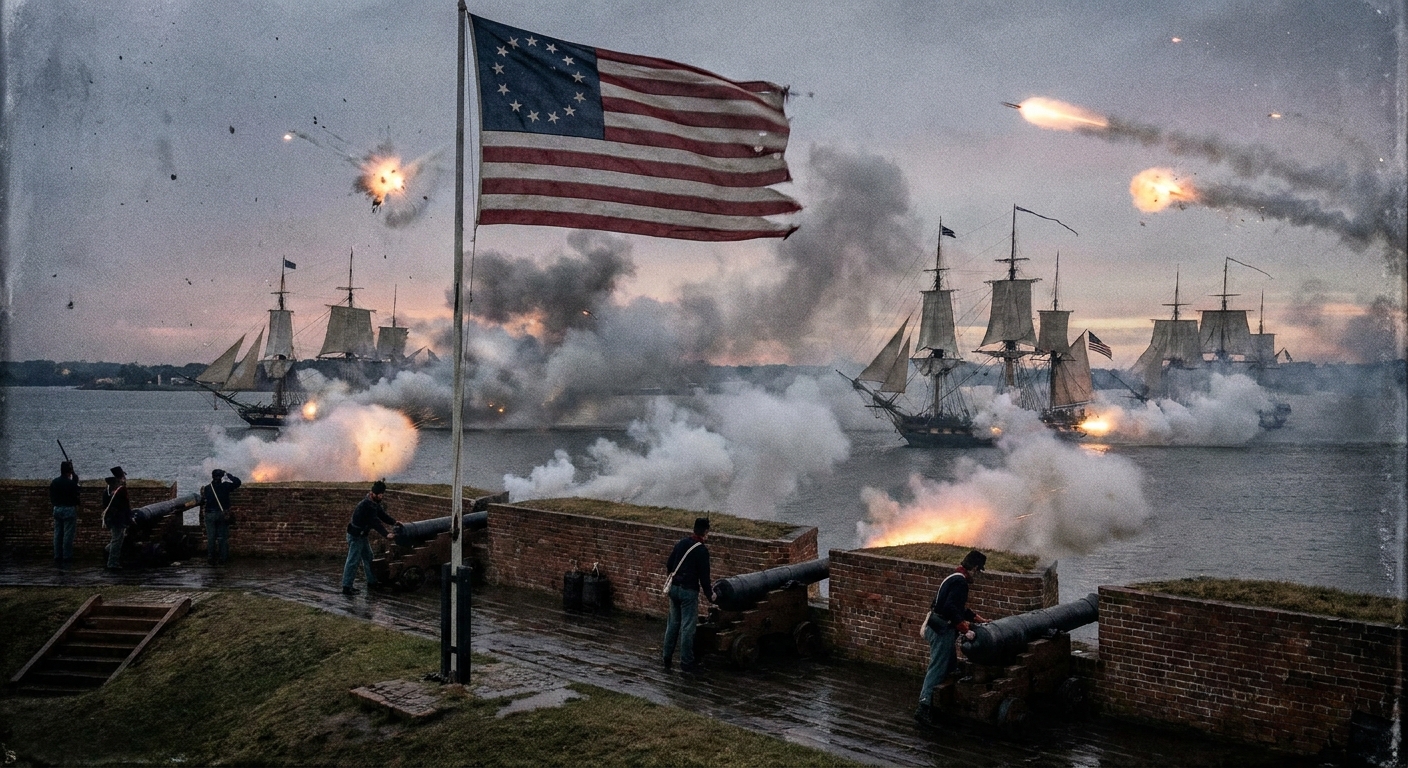
September 1814: The British attack on Baltimore culminates in the bombardment of Fort McHenry. By this point, privateering is already heavily constrained, and the attack is less a new bottling of the harbor than the sharpest proof of an existing reality: naval power can close a port with fear even before it closes it with force.
If you want the defensive side of this moment and why the bombardment did not achieve its aim, I broke that story out here: Fort McHenry: Why the Bombardment Failed.
How the money worked
When people say “privateers made fortunes,” they are not lying, but they are compressing the story. Privateering profit depended on a chain of events that could break at any link:
- Capture: taking a vessel intact was far more valuable than damaging it.
- Control: you needed a prize crew to sail the capture in, and that stripped manpower from your own deck.
- Escape: both the privateer and the prize had to evade cruisers, patrols, and blockading squadrons.
- Condemnation: admiralty courts could reject claims if papers were wrong, property was neutral, or circumstances looked unlawful.
- Sale: markets fluctuate. A cargo’s value depended on timing, condition, and local demand.
That is why “success rate” is best understood as changing phases across the war. Early on, the ocean feels wide and British coverage imperfect. By 1814, the same routes out of the Chesapeake feel like narrow gates with guards posted at each one.
Common tactics
Speed as armor
Baltimore schooners were not built to trade broadsides with a Royal Navy frigate. They were built to run. The goal was to choose fights carefully, strike quickly, and vanish.
Hunting lanes and intelligence
Captains favored routes where merchant traffic was predictable: near approaches to major ports, along common trans-Atlantic paths, and along coastal corridors where smaller traders hugged land. Information from other captains, pilots, and coastal communities mattered. One reliable hint about a convoy schedule could mean everything.
Selective prize taking
As pressure rose, captains increasingly faced a cold calculation: a prize that slows you down can cost you your ship, your liberty, and your crew. In late-war conditions, letting a prize go could be the profitable decision if it saved the privateer for a better opportunity later.
A quick walk, then and now
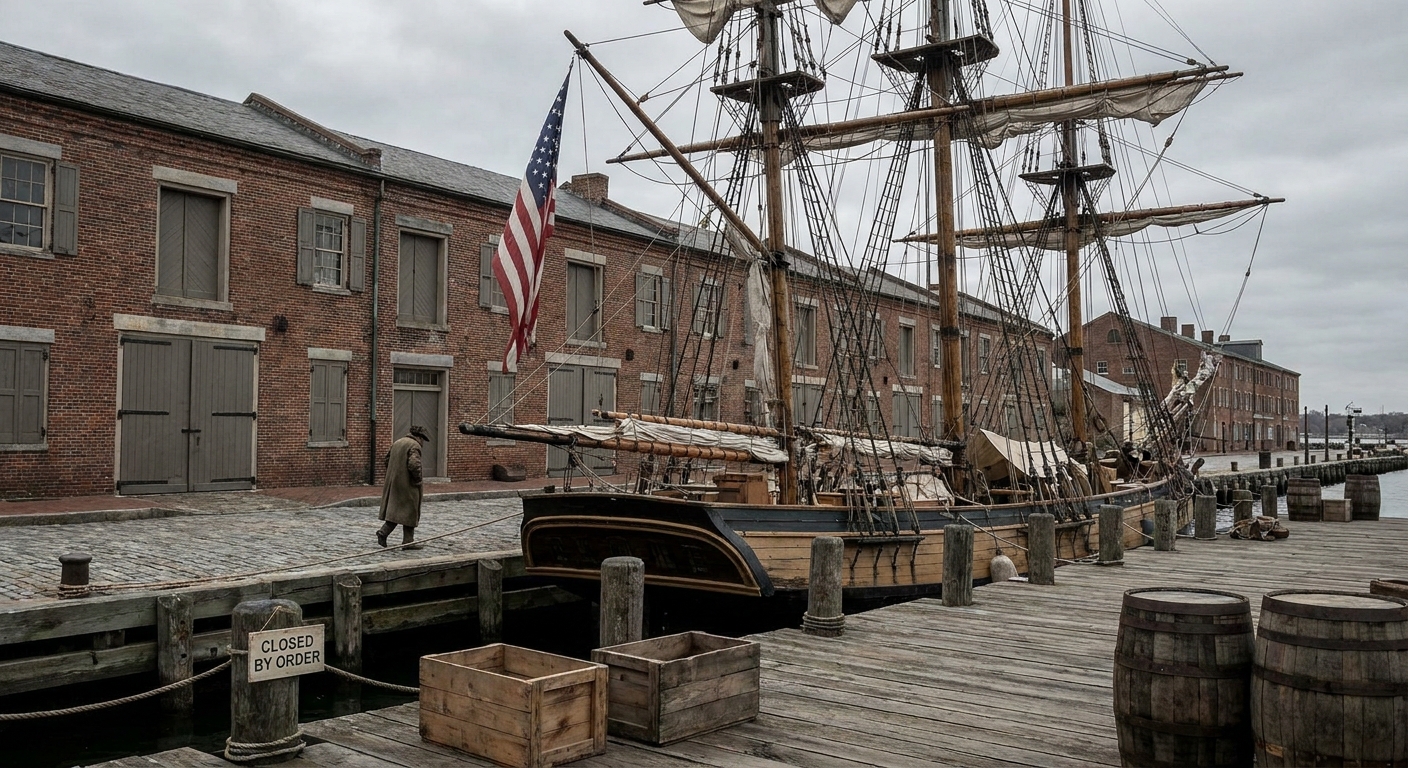
When I try to explain Baltimore privateering to friends, I tell them to imagine the waterfront as a living machine. Shipwrights, sailmakers, coopers, chandlers, lawyers, clerks, and dockhands all turning the same crank. Privateering was not just daring captains. It was an urban economy making war pay, at least for a time.
And it is worth remembering the human texture. A successful cruise meant shore leave wages spent in taverns and boarding houses. An unlucky one meant a mother learning her son was taken, and might be gone longer than anybody expected. Americans captured at sea often ended up in British prisons, including places like Dartmoor, where confinement could stretch on and on when exchanges stalled and distance did the rest.
For a different Baltimore story that lives in brick and cloth instead of cannon smoke, I recommend Mary Pickersgill’s Flag Shop in Baltimore.
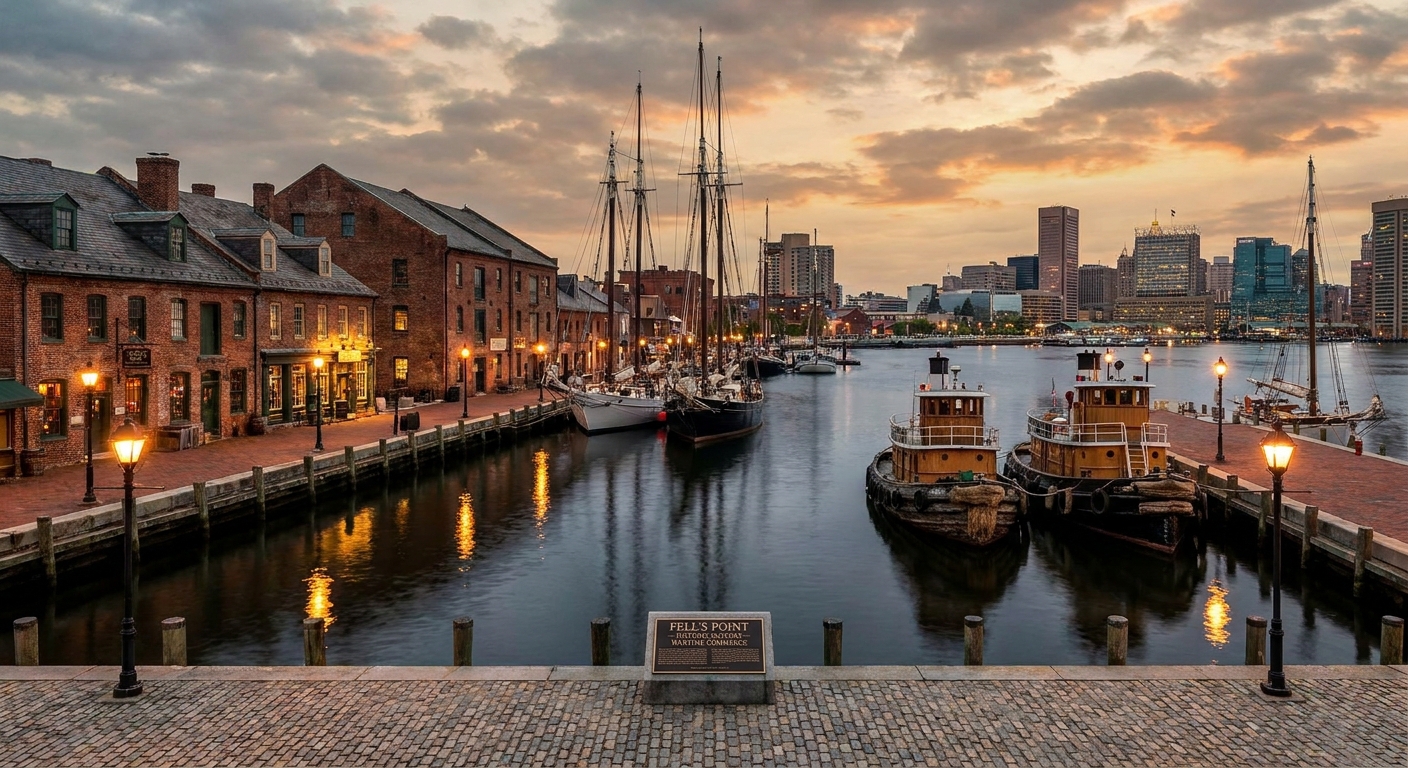
The curve across the war
If you forced me to sketch the privateering experience in three sentences, it would go like this:
- 1812: opportunity is high, procedures are new, and daring often pays.
- 1813: experience and organization peak, but countermeasures accelerate.
- 1814: the blockade strengthens, the Chesapeake becomes more dangerous, and the business model strains under military reality.
That is not a moral judgment, just the shape of the conflict. Maritime raiding flourishes in gaps. Empires are good at closing gaps.
After the peace, privateering as a wartime business collapses quickly because the legal authority and the target environment change. Baltimore does not lose its water sense or its shipbuilding skill, but the port has to carry those strengths back into ordinary commerce, where profit comes slower and paperwork is less thrilling. In practical terms, that meant yards and crews pivoting toward merchant packets, coastal carrying, and fast pilot and trading vessels, work where speed still mattered even when prizes no longer did.
FAQ
Were Baltimore privateers basically pirates?
No. Privateers operated under government commissions and were subject to laws of war and prize courts. They could still behave brutally or unlawfully in individual cases, but the legal framework is what separated privateering from outright piracy.
Did privateers hurt Britain or just get rich?
Both can be true. Capturing merchant ships disrupted trade, raised insurance rates, diverted Royal Navy resources to convoy and patrol work, and created uncertainty. At the same time, the privateering economy undeniably attracted investors looking for profit.
What happened to captured American privateers and crews?
Many were imprisoned in Britain or in British-held facilities, sometimes in harsh conditions, sometimes for long stretches depending on exchanges and logistics. If you want a grounded sense of what imprisonment could look like, start with Inside Dartmoor Prison.
How big was Baltimore privateering?
Big enough to shape the city’s wartime identity, and big enough that British officers and American newspapers both talked about Baltimore as a privateering hub. A safe way to picture the scale is to think of well over a hundred cruises, and potentially into the hundreds if you count short or repeated sailings, with captures and court cases cycling through the city’s wartime legal and commercial machinery.
Where does the story end?
The raiding did not stop the moment diplomats agreed to peace, but the incentives changed rapidly as the war wound down and news traveled unevenly. For the end-of-war sequence, I keep a separate chronology here: Treaty of Ghent Timeline: When Peace Reached the Front.