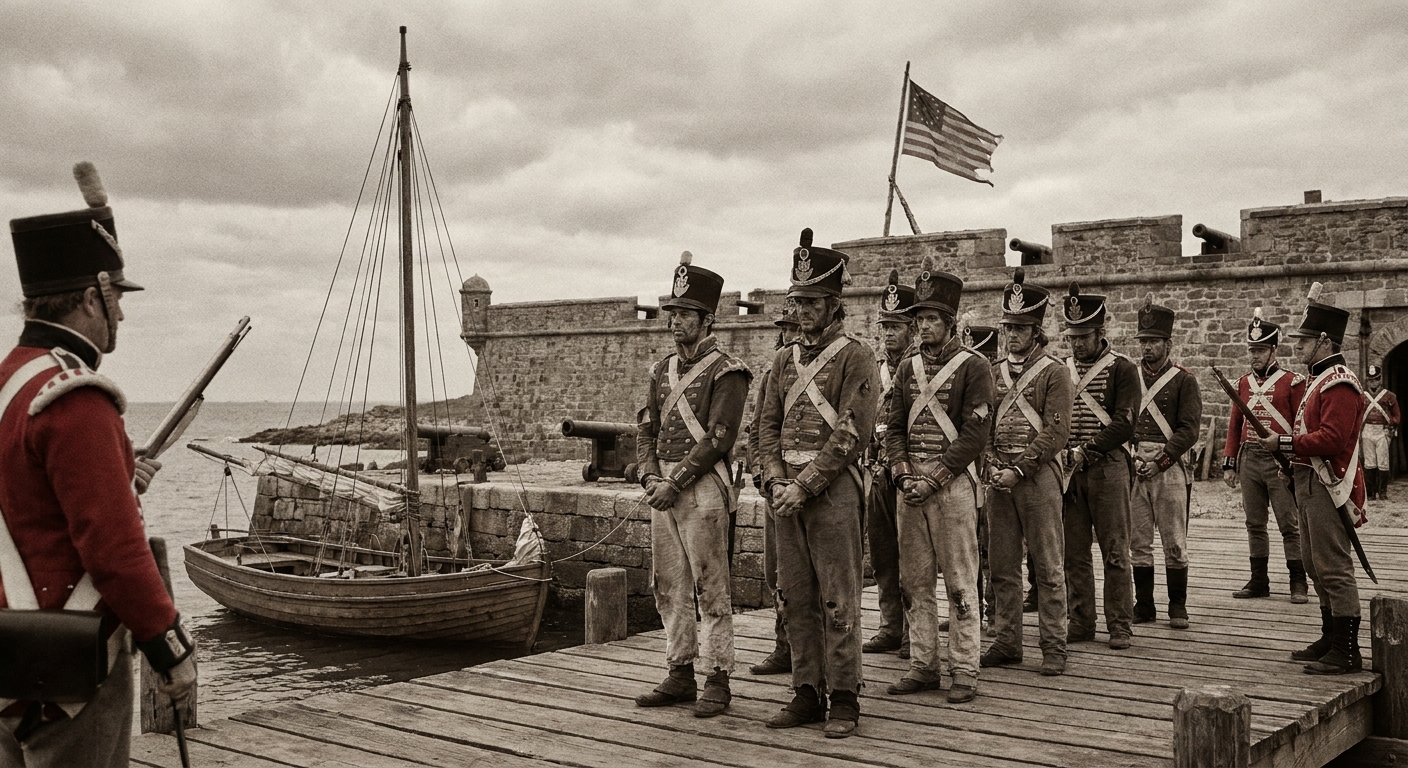

The first time I read a Dartmoor prisoner’s account, I could practically taste the wet in the air. Not the clean, rain-washed kind either. The sour damp of stone that never dries, wool that never fully warms, and bread that turns to paste between your fingers. Dartmoor Prison sat high on the moor in Devon, England, where the wind comes in sharp and the weather seems to change its mind every ten minutes. During the War of 1812 it became a holding pen for captured American sailors, privateersmen, and merchant seamen. At times it held hundreds at once, and over the war years thousands passed through its gates.
We talk about the war in cannon flashes and famous lyrics, but Dartmoor is a story of endurance. Captivity magnified everything a man already carried with him: hunger, pride, prejudice, and the desperate talent for improvising a life out of scraps. And at the end, when peace existed on paper but not yet in practice, Dartmoor gave the war one of its ugliest footnotes: a deadly volley fired into a crowd of prisoners who believed they were finally going home.
Where Dartmoor fits
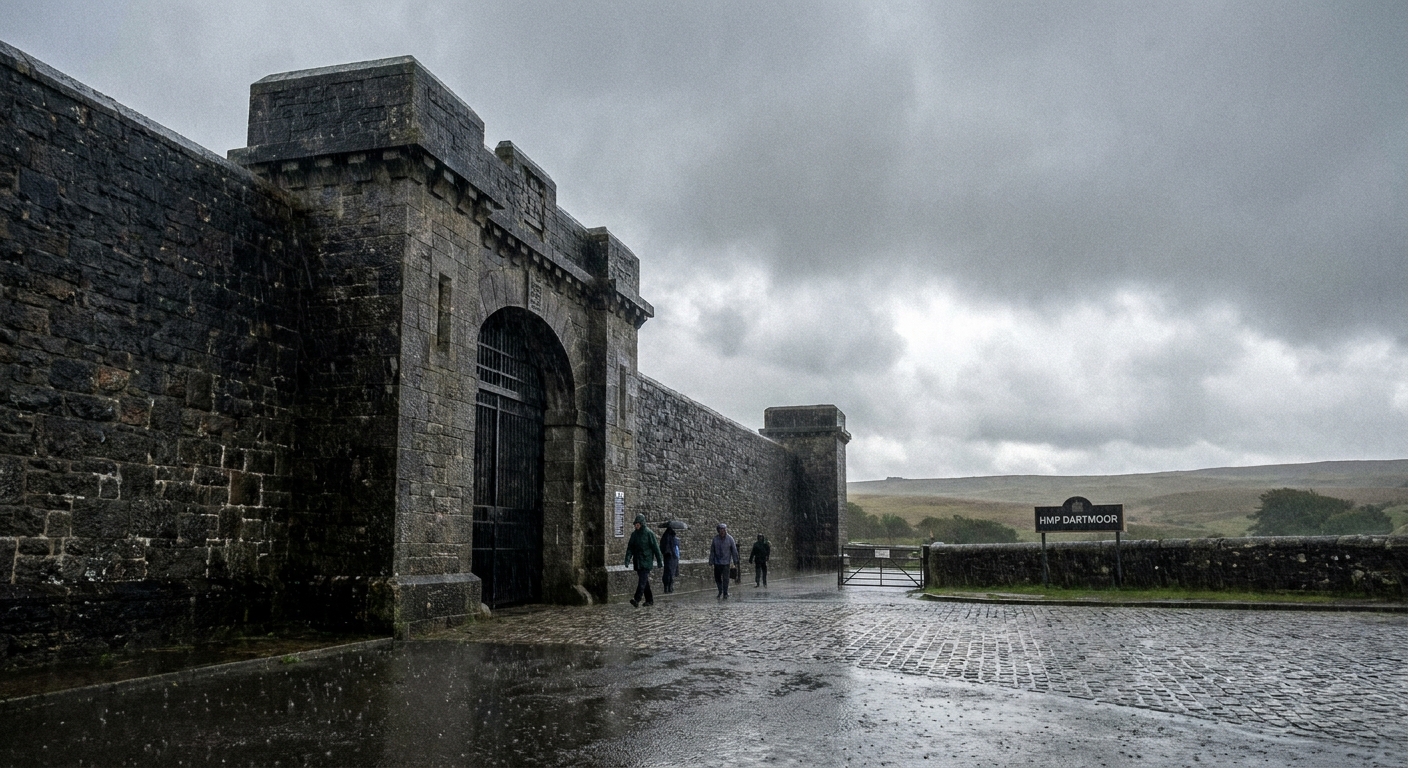
Britain had long experience managing prisoners of war, and by 1812 it already maintained hulks and shore prisons for captives from earlier conflicts. Dartmoor Prison was part of that larger machine. Construction began in 1806 during the long Napoleonic struggle, and it was designed to hold prisoners taken in those wars, often described in the records simply as “French” even when the net was wider. When conflict with the United States added a new stream of captives, British authorities began routing Americans there as the numbers grew.
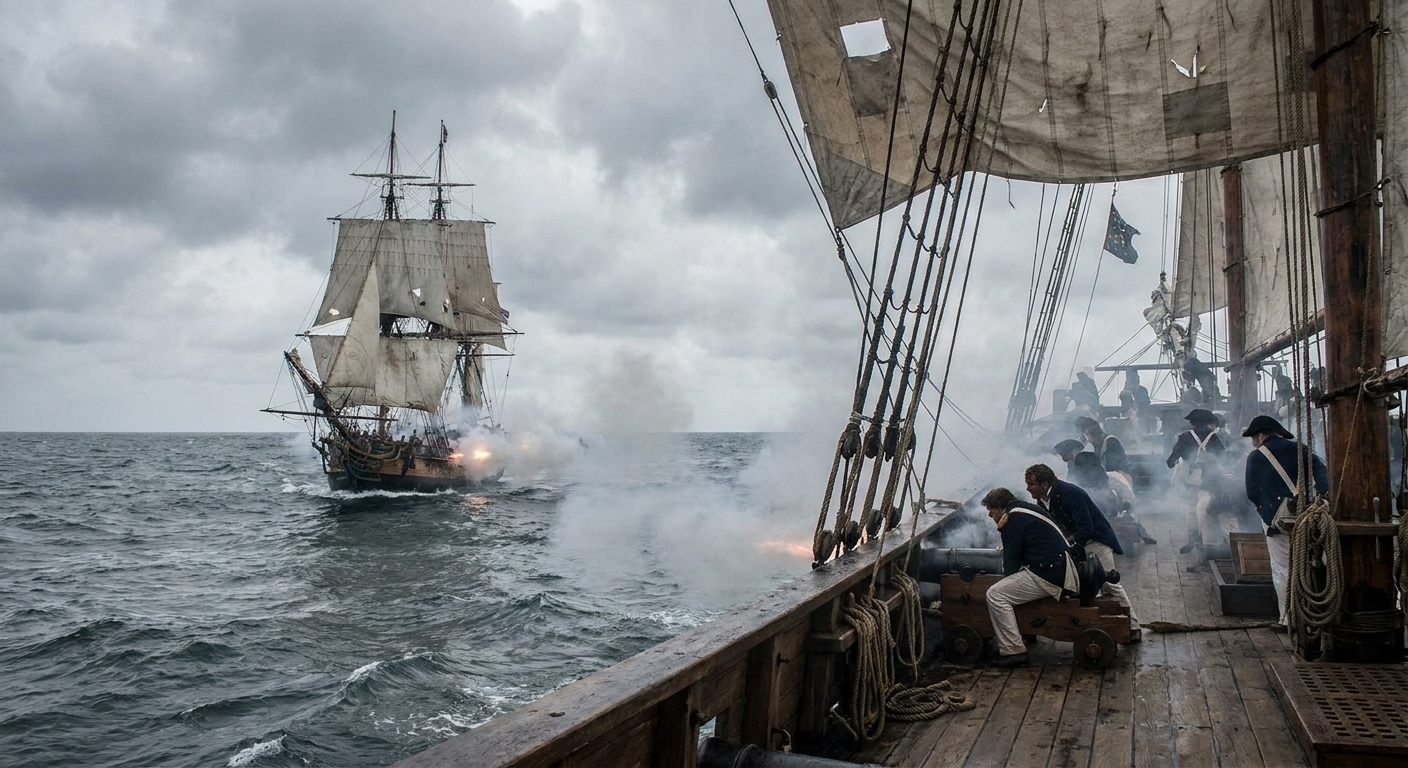
Most of the men sent to Dartmoor were not red-coated soldiers captured on land. They were sailors. Some had served in the U.S. Navy, many more sailed on privateers or merchant vessels, and plenty were working mariners who happened to be on the wrong deck when the wrong ship’s guns spoke up.
If you want the naval side of the conflict that fed prisoners into places like Dartmoor, start with 5 Naval Actions That Changed the War of 1812. Those victories and defeats were thrilling on paper, but for captured crews they could end with months or years behind stone.
The prison on the moor
Dartmoor’s setting mattered. The prison was remote, exposed, and hard to escape from even if a man managed to slip a gate or scale a wall. The moor offered miles of bleak terrain, unpredictable weather, and small settlements that would not easily hide an outsider with an accent and no papers.
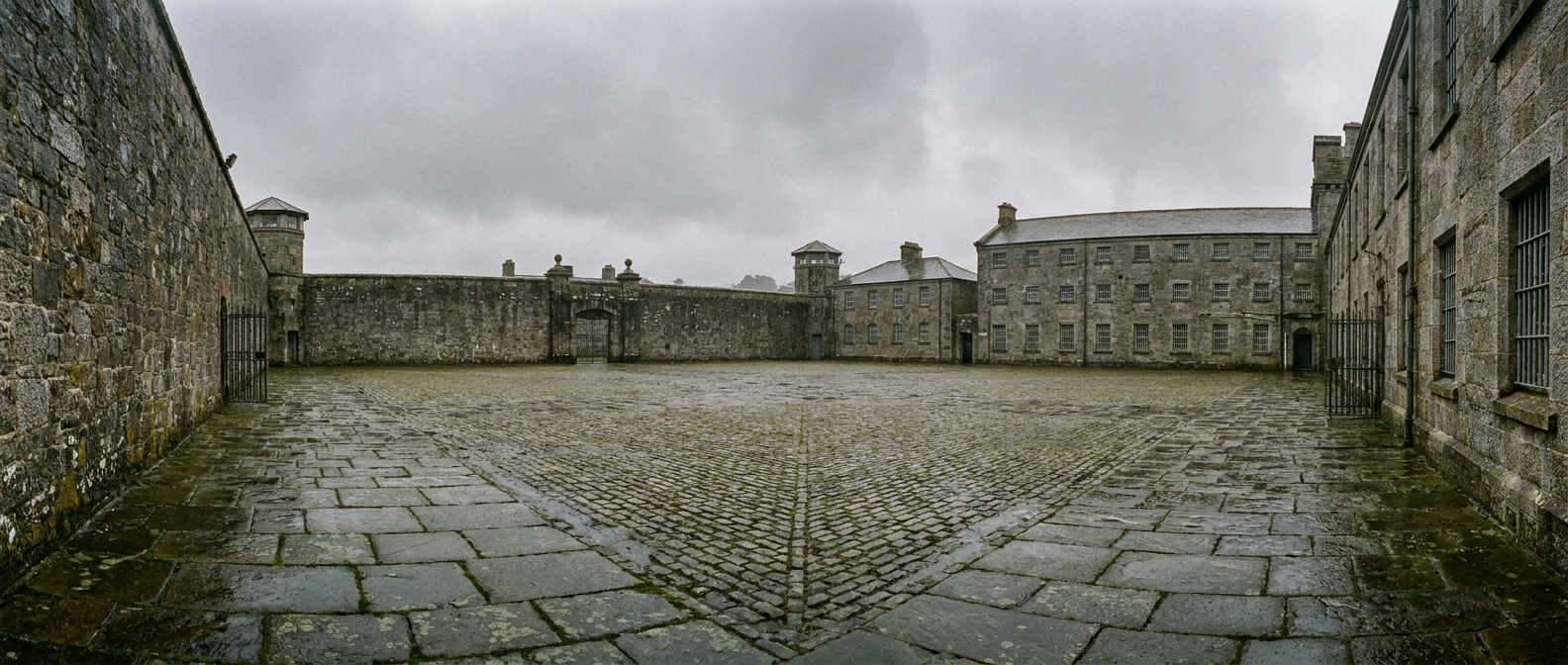
Inside, the layout was built for control. High perimeter walls and watched gates funneled prisoners into numbered yards, with long barracks blocks aligned behind inner gates that could be closed off like bulkheads on a ship. Segregation was part of the design. A man learned quickly that “the prison” was not one space but a set of compartments, each with its own rules, its own tempers, and its own pecking orders.
A day inside
Daily life at Dartmoor was a grind of routine broken by rumor. The details could vary by period and by the barracks a man landed in, but the common pieces show up again and again in prisoner narratives and later investigations. You see the same complaints repeated until they start to read like a drumbeat: the counts, the hunger, the wet, the waiting.
Roll calls and rules
Prisons run on counting. Men were marched out, lined up, and counted, then counted again. Noise, disorder, or refusal could bring punishment. The prisoner community developed its own internal discipline too, not always gentle, because collective punishment was a constant threat. If one man bolted or one group sparked a disturbance, everyone could pay for it.
Food: enough to live
Rations were a central complaint, and not only because of quantity. Quality mattered. Bread could be coarse and heavy. Soup or broth might be thin. Meat, when it appeared, was not always appetizing. Prisoners talked obsessively about food, traded for it, gambled for it, stole it, and fought over it.
In captivity, hunger is not just a sensation. It is a clock that never stops ticking. It turns mornings into calculations, and it turns afternoons into bargaining sessions.
Work and prison trade
Some prisoners found work inside the prison system or did tasks that gave them a little leverage. Many turned to making things: small carvings, ropework, trinkets, anything that could be exchanged. A kind of prison economy formed, part survival and part sanity. Men who had been sailors did what sailors have always done while waiting for the wind: they made, mended, and told stories.
Sickness and damp
Dartmoor’s climate was an accomplice. Respiratory illnesses, fevers, and outbreaks found easy footing where men were crowded and the stone held moisture. Prisoners wrote about clothing that stayed wet, bedding that never quite dried, and the misery of trying to warm yourself when your own breath felt cold in your chest.
Race and captivity
One of the details that hits hard, once you start reading captivity accounts with your eyes open, is how diverse many American crews actually were. Black sailors worked in the coastal trade, on merchant routes, and in privateering ventures. They were in harm’s way, and they were captured too.
At Dartmoor, race shaped vulnerability and, just as important, shaped how prisoners organized themselves. One famous example sits in the prison’s own geography: Prison Block No. 4, where Black prisoners were concentrated for a time. Contemporary accounts describe a towering prisoner-leader there, Richard Crafus, better remembered by the nickname “King Dick.” His presence anchors something easy to miss if we only speak in generalities. Captivity did not flatten men into a single “American” mass. It produced internal structures, reputations, and power, and those structures often tracked the racial lines the outside world insisted on drawing.
A Black prisoner faced the same hunger and cold as everyone else, but also the added weight of how guards, fellow prisoners, and the broader world defined him. Some accounts and prisoner fears describe men worrying about being singled out, assigned differently, or having their status questioned in ways white shipmates did not face. Even when the official category read “American,” the social reality inside a crowded barracks could be cruelly specific.
There is a temptation to treat Black participation in the war as a sidebar, but it is not. It is part of the human texture of the conflict, and it changes what captivity means when freedom itself was contested back home. For a broader look at Black service and community pressure in the war, see Richard Pierpoint and the Coloured Corps.
Life behind walls
Prisoners were not a single mind. Dartmoor held men from different ports, different classes of seafaring work, different temperaments. Some had sailed under U.S. naval discipline, others under the looser, risk-heavy world of privateering. Put them together in a tight space for months or years and you get everything: friendships, gangs, mutual aid, betrayal, and sudden violence.
Still, prisoner accounts describe collective action when it mattered most. They organized petitions and complaints. They negotiated internally to reduce theft or settle disputes. They spread news, and just as often they spread hope. Even the arguments tell you something. Men were still thinking like crewmen, still forming committees and rules, still trying to build order where the prison wanted only compliance.
If you have ever spent time with sailors’ letters or pension files, you recognize the pattern. A crew is a community forced to cooperate. Dartmoor was that, only without the sea and without the dignity of choosing your shipmates. If you are tracing an ancestor who might have been captured, Tracing War of 1812 Military and Pension Records can help you understand what paperwork may survive and where captivity sometimes shows up in the record.
Waiting for peace
When peace negotiations finally produced an agreement, prisoners expected release. The logic is simple: the war is over, so we go home. But wars rarely end cleanly for the people caught in their gears. The Treaty of Ghent was signed in late 1814 and ratified in early 1815, but that did not swing Dartmoor’s gates open overnight. Transport had to be arranged, prisoner lists checked and rechecked, and ships assigned to move men across an ocean that still punished winter planning. A peace treaty could travel faster than the logistics needed to honor it.
At Dartmoor, that delay became combustible. Men who had survived years of captivity could almost taste freedom, and that taste made every extra day feel like theft.
The massacre
On April 6, 1815, violence erupted at Dartmoor in what became known as the Dartmoor Massacre. The broad outline, supported by investigations and prisoner testimony, is grim: a confrontation spiraled, guards fired into prisoners, and Americans were killed and wounded inside a prison that should have been emptying for peacetime.
Accounts differ on the immediate spark, as they often do when fear, anger, and confusion collide. Prisoners insisted they were being held unjustly and protested, some describing efforts to force attention to stalled release and worsening conditions. Authorities emphasized order and security, framing the moment as a disturbance that demanded force. What is not in dispute is the result: gunfire in the yards, men dropping in the mud, and an event that lodged itself in American memory as proof that captivity did not end when treaties were signed.
The joint commission that investigated the incident reported 7 prisoners killed and 60 wounded, while some later tellings push the death toll higher, often to 9. The numbers matter, but so does the shape of the thing. This was not a battlefield. It was a prison yard, and the war was supposed to be over.
There was an official inquiry afterward, with sworn testimony and a hard effort to pin down who ordered what and when. In the end, responsibility was blurred rather than cleanly assigned. The prison’s leadership was not made to answer in a way that matched what survivors believed they had endured, and the men on the receiving end carried the outcome in their bodies for the rest of their lives.
When I think about Dartmoor, I think about that timing. Not in the middle of war fever, not during the first shocks of capture, but right at the edge of homecoming. The cruelty of it is that the men could finally see the shoreline, and then the tide pulled them back under.
What it tells us
We like clean stories. Battle, victory, handshake, end. Dartmoor is a reminder that wars also live in kitchens that cannot feed everyone, in lungs that cannot clear damp air, and in crowded rooms where men make a society out of nothing because there is nothing else to do.
Dartmoor also forces a hard question about categories. “Prisoner of war” sounds official, almost tidy. But the men inside were individuals with different stakes. For some, captivity was a miserable interruption in a seafaring career. For others, especially Black sailors, the definition of freedom could shift depending on which side of the ocean they ended up on and who decided what they were entitled to.
If you want to place Dartmoor in your broader understanding of the conflict, the best anchor is context. Start with our War of 1812 timeline guide for the pacing of the war, and use the people guide to keep track of the human players who often disappear behind ship names and treaty titles.
Questions
Was Dartmoor only for Americans?
No. Dartmoor was built during Britain’s war with Napoleonic France, and it had a life beyond the War of 1812. During the 1812 conflict it became a major holding site for American captives in Britain.
Were the prisoners mostly Navy?
Many were sailors with naval connections, but a large share were from merchant ships and privateers. Capture at sea did not sort men neatly into categories, and Dartmoor’s yards mixed seafaring worlds that rarely shared the same cramped roof back home.
Why did violence happen after peace?
Because peace on paper is not release in practice. Ratification did not instantly produce ships, manifests, and escorts. Delays in transport and administration kept prisoners confined, frustration rose, rumor filled the gaps, and a confrontation ended in lethal force.
Can I visit Dartmoor today?
Dartmoor Prison is an active facility, so it is not a typical historic site you can stroll through like a battlefield. If you are planning War of 1812 travel instead, our historic sites guide is a better place to build an itinerary grounded in accessible locations.