
I grew up thinking the War of 1812 lived along the St. Lawrence and the Great Lakes. That was the map my grandfather walked me through, marker by marker, in upstate New York. Years later, standing in Florida heat and staring across marsh and tidal creeks, I realized the same war had another heartbeat entirely. No big set piece battlefields, no neat visitor centers in the pines. Just a string of covert landings, paper-thin “revolutions” that held together only as long as they had enough men, supplies, and quiet backing from across the Georgia line, and uneasy occupations that tried to pull Spanish Florida into the United States while Washington’s attention was fixed on Canada and the Atlantic coast.
Historians often call this episode the Patriot War in East Florida. If you have never heard of it, you are not alone. It was messy by design: local frontiersmen and Georgia militia dressed up as “Patriots,” American officers helped quietly, and U.S. leaders tried to keep a straight face in public while nudging events along behind the curtain.
This timeline traces how the broader War of 1812 lit the fuse. It also shows why this southern front sputtered, dragged on, and left scars that mattered long after the Treaty of Ghent. For a broader sense of how fast events moved in this era, I like to keep our site’s big chronology close at hand: Guide: War of 1812 timeline.
What the Patriot War was
First, a quick map check, because Florida’s War of 1812 era gets tangled fast. This story is about East Florida, the Spanish province anchored by St. Augustine and the St. Marys River border with Georgia. It is not the same thing as the West Florida grabs and Gulf Coast maneuvering that played out around Mobile and farther west.
East Florida was Spanish territory, but it sat uncomfortably next to the United States. Along the border with Georgia, loyalties and languages blurred. Some settlers wanted U.S. annexation. Others wanted protection from raids and counter-raids that were already part of frontier life. Spain, weakened by Napoleon’s wars and turmoil in its empire, could not always enforce order on the ground.
When the War of 1812 began, American leaders worried about a southern vulnerability: if Britain could use Spanish Florida as a base, the whole U.S. southeast could be harassed from the coastline inward. That fear, mixed with long-running American desire to acquire Florida, produced a campaign that was half military, half political theater.
- Public story: local “Patriots” rose up against Spain.
- Private reality: U.S. troops and officials encouraged, supplied, and sometimes directly supported the effort, then tried to manage the diplomatic fallout.
If this kind of shadowboxing feels familiar, it is because the War of 1812 produced several “side wars” where local objectives collided with global empires. You can see a different version of that collision down at New Orleans with privateers and regulars in our piece on Jean Lafitte’s pirates vs. regulars.
Timeline: Patriot War (1811 to 1814)
1811: A southern fuse burns
- Early 1811: U.S. attention turns sharply toward Florida again. The borderlands are tense, with cross-border raids, property disputes, and fears of British influence. Spanish control is thin outside a few posts and towns.
- Late 1811: American policymakers debate how to prevent Florida from becoming a wartime threat. The mood is shaped by the same strategic anxieties driving northern planning: if the enemy can stage from nearby territory, civilians pay first.
Early 1812: Plans harden
- January to February 1812: Officials and local leaders in Georgia discuss ways to “secure” East Florida. The language often frames the problem as defense, but the endpoint many imagine is annexation.
- February to early March 1812: Organizing begins among self-styled Patriots and sympathetic militia. In practice, this means men, weapons, boats, and provisions positioning near the St. Marys River, with an eye on Fernandina and the roads leading toward St. Augustine.
March 1812: Amelia Island is taken
This is the episode most people mean when they say “Patriot War,” even though the ripple effects last longer.
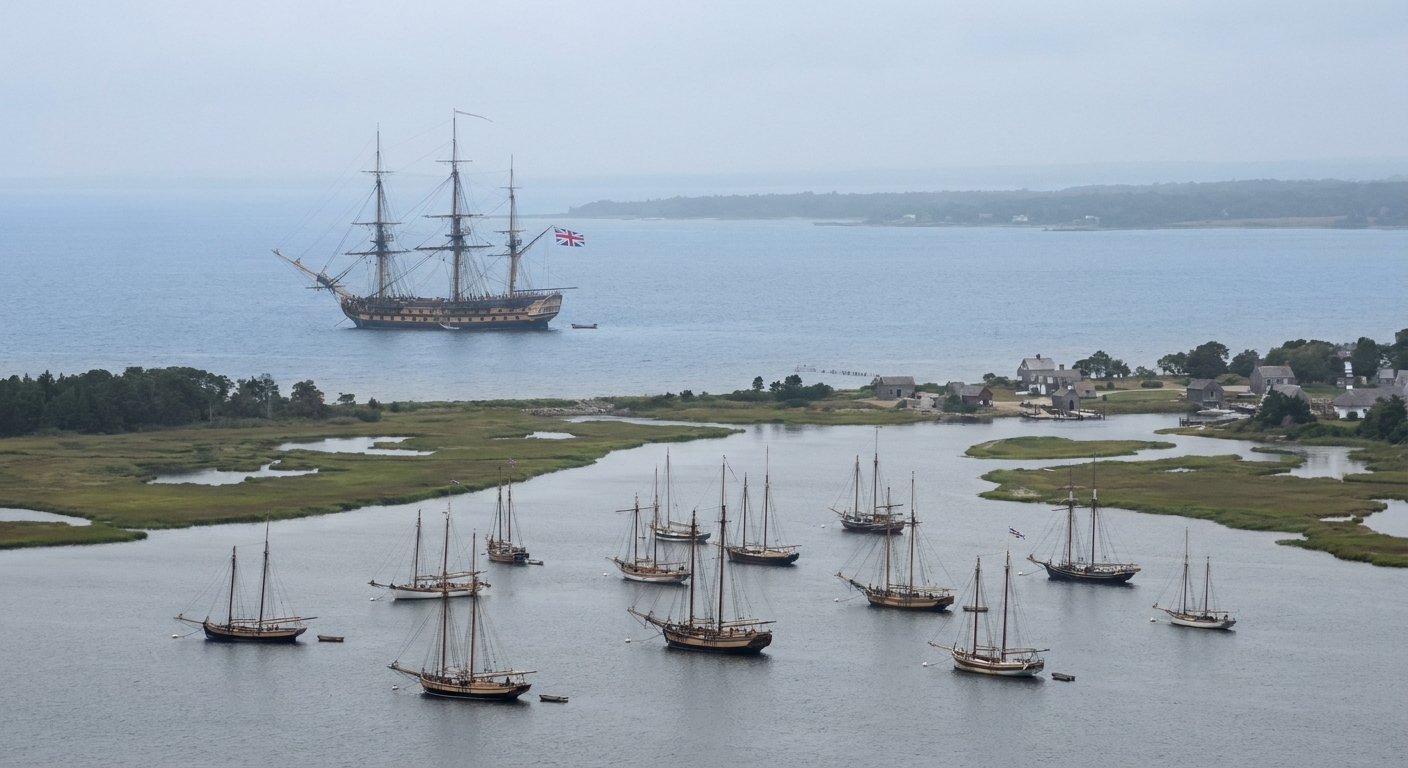
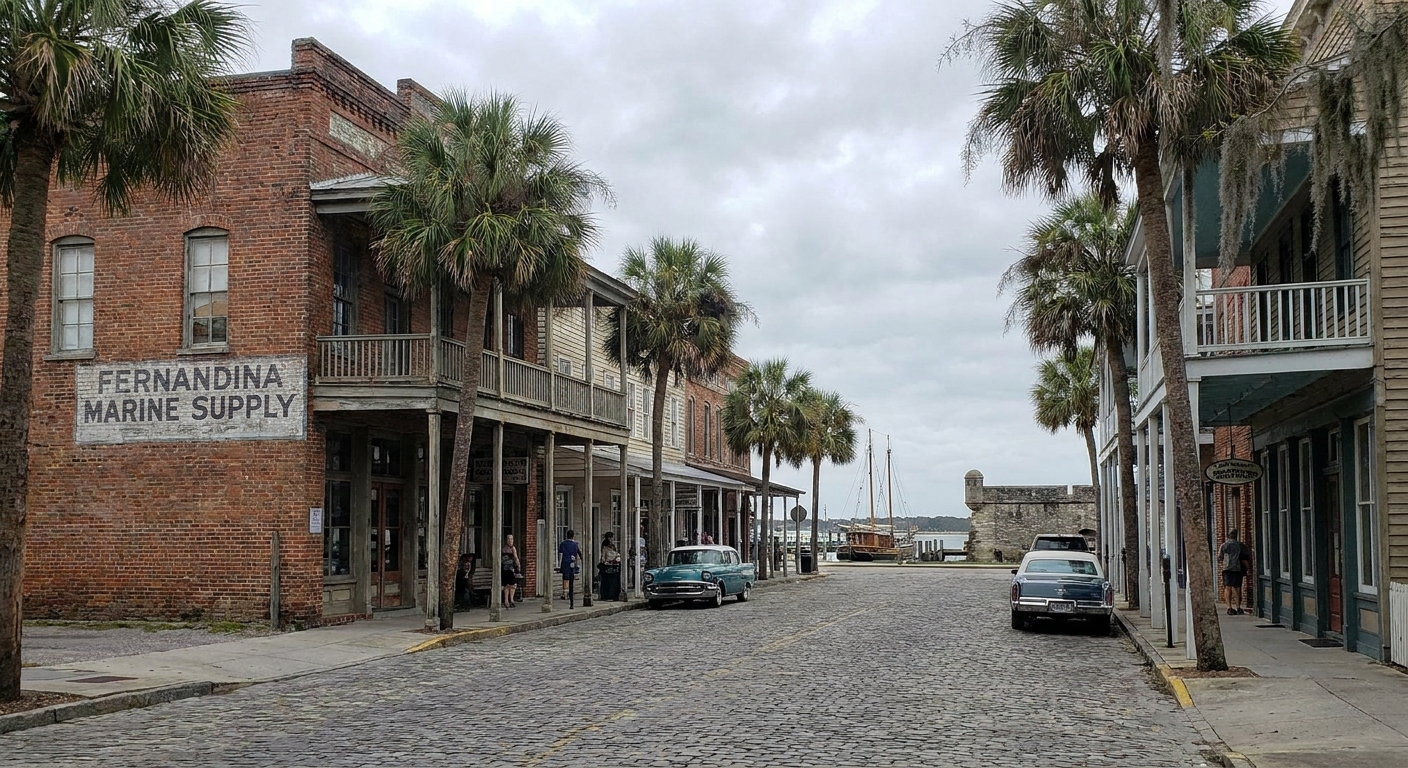
- Mid-March 1812: Patriot forces move against Spanish control on Amelia Island, near the Florida-Georgia line, taking the port at Fernandina. A “Patriot” banner is raised as the takeover is presented as a local uprising, even though it is tightly connected to outside support.
- Within days: U.S. regulars enter Fernandina under the authority of the Mathews plan, which hinged on U.S. agent George Mathews recognizing a “local” transfer and then accepting the port into U.S. military custody. The Patriot banner is replaced by the U.S. flag. The occupation is justified in official language as a protective step, aimed at denying a useful harbor and customs point to British-aligned forces during a widening Atlantic war.
June 1812: War begins
- June 18, 1812: The United States declares war on Britain. Overnight, every coastal inlet looks like a possible doorway for British ships and supplies.
- Summer 1812: East Florida is increasingly treated as a strategic problem. Even when Washington speaks carefully about Spain, the practical goal is to deny Britain any foothold nearby.
Mid 1812: The St. Augustine push stalls
- Spring to summer 1812: Patriot and allied forces attempt to extend control on the mainland, pressing down from the St. Marys corridor. The ultimate prize is St. Augustine, the seat of Spanish authority in East Florida.
- Mid 1812: Operations bog down. Supply problems, disease, and local resistance all bite. The deeper you go into Florida’s sandy roads and wetlands, the more logistics becomes the real enemy.
Late 1812: Fighting turns into frontier war
- Late 1812: In the contested belt south of the St. Marys River, Patriot and U.S.-aligned detachments report ambushes and sudden attacks along the roads and swamp crossings that tie the border settlements together. Some contemporary accounts describe quick-striking Seminole fighters who could hit a column and vanish into the timber and marsh.
- In several clashes: Reports also mention armed Black men linked to Spanish service and allied communities, alongside people seeking refuge in Spanish Florida, moving in the same violent borderland. It is the kind of ground-level complexity that turns neat “Patriot” labels into fog.
1813: Occupation and uneasy politics
- Early 1813: U.S. troops remain in parts of East Florida, with Patriots still involved. Diplomacy is delicate. Spain is not Britain, and the United States does not want to widen the war on paper even while widening its footprint in practice.
- Mid 1813: Skirmishing, seizures, and local intimidation continue in a pattern that looks less like a tidy expedition and more like a grinding border conflict. Civilians are caught in between, as they so often are. If you want another example of civilians living inside military decisions, our northern stories echo this theme, especially Plattsburgh’s civilians in the crossfire.
- Late 1813: The occupation becomes harder to justify publicly. The Patriots have not toppled Spanish East Florida, and the U.S. military is needed elsewhere.
1814: A gradual pullback
- Early 1814: U.S. forces begin to pull back from positions in East Florida. It is not a single clean exit. Posts are thinned at different speeds, some positions linger longer than others, and the pressure comes from both diplomacy and manpower.
- Mid to late 1814: U.S. attention and manpower are pulled hard by crises elsewhere, including the Gulf Coast and the widening conflict tied to the Creek War. Florida remains a stubborn borderland problem, but the Patriot War phase, the attempted East Florida “revolution” backed by quiet American muscle, has largely run its course.
By the time the war’s famous late chapters roll around, the story Americans remember is burning capitals and battered forts. For that larger arc, see our paired timeline on the burning of Washington, and for the war’s closing sequence see the Treaty of Ghent timeline.
Why it mattered
It showed coastal anxiety
In 1812, fear traveled faster than armies. Leaders could imagine British ships appearing offshore almost anywhere, and Florida’s inlets and islands looked like invitations. That same coastal anxiety drives the story farther north in our look at Britain’s blockade, port by port.
It blurred war and acquisition
The Patriot War sits in that uneasy space where a nation at war convinces itself that “security” requires new borders. Even when U.S. leaders avoided formally declaring war on Spain, actions on the ground pushed hard against Spanish sovereignty.
It made Florida feel inevitable
The Patriot War did not deliver East Florida to the United States in 1812 or 1813. But it normalized the idea that Florida could be taken, managed, and “kept safe” by American arms. That mindset did not vanish when troops withdrew. It lingered until Florida was finally ceded years later through the Adams to Onís negotiations, signed in 1819 and implemented in 1821.
Key players and groups
- Patriots: local and regional men, often from Georgia or border settlements, who declared themselves liberators of East Florida. Their motives varied from genuine political preference to opportunism.
- U.S. Army and U.S. officials: providing support that ranged from tacit encouragement to direct occupation. One name that matters early is George Mathews, a U.S. agent whose role captures the whole balancing act. He was meant to encourage a “local” transfer of power that looked spontaneous, while still serving American aims.
- Spanish authorities in East Florida: centered around St. Augustine, attempting to hold a thin line with limited resources.
- Seminole communities and Black Floridians: operating in and around the borderlands, defending communities and disrupting columns that tried to move and live off the land. In period sources, you also see references to armed Black men connected to Spanish service and allied settlements. You also see Black families and runaways trying to carve out safety in a province that sat one misstep away from American slave patrol logic.
- British influence: sometimes direct, often feared, always shaping American calculations. In this war, what commanders feared an enemy might do could be as decisive as what the enemy actually did.
FAQ
Was this part of the War of 1812?
It was not a formally declared theater like the Canadian campaigns, but it was driven by the War of 1812’s pressures and fears. It is best understood as a wartime offshoot that used local actors and plausible deniability to pursue strategic goals.
Did the United States declare war on Spain?
No. That is part of what makes the story feel covert. U.S. actions in East Florida pressed hard against Spain’s control while avoiding the clean, official break that would widen the war.
Did the Patriots capture St. Augustine?
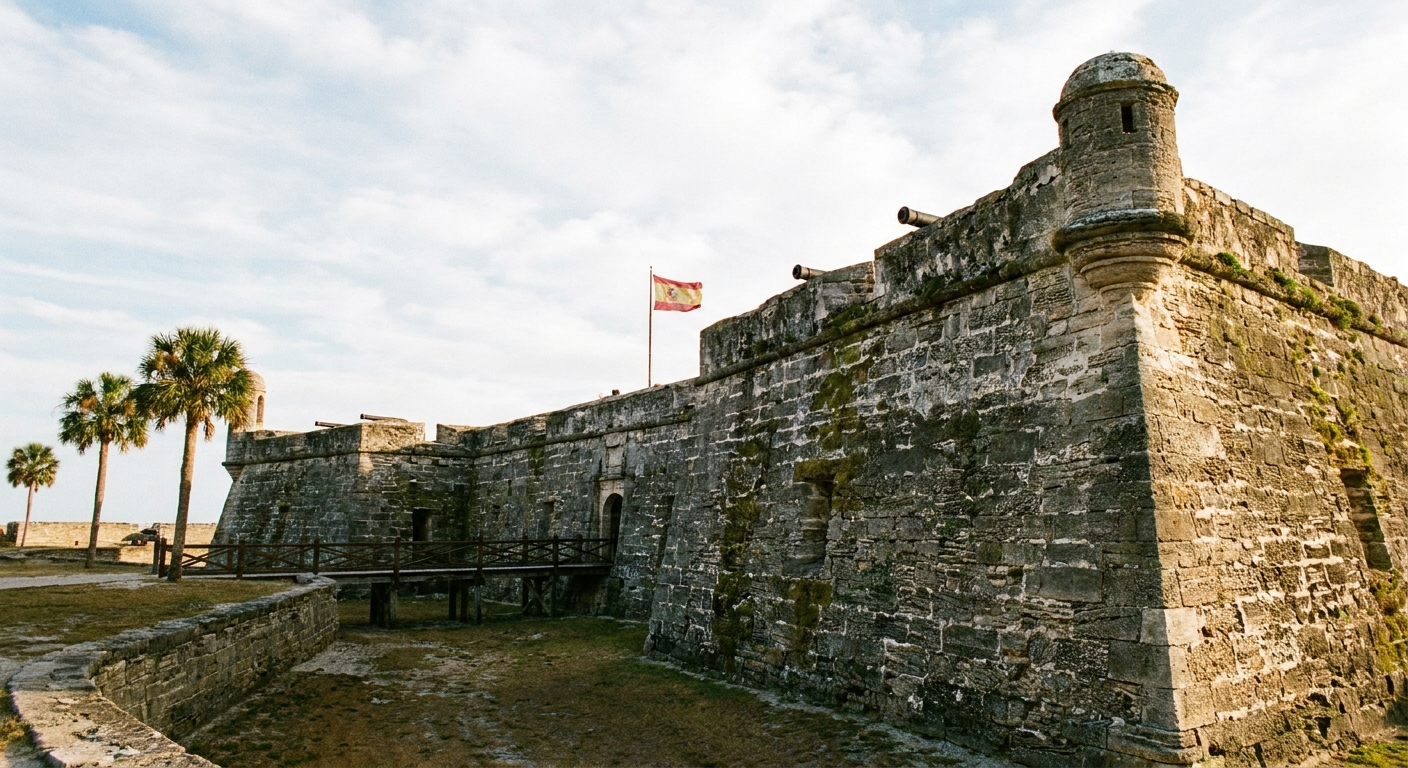
No. The movement’s high-water mark was seizing Amelia Island and pressuring the mainland. The attempt to force the issue at St. Augustine did not succeed.
What ended the Patriot War?
A mix of realities: poor logistics, limited local support once the initial surprise passed, diplomatic risk, and the fact that the U.S. military had bigger emergencies elsewhere in 1813 and 1814. The wind went out of it in stages, not all at once.
Places to read further
I am stingy with recommended references, because Florida’s borderland history can get retold with a lot of patriotic varnish. These are steady starting points for the Patriot War and its context.
- Encyclopaedia Britannica: Patriot War
- Library of Congress collections (for contemporary printed material and context)
- Florida Memory (state archive portal for related documents and images)
And when you want to zoom back out to the war’s better-known endings and what peace looked like in practice, our timeline on how peace reached the front helps keep all these scattered fronts on the same map.