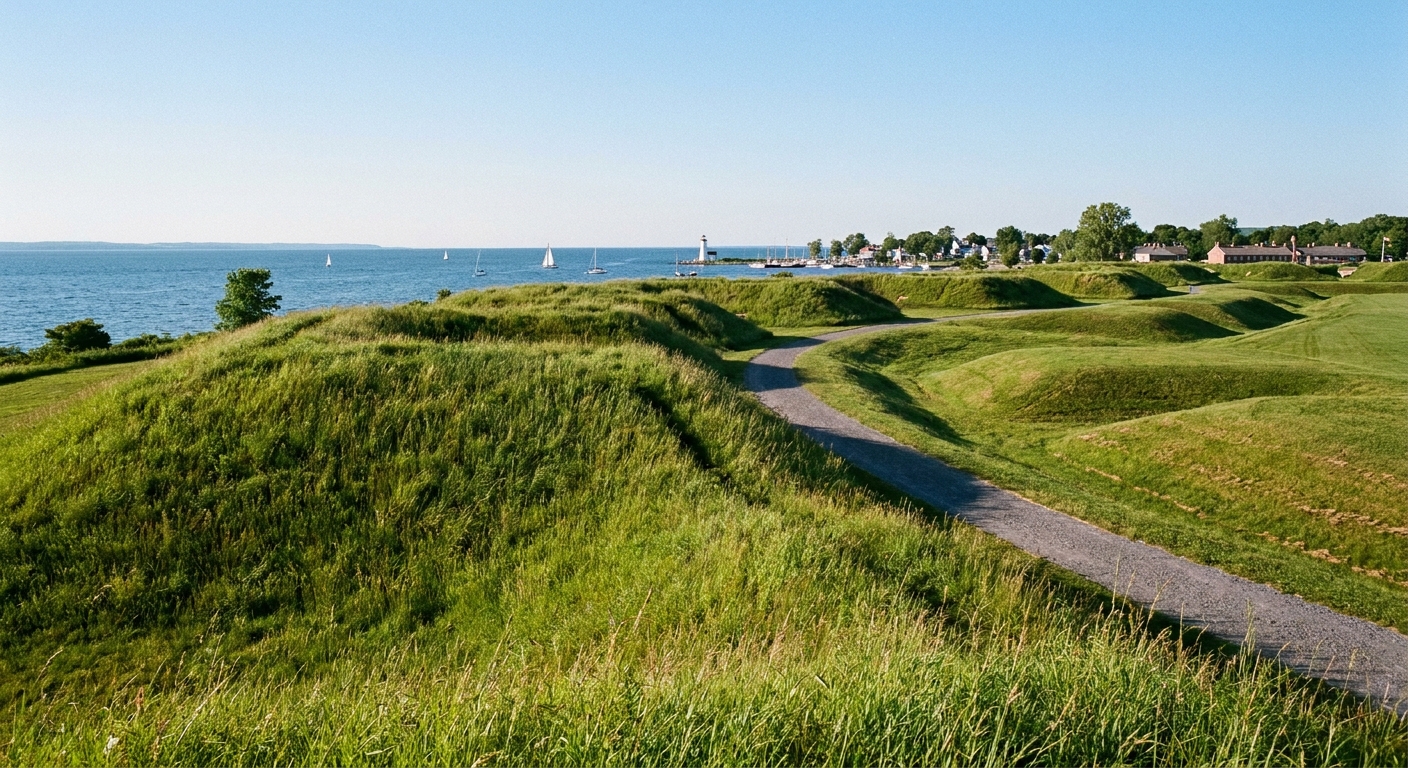

The first time I went looking for Crysler’s Farm, I did what any battlefield walker does. I hunted for the lay of the land. I tried to find the slope that would have shaped the musket smoke, the fence lines men would have crouched behind, the little rise an officer might have used to see over the corn. And then, standing near the St. Lawrence, I had to admit the truth out loud: much of the battlefield is gone.
Not forgotten, not misidentified, not paved over. Swallowed.
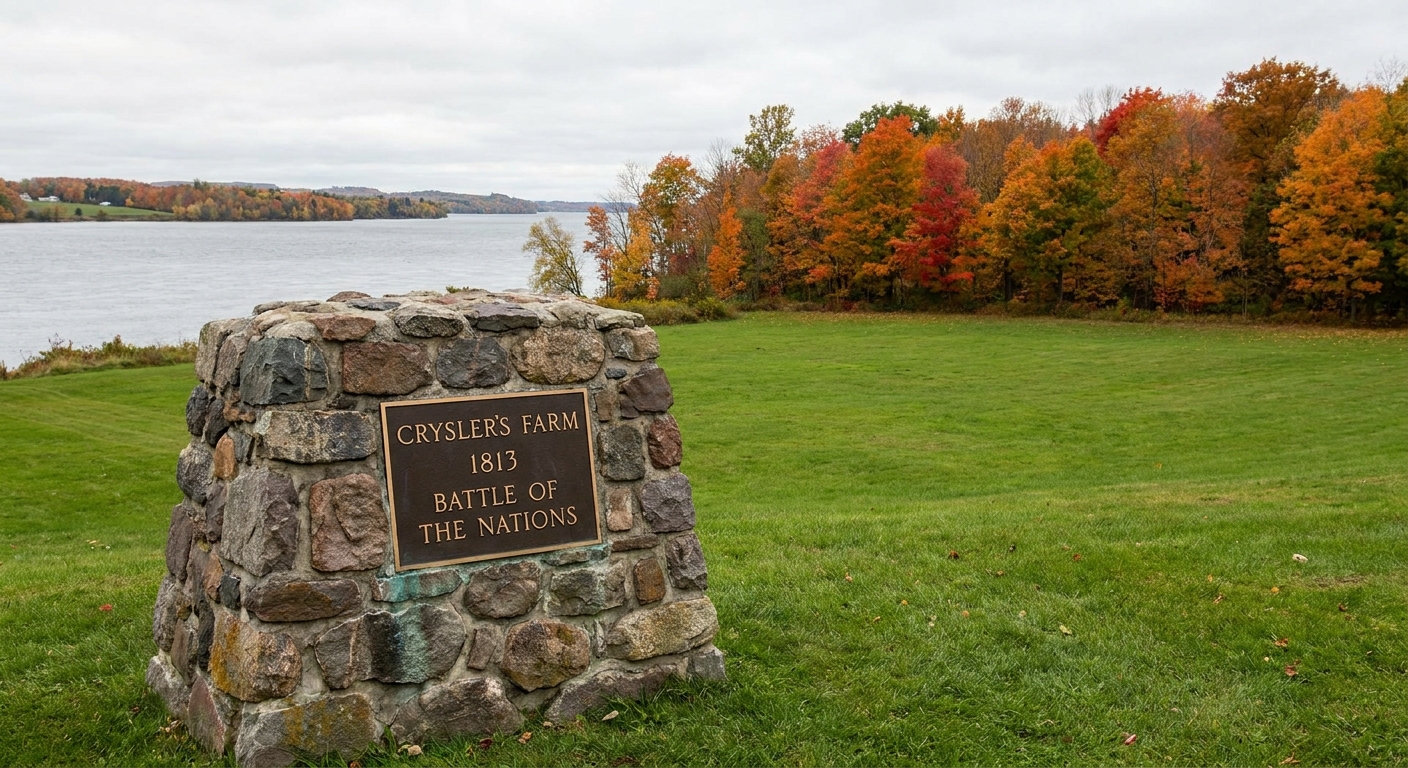
The Battle of Crysler’s Farm was fought on November 11, 1813, on low farmland along the north bank of the St. Lawrence River. In the 1950s, the river was raised and shorelines reshaped during the St. Lawrence Seaway and power project, and key parts of the original ground went under. What we have now is a memorial and interpretation in the Morrisburg area near Upper Canada Village, where you can still read the fight if you know how to listen and where to stand.
Where you are standing
To make sense of Crysler’s Farm today, you have to hold two maps in your head at once.
- The 1813 map: a working farm near the river, broken by fields, fence lines, drainage ditches, and pockets of woodlot.
- The modern map: a broadened shoreline, higher water, changed roads, and commemorative features set back from where the firing lines once stood.
That dislocation can feel disappointing at first. But there is a strange gift in it, too. Because when the exact terrain is missing, the memorial forces you to think about decisions rather than just distances: why a line held, why another wavered, why a general misread what was in front of him.
If you want more places where the landscape does a lot of the storytelling, I keep a running index in our Historic Sites guide.
Battle recap
Crysler’s Farm sits inside the American push down the St. Lawrence in late 1813, the Wilkinson column’s attempt to pressure Montreal and split Lower Canada from the rest of British North America. It was part marching campaign, part logistical gamble, part personality clash. Soldiers lived on tight rations, cold nights, and the kind of damp that never seems to leave wool.
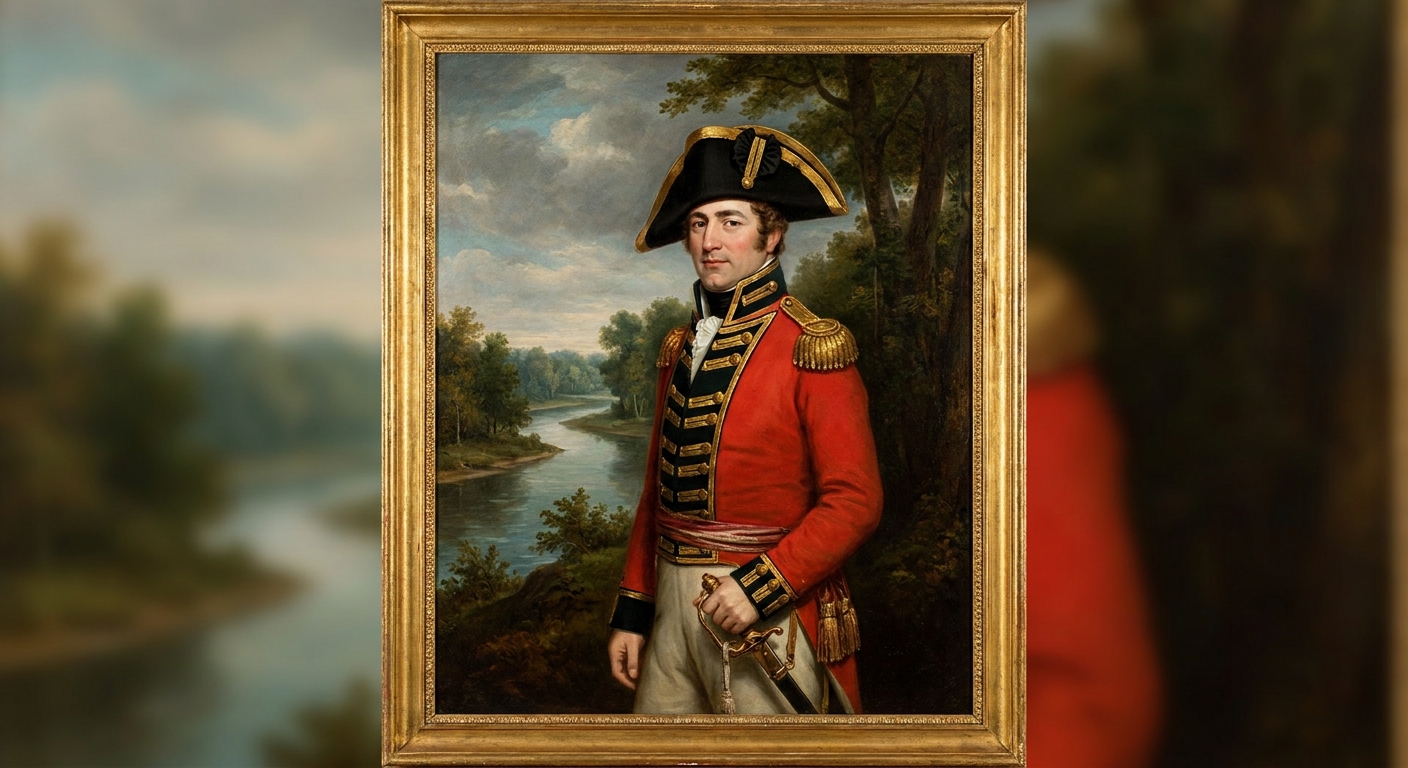
On November 11, a British and Canadian force under Lieutenant Colonel Joseph Wanton Morrison met a larger American force that day led on the field by Brigadier General John Boyd. What followed was not a romantic bayonet whirlwind. It was a hard, methodical fight in open ground where volleys had room to do their worst.
The Americans attacked in uneven pulses and struggled to coordinate their brigades. Morrison’s line, anchored by disciplined regulars and well-served artillery, held firm. The American assault faltered, then folded back. Tactically, it was a sharp defeat. Operationally, it contributed to the failure and abandonment of the St. Lawrence campaign against Montreal.
For broader context on how battles fit into the wider arc of the war, our Timeline guide is the best jumping-off point.
What is here now
Think of the Crysler’s Farm stop as a short, reflective read rather than a long hike. You should expect a commemorative setting with a memorial, interpretive panels, and open views of the river corridor. There is room to walk, pause, and re-read, but you are not tracing original fence lines or standing on untouched ground.
What you will not see is just as important: preserved earthworks, original riverbank edges, or unmistakable “this is where the line stood” features. The site works best when you arrive ready to translate words and diagrams into a mental map.
How to read the memorial
Even without the original ground under your boots, you can still “walk” Crysler’s Farm by using the memorial and interpretive material the way an officer might have used a sketch map.
1) Start with orientation
Ask: Where would the river have been from the soldiers’ viewpoint in 1813? The shoreline you see today is not the shoreline they saw. The St. Lawrence has always been a presence here, but modern water levels change how close the battle feels to the river and how tight the space seems.
When you stand at the memorial, take a slow turn and imagine the farm as a working place. Picture fences that have to be mended, livestock paths pressed into wet soil, harvested stubble underfoot. Battles fought on farms are never fought on empty “battlefields.” They are fought through someone’s daily life.
2) Follow what the site emphasizes
On-site interpretation at Crysler’s Farm tends to pull your attention toward a few practical themes that matter more than speeches do:
- Line discipline: formations holding under fire, and the consequences when units lose cohesion.
- Coordination: attacks that arrive out of sequence often fail, even when the numbers look favorable on paper.
- Time and exhaustion: soldiers on a long campaign do not arrive fresh, and fatigue shows up as hesitation, ragged volleys, and poor alignment.
3) Picture the invisible features
The swallowed ground makes the small stuff feel intangible, but those small features are exactly what shaped the firefight.
- Fence lines shaped where men could advance in order, and where they bunched up into targets.
- Shallow ditches and wet spots slowed movement and broke formations at the worst moments.
- Open fields gave musketry room to punish attackers before they could close.
4) Let the quiet work
When the wind comes off the river, it can sound like distant surf. On a calm day you might hear nothing but birds and cars in the far background. That silence helps me remember how loud a line battle would have felt: the crack of volleys, the harder punch of cannon, officers shouting themselves hoarse, the wounded calling out from grass that suddenly did not look like grass anymore.
What happened to the battlefield
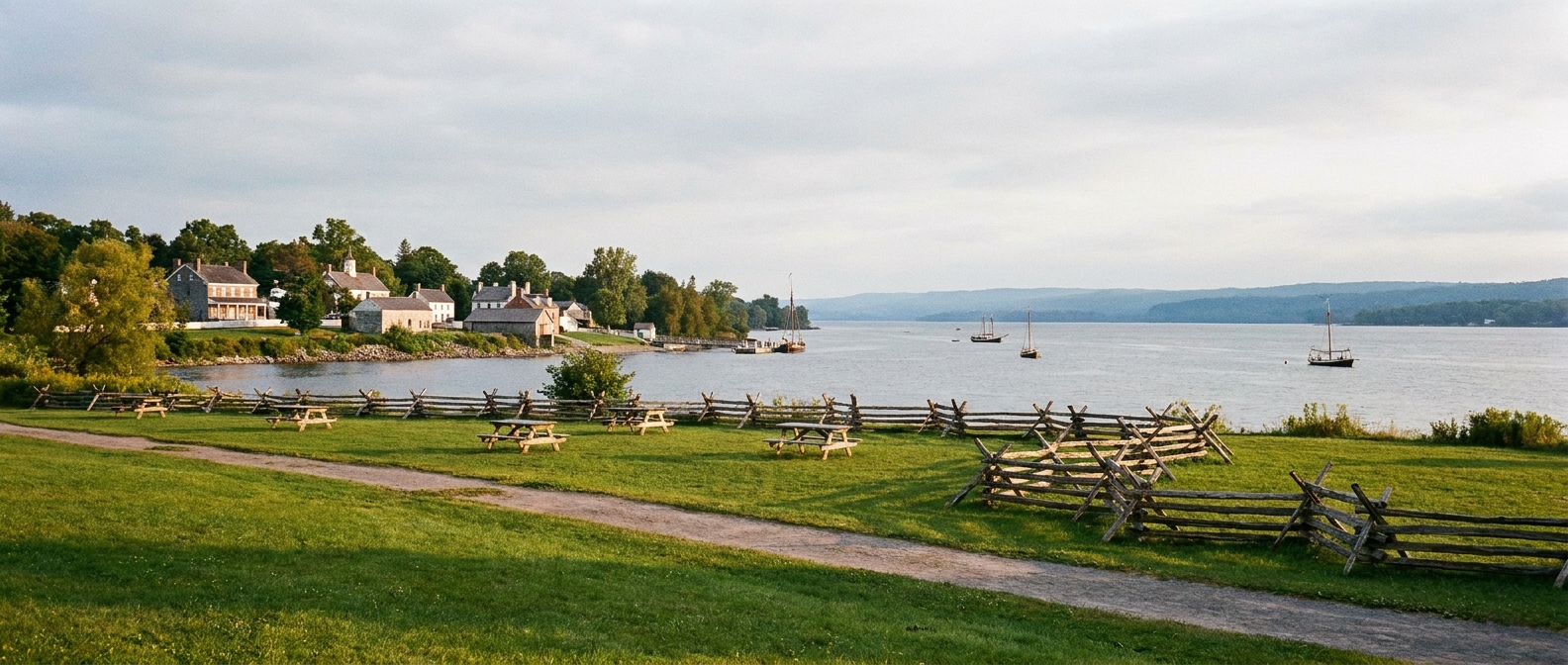
The short version is that the St. Lawrence Seaway and associated hydroelectric work in the 1950s raised water levels and reshaped sections of the river corridor. Communities were relocated and landscapes transformed. In the process, parts of the Crysler’s Farm battlefield area were inundated or heavily altered.
That fact can land like an insult if you come expecting preserved lines and original sightlines. But the memorial exists precisely because people refused to let the battle vanish in memory just because so much of the ground vanished in water.
Three questions on site
Why did the smaller force hold
At Crysler’s Farm, numbers mattered less than who could keep their line steady and who could apply firepower coherently. The battle is a reminder that “more men” is not a plan if they arrive misaligned, exhausted, or under unclear direction.
What did the campaign need
Even if the Americans had done better tactically, the campaign still faced problems of supply, timing, and command friction. When you read Crysler’s Farm as part of the 1813 Montreal effort, you see a familiar War of 1812 pattern: operations collapsing under the weight of logistics.
What did civilians lose
It is easy to forget this at a memorial with neat paths and interpretive order. In 1813, the Crysler family farm was a working livelihood, and like so many farms caught between armies, it became ground to be used up. Fields trampled, fences pulled apart for firewood or lines of fire, animals scattered, stores seized. The war leaves footprints that last long after the smoke clears, even if the water later covers the prints.
Pair it with context
If you are building a weekend around this stop, you will get more out of it by treating Crysler’s Farm as one chapter in the war’s borderland struggle rather than an isolated plaque visit.
- Browse Battles to connect Crysler’s Farm with other turning points in 1813 and 1814.
- Browse People to follow commanders, civilians, and lesser-known participants beyond a single day’s fighting.
- If you like to compare how different battles secured or threatened the Canadian border, my deep dive on Queenston Heights vs. Lundy’s Lane makes a good companion read.
Visiting tips
- Give yourself unstructured time. The memorial can be “done” quickly, but understanding takes a slower loop and a second look at the panels.
- Bring binoculars. Even when the original ground is underwater, scanning the river and far shore helps you feel the corridor the armies moved through.
- Visit in late fall if you can. Bare trees and low sun make it easier to imagine the openness of November fields.
- Talk about weather. Asking “How cold would they have been?” or “How wet is that wind?” gets you closer to soldier reality than reciting unit names.
If you are the sort of person who likes events and living-history weekends, keep reenactment etiquette and packing pointers handy: 7 essential tips for attending War of 1812 battle reenactments.
FAQ
Is the battlefield at Upper Canada Village
The commemoration is in the Morrisburg area near Upper Canada Village, but it is not the same thing as standing on intact 1813 fighting ground. Because the St. Lawrence corridor was altered in the 20th century, today’s visit is about interpretation and orientation, not untouched terrain.
Why does Crysler’s Farm matter
It checked the 1813 St. Lawrence advance and showed how quickly a larger force can be blunted when attacks are poorly synchronized and the defending line stays steady, with artillery used effectively.
What should I look for if I cannot see it all
Focus on the decision points the site helps you reconstruct: how lines formed, why attacks failed to synchronize, and how the river corridor shaped movement and supply. When you stop hunting for exact fence-post locations, you start seeing the battle as a sequence of choices made under pressure.
One last thought
Most War of 1812 sites ask you to imagine what was. Crysler’s Farm asks you to imagine what is not. The river is beautiful, wide, and deceptively calm. Somewhere beneath that surface is farmland where men once lay down behind fence rails and waited for the next volley.
When you stand at the memorial, you are not standing on the battlefield. You are standing on the promise that the battlefield still matters.