The first time I walked a river road south of Montreal, I understood something that maps never quite tell you. The land narrows your choices. A wooded bank, a bend in the water, a muddy lowland that swallows boots, and suddenly “advance in good order” stops being a phrase from a report and turns into a hard problem you can feel in your calves.
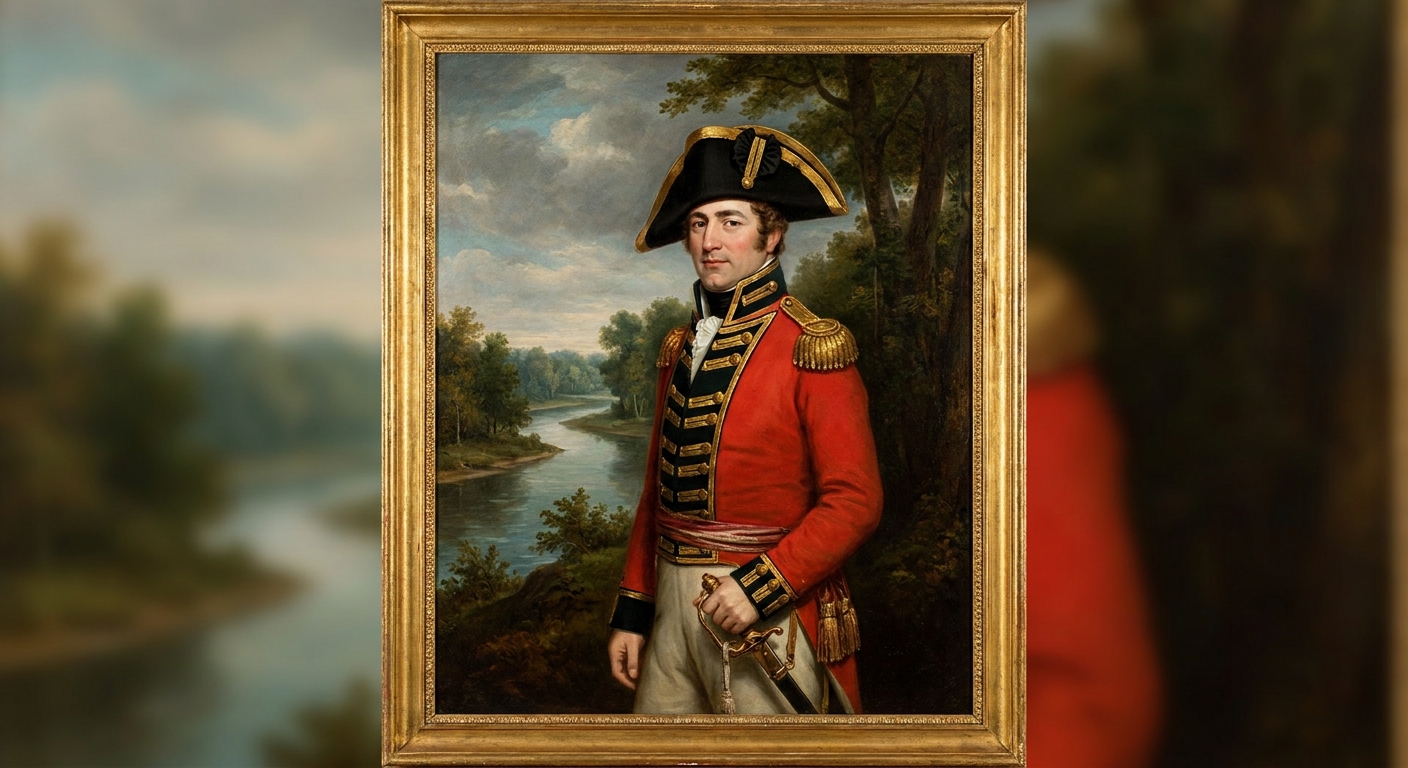
In October 1813, Charles de Salaberry turned that kind of country into a weapon. He was not the sort of commander who needed a grand battlefield and neat lines. He needed trees, a river, local men who knew where the ground turned treacherous, and just enough time to make an American column doubt what it was hearing and seeing. On the Chateauguay River, Salaberry helped derail the American drive on Montreal by stopping one half of a coordinated advance.
Why Chateauguay mattered
The American plan in 1813 was not a single punch. It was meant to be a shove with two shoulders: one force moving down the Lake Champlain and Richelieu corridor toward Montreal, and another advancing along the St. Lawrence from the west. If those pressures met, Montreal could be isolated, cut from supplies and command, and forced into a crisis that would ripple across the whole war.
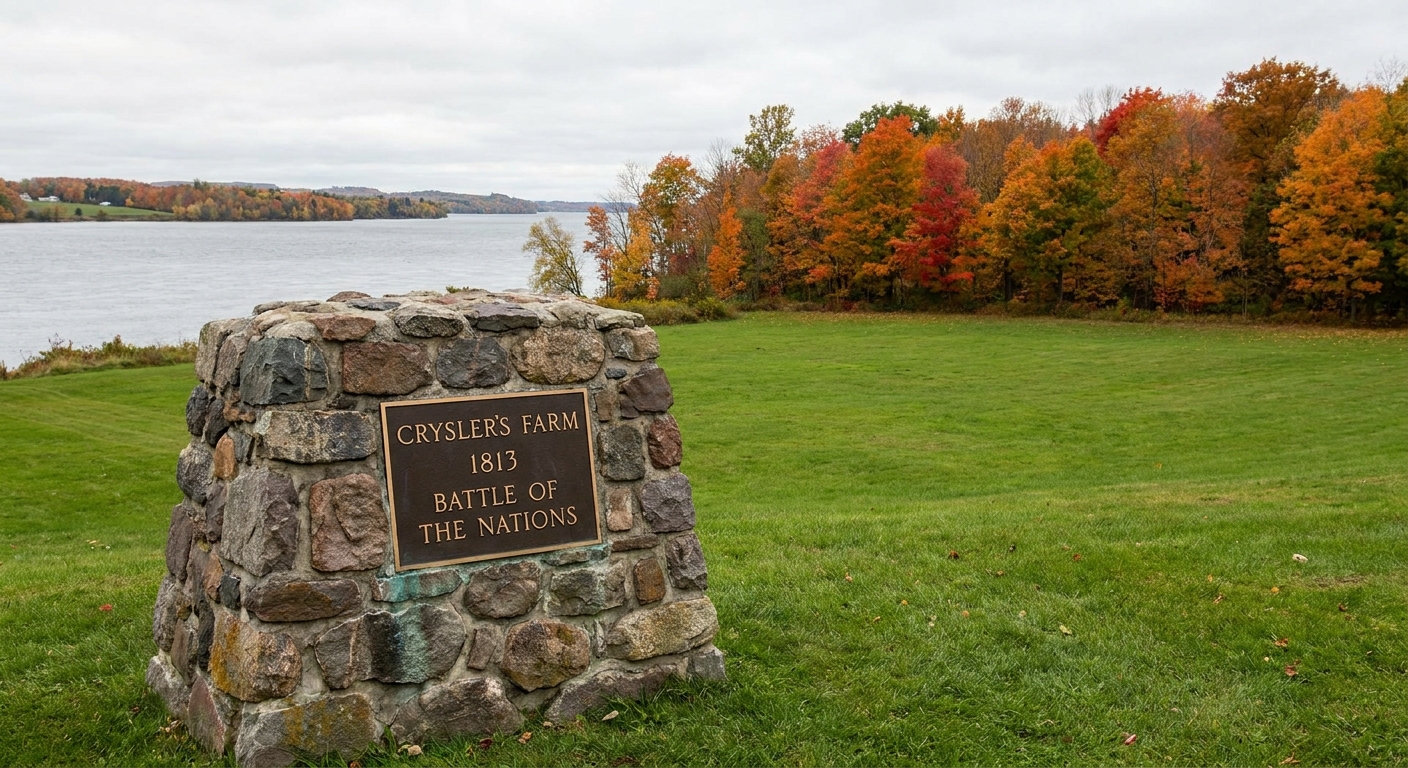
Salaberry’s assignment was the kind that rarely gets the full cinematic treatment: delay, confuse, hold, and do it with mixed forces, thin resources, and a lot riding on morale. Chateauguay mattered because it prevented Major General Wade Hampton from pushing forward and linking up with the other American wing under James Wilkinson. That second wing would falter as well, most famously at Crysler’s Farm, but Chateauguay ensured the pincer never closed in the first place.
If you want the broader scaffolding of who was where and why in these years, the site’s timeline hub is a handy trailhead: War of 1812 timeline guide.
Salaberry’s tools
Salaberry was a French-Canadian officer in British service, but his edge at Chateauguay was not simply rank. It was intimacy with the people and the landscape. His force drew on the Voltigeurs Canadiens, supported by Canadian militia and other local elements. Contemporary accounts also note Indigenous participation in the wider screen of scouting and skirmishing that helped watch approaches and pressure an advance in thick country, the kind of work that rarely shows up cleanly on a battlefield diagram.
What made his force effective
- They moved like locals. Not because of romance, but because many of them actually were. They knew farm lanes, woodlots, and river crossings that an invading column would only discover the hard way.
- They could fight dispersed. In thick forest, a commander who insists on parade-ground geometry invites chaos. Salaberry leaned into skirmish tactics and controlled fields of fire.
- They were defending home ground. That matters when the weather turns and rations thin. A militia man might not love drill, but he understands what is behind him.
For readers who like people-first context, you can browse other key figures across the war here: People of the War of 1812.

What happened
Hampton’s column probed north in difficult going, expecting to force a passage and keep the campaign moving toward Montreal. Salaberry met him in the kind of ground where distance lies. Trees make a hundred yards feel like a mile. A slight rise becomes a wall. A wet lowland becomes a trap for tired feet and wagons.
As the Americans pressed into the wooded approaches, they ran into prepared obstacles and controlled fire. The fight became a series of sharp contacts rather than a clean, visible line. Units struggled to coordinate in the timber. Reports came back unclear. Under that pressure, and facing a defense that seemed larger than it was, Hampton pulled back rather than forcing a costly push through a position he could not properly read.
Casualty numbers for Chateauguay vary by account, but the commonly cited totals are relatively low for a battle with such strategic weight, often described in the rough range of dozens killed and wounded on each side. The more immediate result was operational: Hampton retreated, the planned junction with Wilkinson did not happen, and the Montreal campaign began to unravel.
How Salaberry won
Chateauguay was not won by one heroic volley. It was won by a series of decisions that stacked small advantages until the American commander could no longer see a clean path forward.
1) He chose the ground, then shaped it
Salaberry did not wait to be found in open country. He positioned his defense where the Chateauguay River, woods, and rough terrain squeezed movement and limited visibility. Then he improved that natural choke point with prepared obstacles and fighting positions, the sort of practical fieldworks that do not look dramatic on a painting but ruin an attacker’s rhythm.
In this environment, the attacker has to do three things at once: maintain formation, keep direction, and identify the enemy. Forest fighting punishes all three. Salaberry’s placement forced the American advance to slow, bunch up, and second-guess.
2) He used sound and confusion
Several accounts emphasize how the defense benefited from sound in the woods: bugle calls, controlled firing, and echoes that made a thin line feel broader than it was. In close country, where sightlines are short and reports travel by breath and rumor, sound becomes a form of intelligence. Whether every note was part of a single master script or simply good field sense in the moment, the effect was the same. Hampton’s men could not easily tell what they were walking into.
3) He kept the fight tight
A militia-heavy defense can unravel if the commander asks too much, too fast, or too far from cover. Salaberry’s control showed in restraint. He resisted the temptation to chase every retreating movement deep into the woods. He focused on the mission: stop the advance, hold long enough, and let time do its work.
4) He defended in layers
Defending in depth matters in wooded terrain. If the forward edge buckles, the fight is not automatically lost. Salaberry’s posture was built for resilience: multiple positions, fallback options, and men placed to sting, stall, and report rather than simply stand and absorb.
5) He guarded morale
Salaberry’s leadership was personal. Accounts of the day consistently paint a commander close enough to the action to be felt by his men. In militia and light infantry actions, morale is not an abstraction. It is whether your neighbor stays put when musket smoke drifts between the trees and you cannot see what is coming next.
The attacker’s problem
From an attacker’s perspective, Chateauguay was a maze with consequences. Columns that look formidable on a road become fragile in forest, especially when supply, coordination, and communication are strained. A defender who knows the ground can turn every small delay into a new decision point, and every decision point into fatigue and doubt.
At Chateauguay, American forces faced:
- Restricted maneuver. Flanking in dense woods is slower than it sounds, and it can detach units from support.
- Uncertain enemy strength. When you cannot see the line, you guess. If the defender can exploit sound and scattered contact, you can guess wrong.
- Time pressure. The longer an assault takes, the less it resembles a plan and the more it resembles survival.
The end result was not simply a failed attack. It was a major setback to the larger operational goal. Even with other factors at work elsewhere along the St. Lawrence, Hampton’s withdrawal meant the coordinated threat to Montreal lost one of its two arms.
What he proved
When I read after-action reports and then walk the kind of ground they describe, I keep coming back to a simple truth. The best leaders cut away what will not work in real conditions and keep what will.
- Practical imagination. He anticipated what the enemy would perceive in the woods, then built a plan around that reality.
- Economy of force. He avoided wasting men where terrain and preparation could do the heavy lifting.
- Local integration. He trusted militia and local fighters with roles that mattered, and aligned those roles with their strengths.
- Discipline without rigidity. He maintained control while fighting in an environment that punishes rigid thinking.
Chateauguay in context
Chateauguay is sometimes overshadowed by larger set-piece names, but it belongs in the same conversation as other moments when a defense held because leaders understood the specific problem in front of them, not the theoretical battle they wished they were fighting. It also fits cleanly into the larger 1813 story: a complicated American campaign, ambitious on paper, that broke down on coordination, terrain, and timing.
If you are tracing how different fronts demanded different kinds of command, you might pair this story with:
- Winfield Scott’s blueprint, for a look at discipline and professionalization on the American side.
- Why the bombardment of Fort McHenry failed, another case where position, planning, and limits mattered as much as courage.
- Queenston Heights vs Lundy’s Lane, for a comparative look at what “securing the border” actually meant in practice.
If you visit
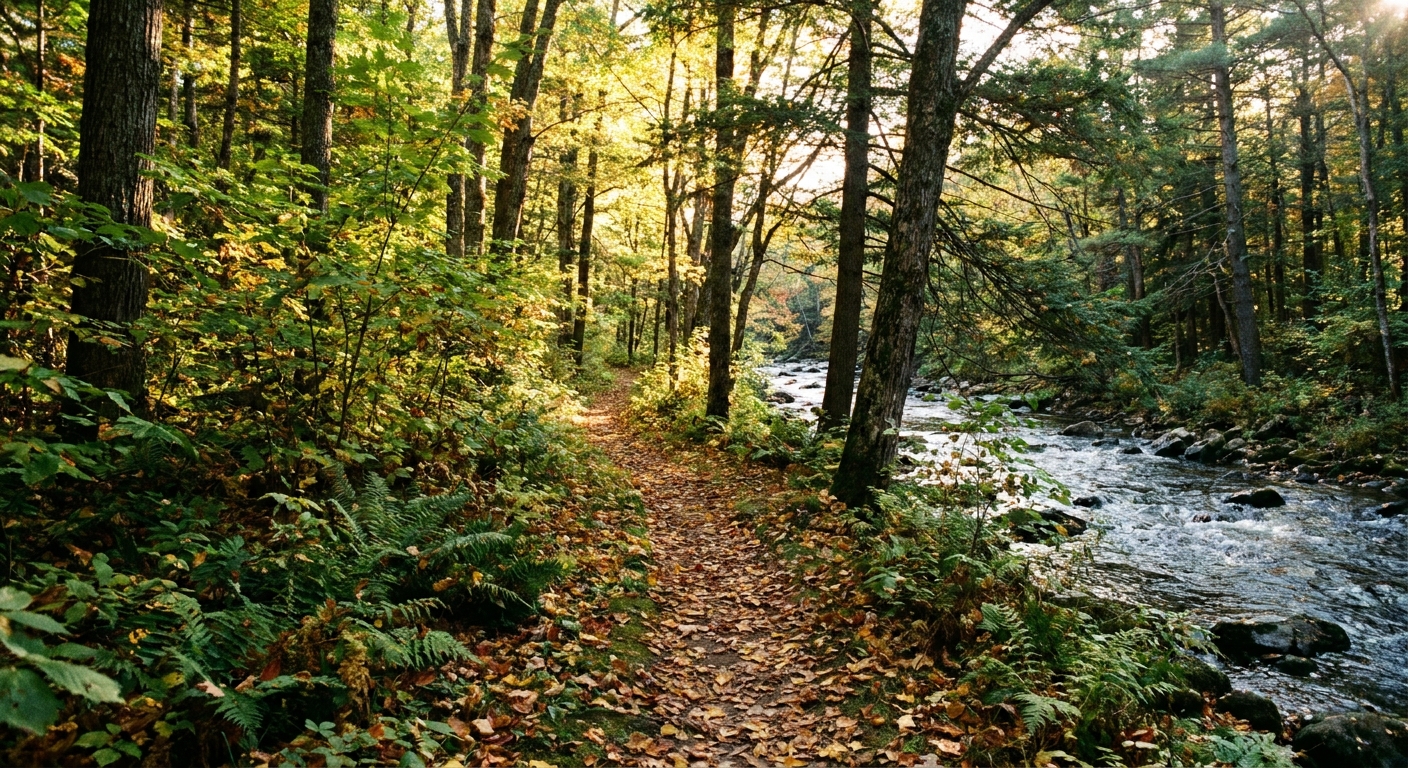
You do not need a grand overlook to understand Chateauguay. What you need is a feel for distance, cover, and the way sound carries in broken country.
- Find a riverside stretch with heavy tree cover. Notice how quickly sight disappears ten steps into brush.
- Look for choke points. Where does the ground force you to move single-file, or funnel toward a crossing?
- Listen. Imagine calls echoing through timber. In 1813, that was not ambience. It was information, and sometimes misdirection.
And if your War of 1812 travel tends to be more structured, the site’s guide hub is a good starting point for planning: Historic sites guide.
The takeaway
Charles de Salaberry’s success at Chateauguay was not luck, and it was not simply “defending bravely.” It was leadership built on specifics: terrain chosen with intent, militia used intelligently, confusion exploited, and a clear understanding that stopping a link-up can be as decisive as winning a set-piece battle.
Chateauguay did not end the 1813 Montreal campaign by itself, but it made the campaign vastly harder to rescue. In a war full of big names and louder moments, that is the quiet kind of decisiveness that deserves remembering.